By TYLER ELLYSON
UNK Communications
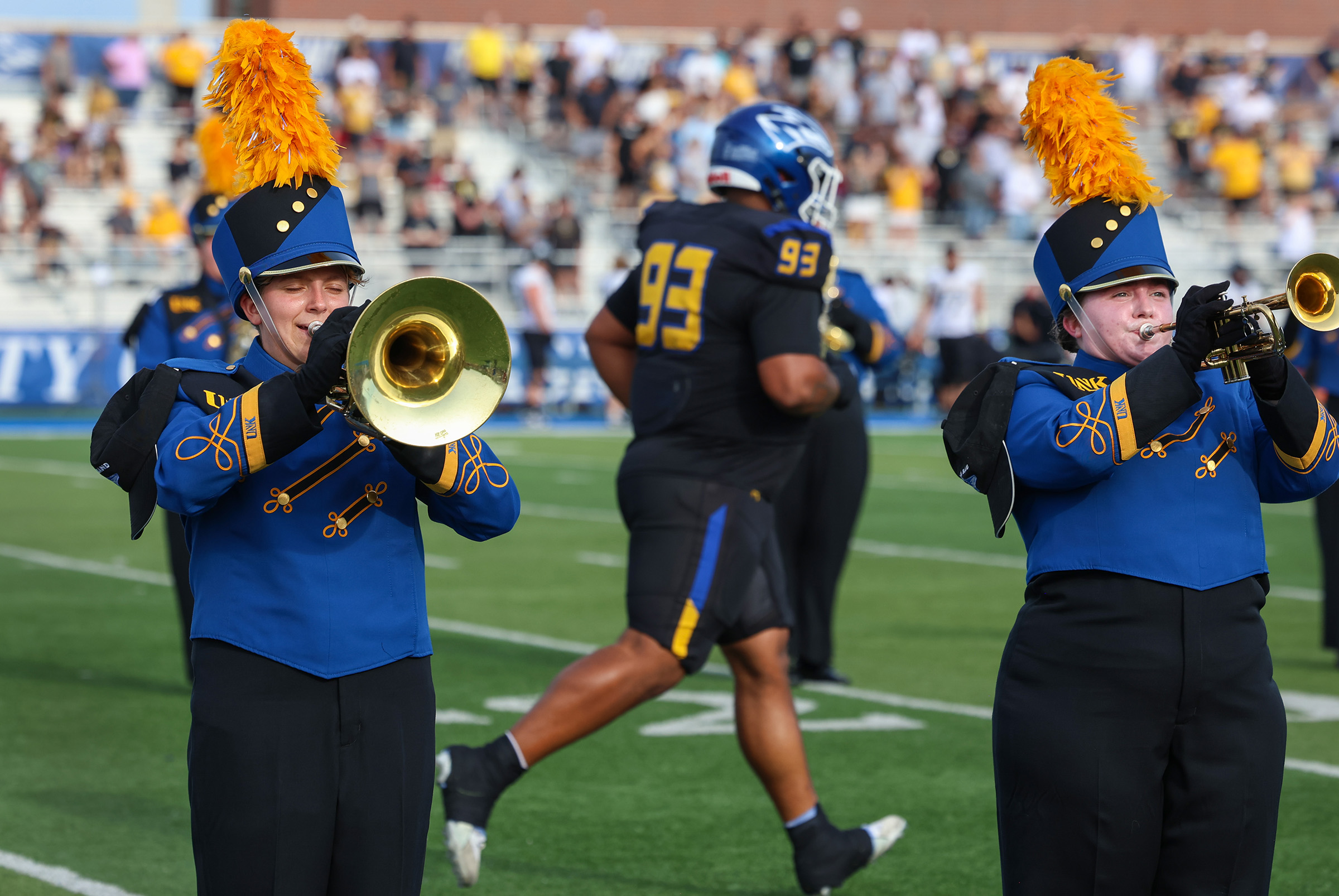
KEARNEY – The trumpets sound their opening fanfare, bright and bold, and it doesn’t take long for Loper fans to recognize what’s coming next.
The melody takes off from there, propelled by a catchy rhythm, punchy brass and spirited countermelody that gives musicians a little extra room to show off.
More than four decades after Ron Crocker composed the UNK Color Song, also known as “The Blue and the Gold,” those first few notes remain unmistakable.
That was the idea all along.
“I wanted it to be short enough that it wasn’t going to last forever after a touchdown. And I wanted it to be memorable,” Crocker said. “I wanted the introduction to be immediately recognizable so people knew exactly what was happening.”
First performed during homecoming in 1980, the Color Song has become part of the soundtrack at the University of Nebraska at Kearney, heard at athletic events, parades, freshman convocation and commencement.
And its history is about as UNK as it gets.

Too Many Touchdowns
The Color Song was born from a good problem to have.
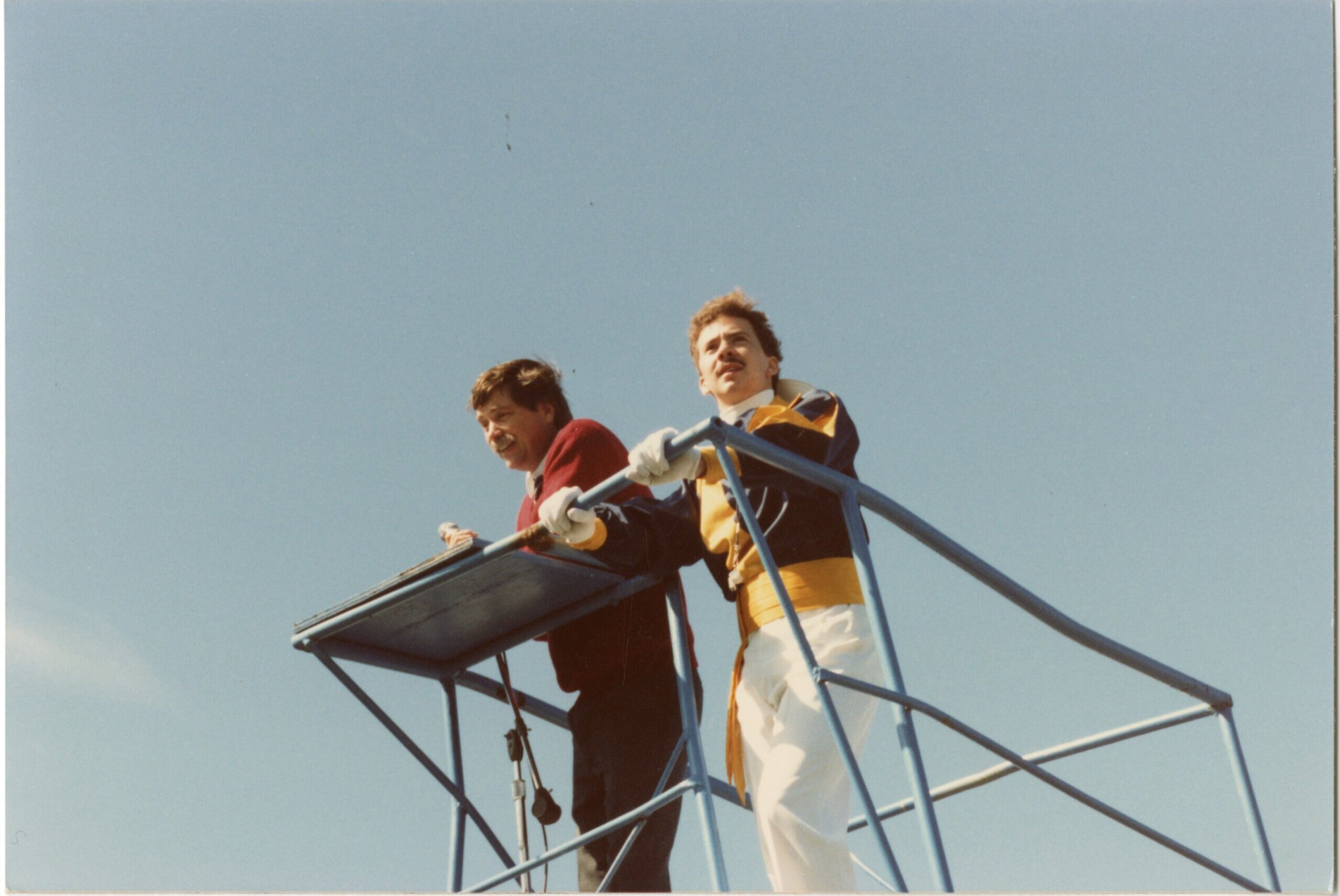
Crocker was director of bands in fall 1980, when Kearney State College was celebrating the 75th anniversary of its founding. Led by legendary head coach Claire Boroff, the football team was in the midst of an impressive run at that time, winning nine straight conference championships from 1972-80 and reaching the NAIA playoffs three times.
“I wrote the Color Song for a very practical reason,” Crocker said. “Our football team was doing really well. They were scoring a lot of touchdowns, so every time we turned around we were playing the fight song. And it got really old playing the fight song that many times in a game.”
He laughed.
“I thought, well, we need something else, so I just sat down and wrote the thing.”
There was no music notation software to speed up the process. Crocker likely worked through some ideas at the piano, made a few sketches, then wrote out each instrumental part by hand.
“I used to finish things at the kitchen table,” he said. “And it was probably 3 in the morning when I finished all the parts.”
Crocker wanted something concise, energetic and memorable – a piece Loper fans would quickly recognize.
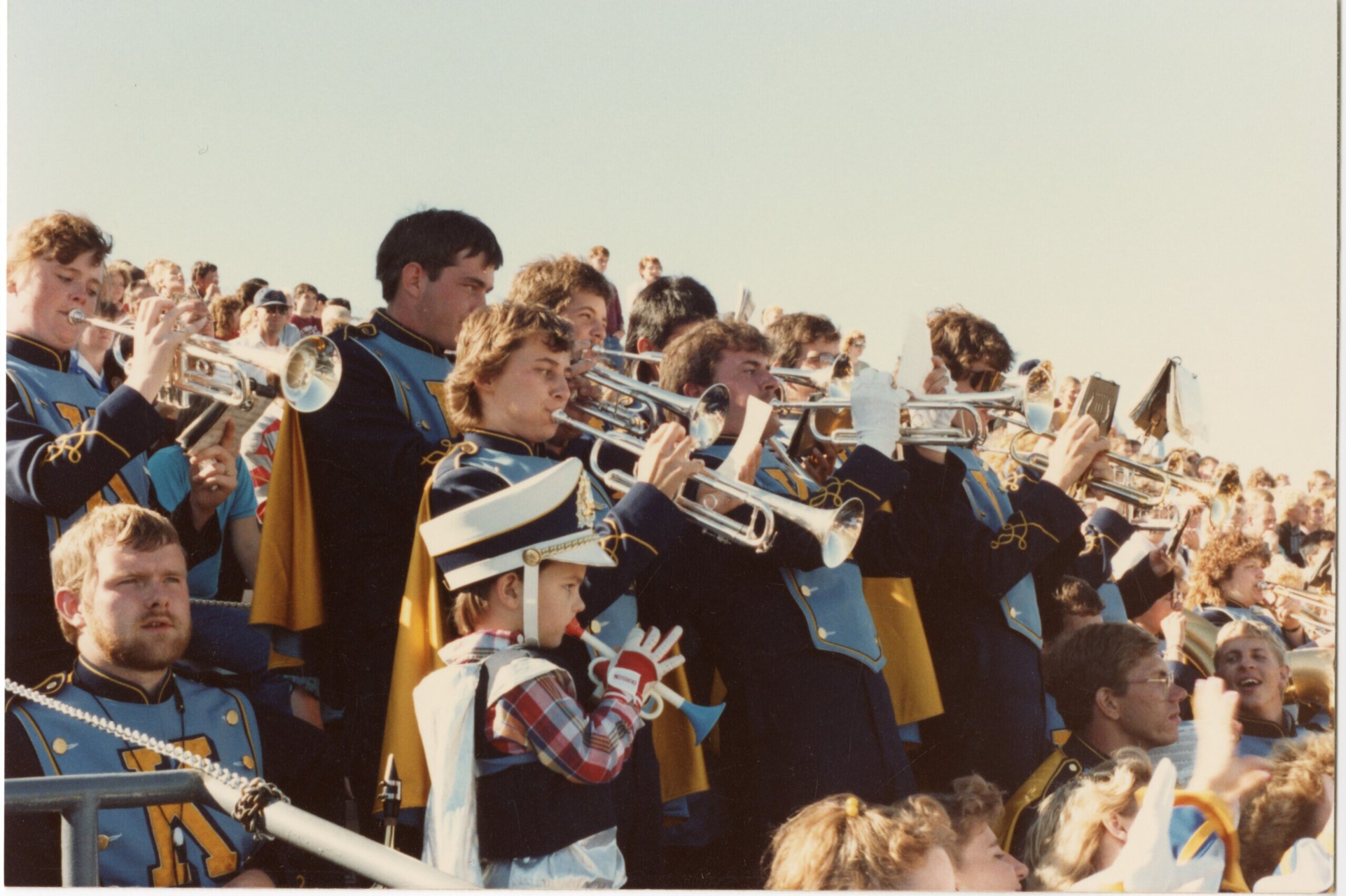
Current Director of Bands Brian Alber, himself a UNK alumnus, believes he accomplished exactly that.
“The opening fanfare in the trumpets immediately catches everyone’s attention,” Alber said.
Chancellor Neal Schnoor knows the piece from a musician’s perspective, too. He arrived at UNK in 1997 as associate director of bands and later served as director of bands from 2008-10. He points to the catchy main melody, syncopated rhythms and musical transitions that keep the relatively short piece interesting from beginning to end.
Crocker even surprised himself with one of the song’s most popular elements.
After finishing the main melody, another tune kept floating through his head. He decided to see what happened when he paired the two.
“The second time through the main theme, the countermelody and the melody are playing against one another,” Crocker said. “And it just worked. I had no idea that funny melody in my head was going to work with that one over there.”
It certainly worked for the trombones, saxophones and other musicians who get to play it.
“All of the people who play that countermelody really get into it,” Crocker said with a smile. “And the people who don’t play it are jealous, I think.”
The Color Song received only about a week of rehearsal before the band premiered it during the 1980 homecoming football game, a 21-21 tie against longtime rival Fort Hays State.
“I probably just tossed it at them and said, ‘Here we go,’” Crocker joked.
The piece stuck.
Adding a Loper Voice
UNK bands continued to perform the Color Song in the years that followed. However, something was missing.
It didn’t have lyrics.
That would change thanks to a student in one of Crocker’s music composition classes.
When someone asked about adding words to the Color Song, Crocker invited his students to take a shot at it. Barry McFarland was immediately interested.
“I was like, ‘You know what? Done,’” McFarland recalled.
Over the next couple weeks, he studied other school songs, shared drafts with friends and revised his lyrics.
There was also another consideration. Kearney State College had joined the University of Nebraska System in 1991 and became the University of Nebraska at Kearney, so McFarland wanted the words to reflect that identity.
Eventually, he had something he was willing to show Crocker.
“I would say after a couple weeks it was at a spot where I thought, ‘OK, I can present this and not be completely embarrassed,’” McFarland said with a laugh.
The lyrics made their way from Crocker to then-Chancellor Gladys Styles Johnston and eventually to the University of Nebraska Board of Regents for approval.
“It just kind of spiraled out of control,” McFarland joked. “It really snowballed and I ended up writing a school song.”
He’s quick to give most of the credit to his former professor.
“Dr. Crocker wrote a good song, so that made it easy,” McFarland said. “I think he did the hard part. The song, for a music ensemble, is fantastic. Just the different pieces that he brought together and how he can hear all of that in his head. God bless musicians like that.”
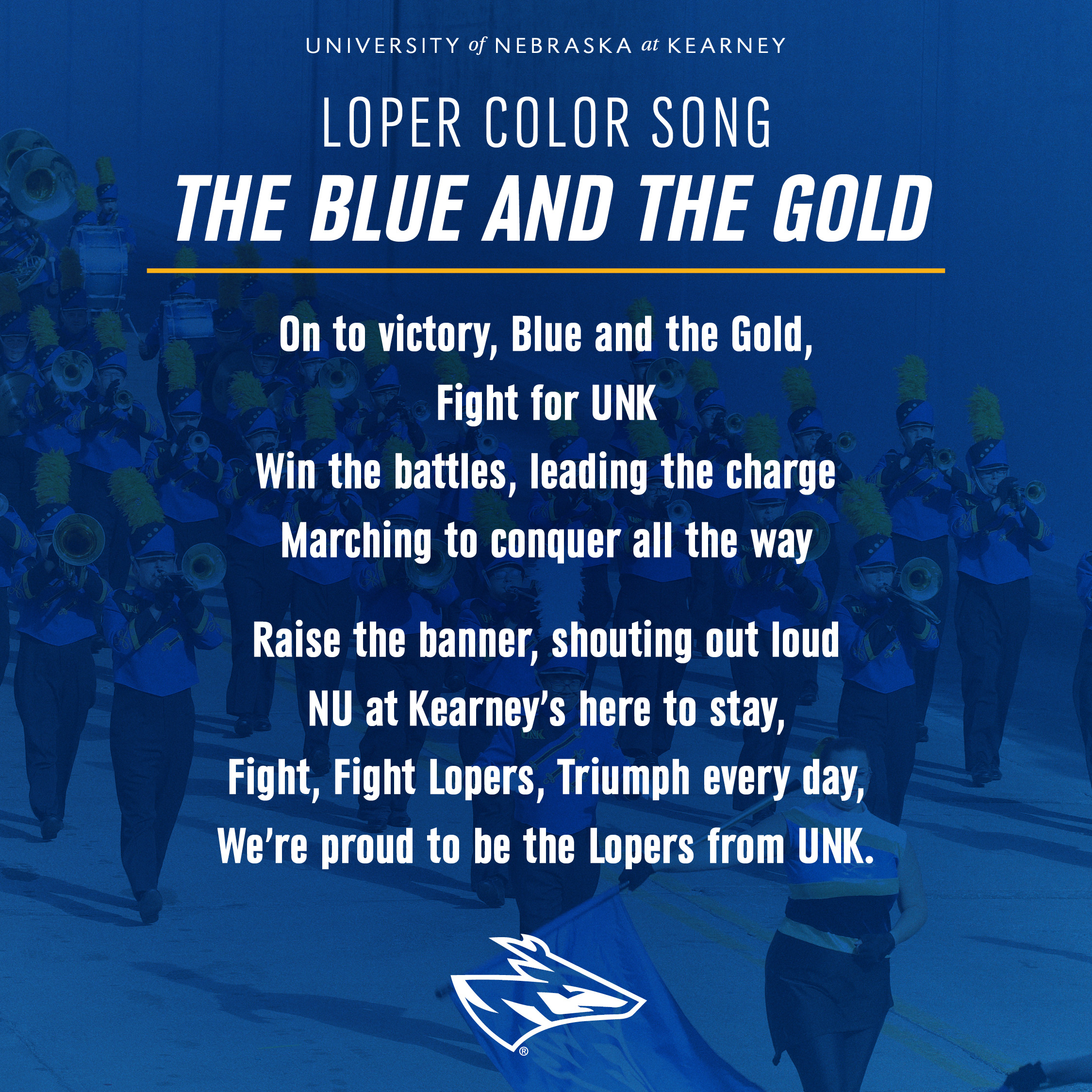
The finished product gave Lopers these words to sing:
On to victory, Blue and the Gold,
Fight for UNK
Win the battles, leading the charge
Marching to conquer all the way
Raise the banner, shouting out loud
NU at Kearney’s here to stay,
Fight, Fight Lopers, Triumph every day,
We’re proud to be the Lopers from UNK.
Schnoor especially appreciates that final line.
“We’re proud to be the Lopers from UNK” captures what the song has come to represent, he said.
A Shared Tradition
McFarland didn’t simply write the lyrics. He got to perform them, too.
A French horn player, he participated in the Pride of the Plains Marching Band, Wind Ensemble and other instrumental and vocal groups while earning his bachelor’s degree in elementary education with a music minor.
His ties to UNK go back even further.
McFarland’s parents were living in the former University Heights campus housing when he was born. His father Max is a Kearney State College alumnus who spent nearly 30 years on the UNK faculty, serving as a professor, program director and chair in the Department of Counseling and School Psychology, and his mother Theresa taught in the same area.
“UNK has been part of me since the very beginning,” McFarland said. “It’s been my life. I grew up there. I did everything there because my dad was a professor there.”
That continued when McFarland became a student. Along with his many musical activities, he worked for the Chancellor’s Office and served as a Chancellor’s Ambassador.
“I took the full meal deal while I was at UNK,” he joked. “If you could be in it, I said, ‘Yes, let’s do it.’”
The Lexington native received his bachelor’s degree in 2000 and later earned two graduate degrees in educational administration from UNK. He built his career in his hometown, where he currently serves as principal at Sandoz Elementary School and helps run his family’s business, Mac’s Creek Winery and Brewery.
McFarland remains a familiar face at UNK, with season tickets for football, volleyball and basketball and regular appearances at concerts and other campus events.
“You name it, I’m there,” he said.
He’ll definitely be back for this week’s homecoming festivities. And when the band strikes up the Color Song, you know he’ll be singing along.
“When you think about it, it’s really kind of cool,” McFarland said. “I guess that’s my mark on UNK. It’s cool to still hear the song and be part of that tradition.”

The same is true for Crocker, who served as UNK director of bands for 20 years before transitioning to an administrative role. He retired in 2012 after a nearly 50-year career at UNK but still lives in Kearney and hears his composition regularly.
Of course, the longtime band director can’t help listening with a critical ear.
“The trouble is I am always analyzing who is playing what and if they’re playing it correctly,” Crocker said with a laugh. “But they are. They do a good job.”
For Alber, that connection to Crocker gives the Color Song added significance.
“To have a school song that was written by someone who is such a vital part of building the marching band community that we have today is particularly important,” he said.
Schnoor sees an even greater connection.
Each performance brings back memories of Crocker and other impactful UNK faculty, the students who learned from them and the thousands of musicians who have performed these songs through the years. Add in the athletes, coaches, cheerleaders, dancers, alumni and fans who know those same melodies, and a relatively short piece of music becomes something much bigger.
It creates a shared sense of place and camaraderie across generations, Schnoor said, carrying part of the university’s tradition from one year to the next.
That’s especially fitting during homecoming week.
Forty-six years after its debut, the UNK Color Song is still doing exactly what Crocker intended.
The trumpets sound, the melody takes off and Loper fans know exactly what’s coming.