By HEIDI KNAKE
UNK Communications
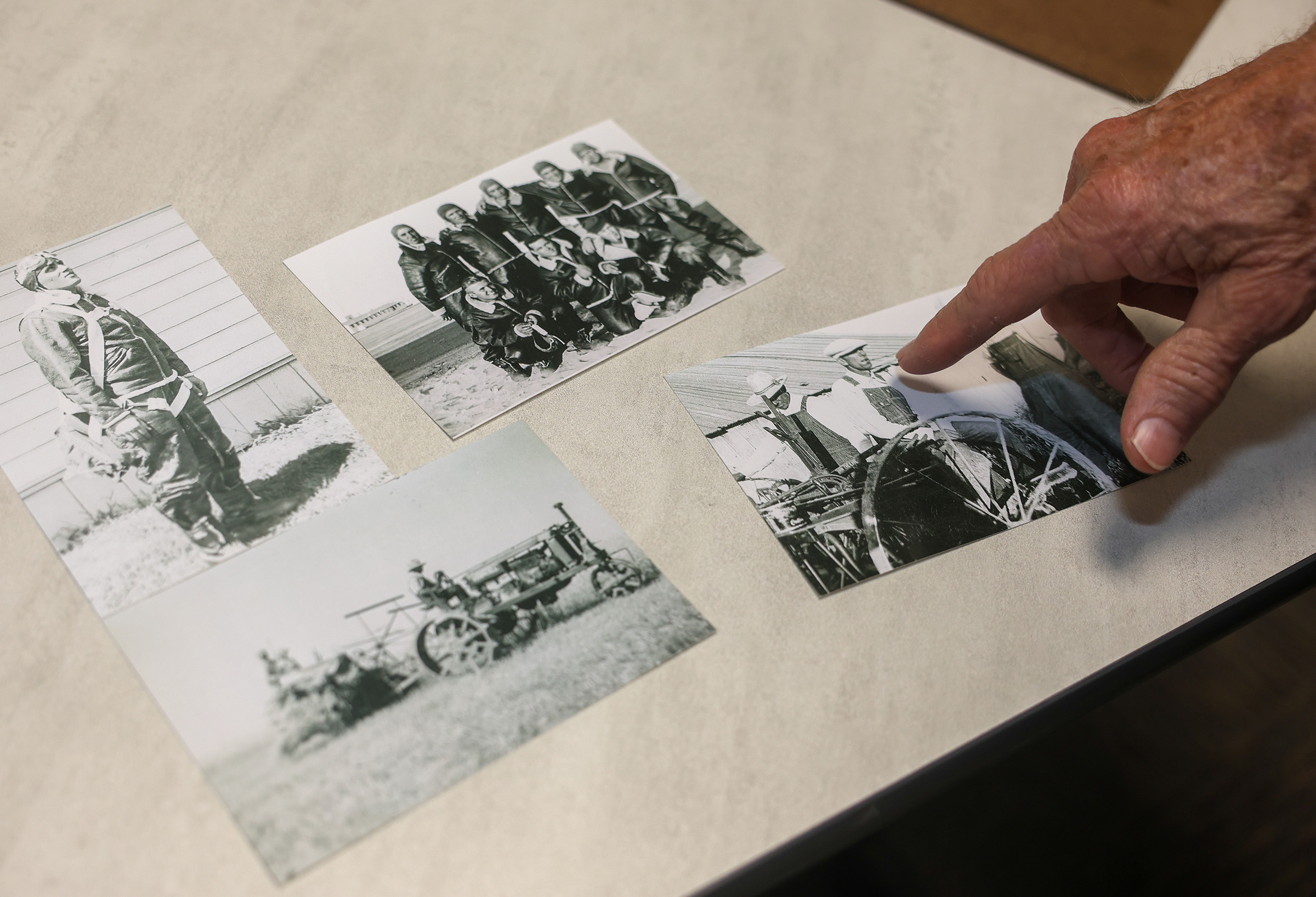
KEARNEY – Robert “Bob” Johnson, a Vietnam veteran from Sumner, slowly walks into Kearney’s Peterson Senior Activity Center with four pieces of his family history tucked safely in the front pocket of his button-up shirt.
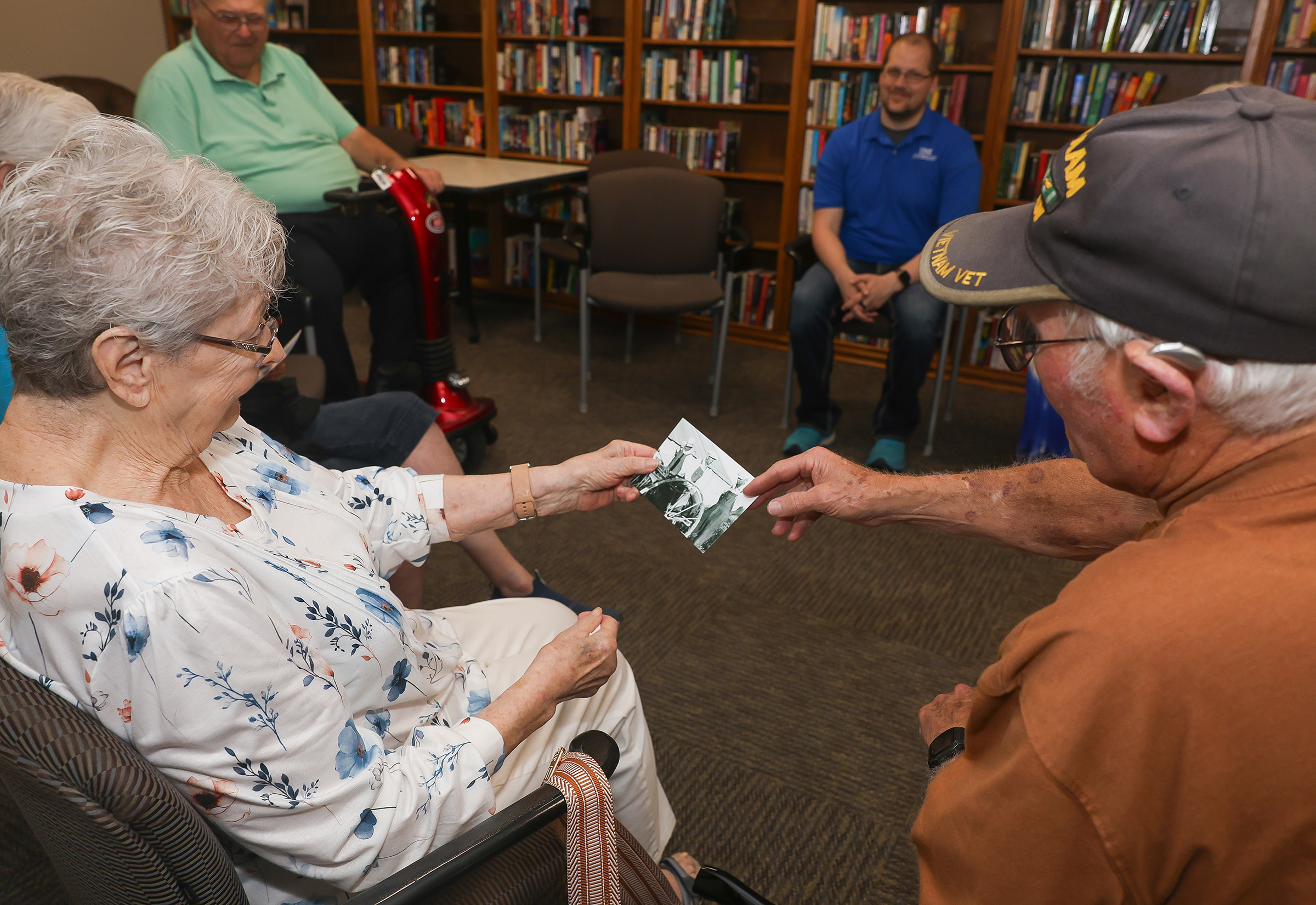
Before choosing his seat among a circle of chairs, Johnson reaches into his pocket, carefully pulling out the faded black-and-white photographs.
“This is my dad with his brothers working on our family farm up by Sumner,” he says, handing the photos to University of Nebraska at Kearney graduate student Kyle Harshbarger.
Harshbarger studies each photograph with genuine curiosity, asking about each family member and listening as Johnson’s stories unfold.
This moment is exactly why Harshbarger and fellow clinical mental health counseling student and co-facilitator Mason Morhain decided to create the group.
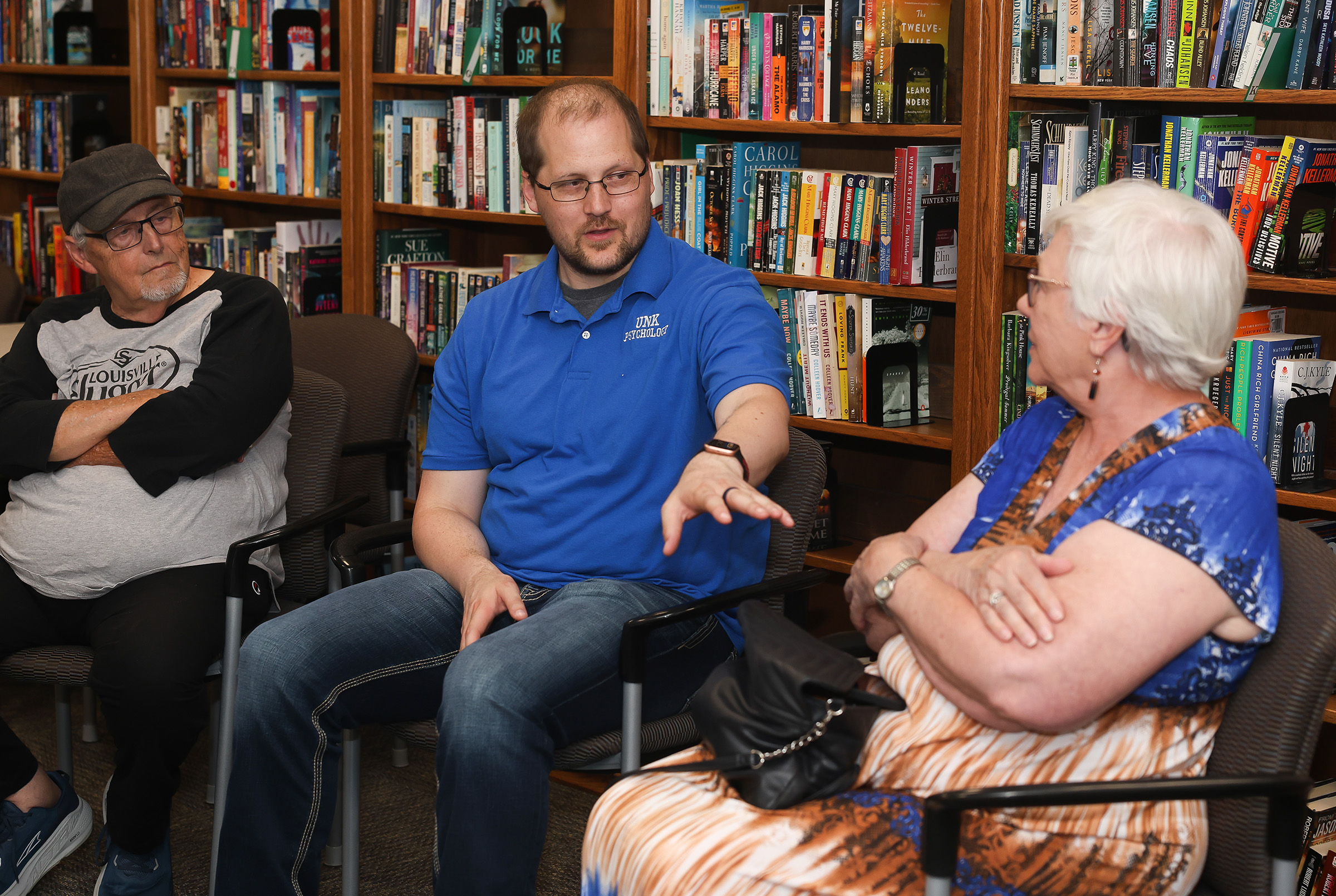
“Our group is a reminiscence therapeutic group for seniors that encourages our members to recall and talk about their positive memories and experiences throughout their lives,” Morhain explained.
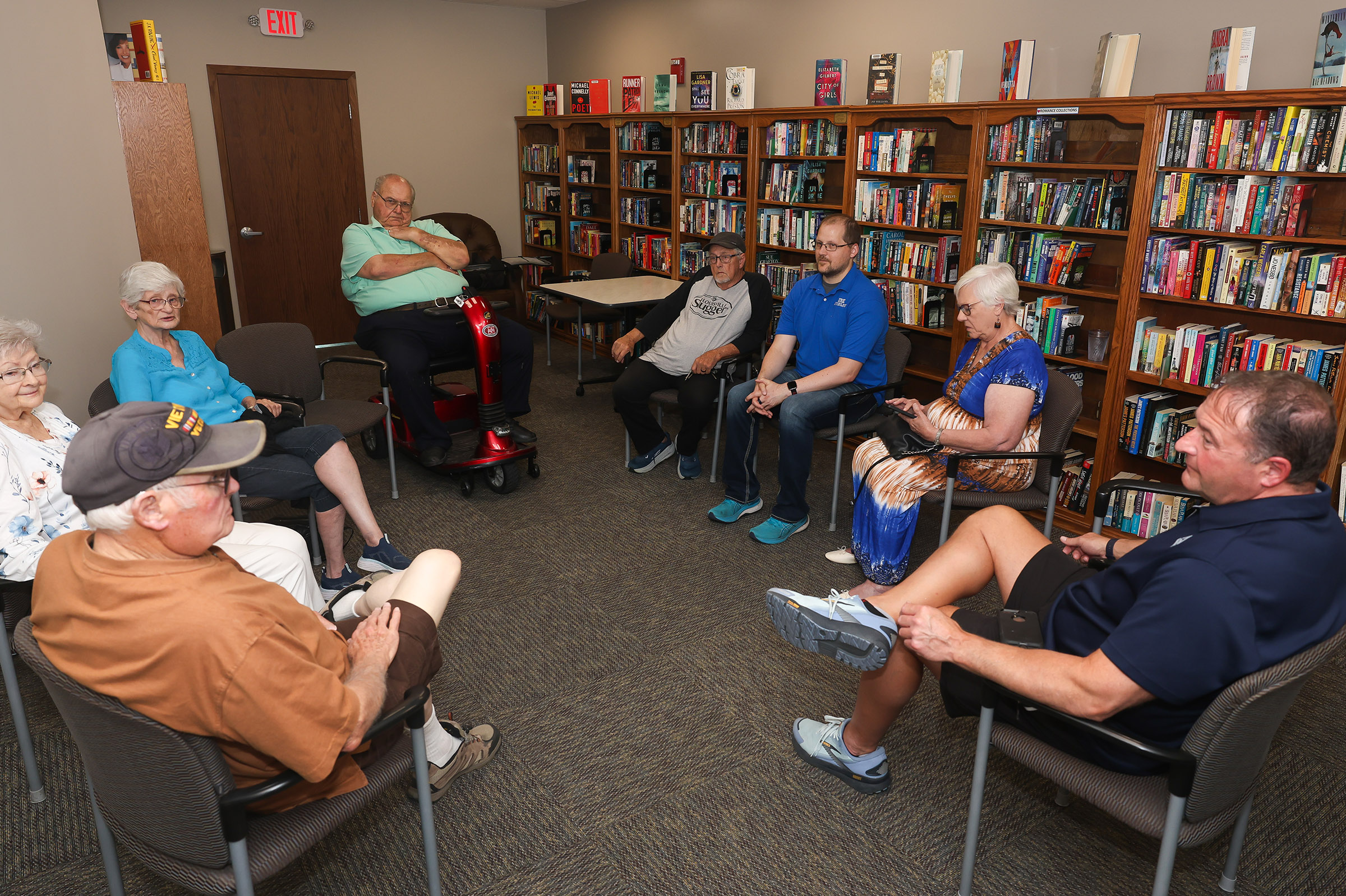
Every Wednesday afternoon, the small library at the senior center located on the north side of Yanney Heritage Park transforms into something of a time machine.
Not the DeLorean that Marty McFly drives in the 1980s film “Back to the Future,” but one powered by passing around old photographs, singing Army cadences and sharing stories that have waited decades to be told.
For the past month, the two students from Kearney have facilitated this reminiscence group for adults 50 and older as part of their practicum experience at UNK. Typically, counseling students complete their practicum hours through free, one-on-one counseling sessions with members of the public, which both are doing in addition to this group.
The primary goals for the group are to provide a welcoming environment for each senior and to help them keep their brains active.
“The brain is like any other part of a human,” Morhain said. “Eventually, it will slow down and stop working. The worst thing you can do is not use it, which speeds up that process.”
Research has shown reminiscence therapy can strengthen cognitive functions, improve communication, reduce anxiety and support people experiencing early stage dementia. It also provides opportunities for social connection, helping participants maintain a sense of identity, purpose and belonging.
Unfortunately, self-isolating is common in aging adults, but this kind of group encourages members like Lina Ruah to stay active in the community.
Ruah moved to Kearney from San Diego to be closer to family after her husband’s death. She credits the group and the senior center with helping her acclimate to a new city.
“Especially as we get older, you don’t socialize as much,” she said. “This is social. It makes us think and it makes us talk.”
Johnson agrees, but he sees the trend of socialization deteriorating even sooner among younger generations.
“People don’t do this anymore,” Johnson said. “They don’t talk to each other, and that’s really sad. That’s probably why the younger generation has a loneliness epidemic.”
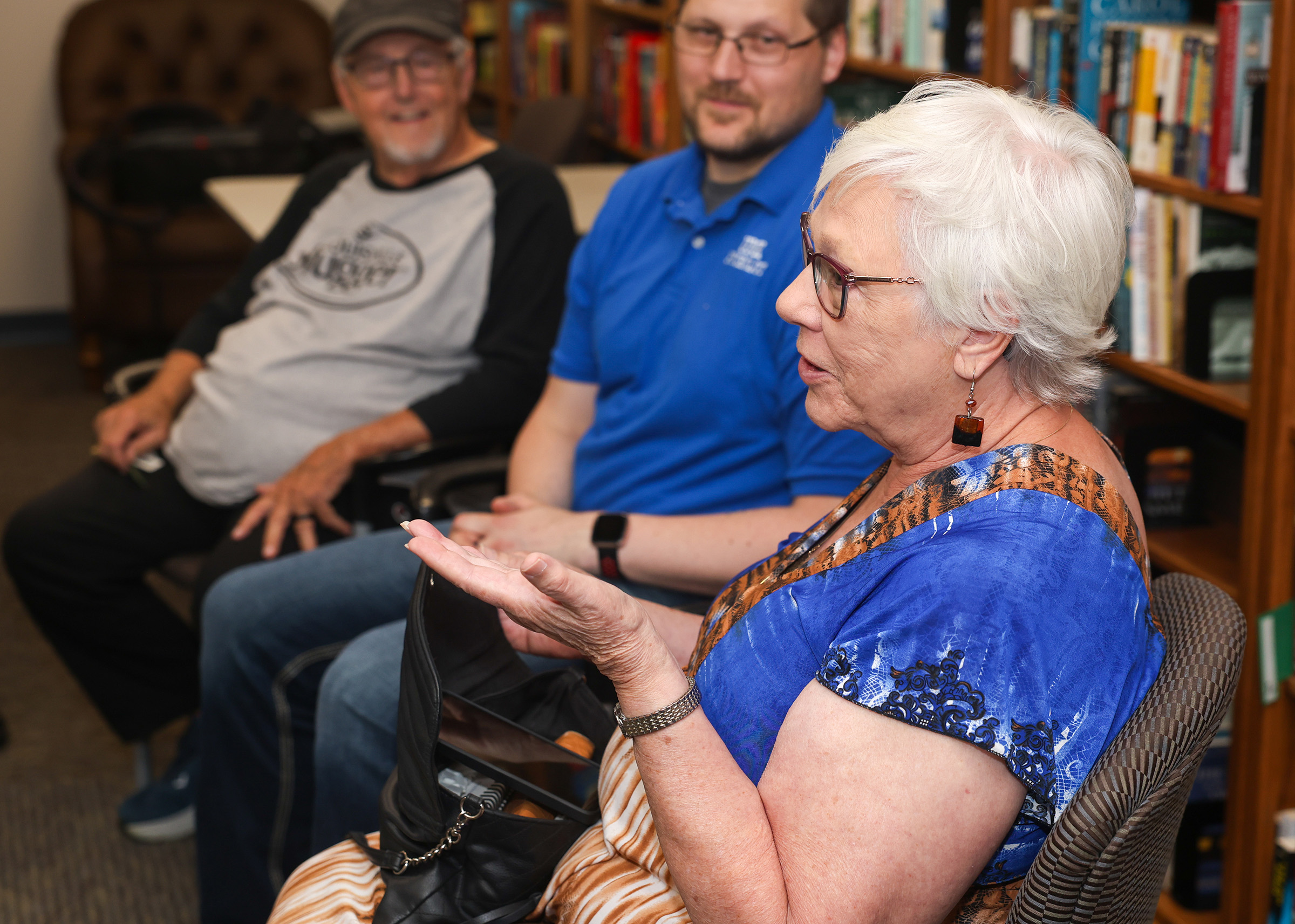
Stories Worth Sharing
Each hourlong session begins with the facilitators introducing two topics for the day. This particular Wednesday, the topics are a favorite Fourth of July memory and foods they disliked as a child.
After stories about ordering fireworks from catalogs, attending small-town celebrations and a major dislike of spinach, Kathleen Tschudin of Kearney pipes up.
“I have a funny story,” she said. “Well, I think it’s funny.”
Her story begins on Independence Day at her grandparents’ farm, where she remembers cousins spending the afternoon lighting off fireworks.
One firecracker landed too close to her grandmother’s favorite red hen. Before anyone could react, the curious chicken picked it up.
The story didn’t end well for the hen or the children who tried convincing their grandmother the chicken had simply drowned.
But the tale ended well within the group, as the room erupted in laughter.
Tschudin said these shared memories are why she keeps coming back.
“I think I just wanted to see what it was about at first,” she said. “Then it was kind of fun. I look forward to it every week.”
Although the group laughs a lot, just like life, sometimes there are tears.
“During our last meeting we had a sad moment,” Harshbarger said. “Somebody lost a family member, and the group was really good at listening. But as she talked, she had some good memories in there. Even in grief, we were able to bring up good memories.”
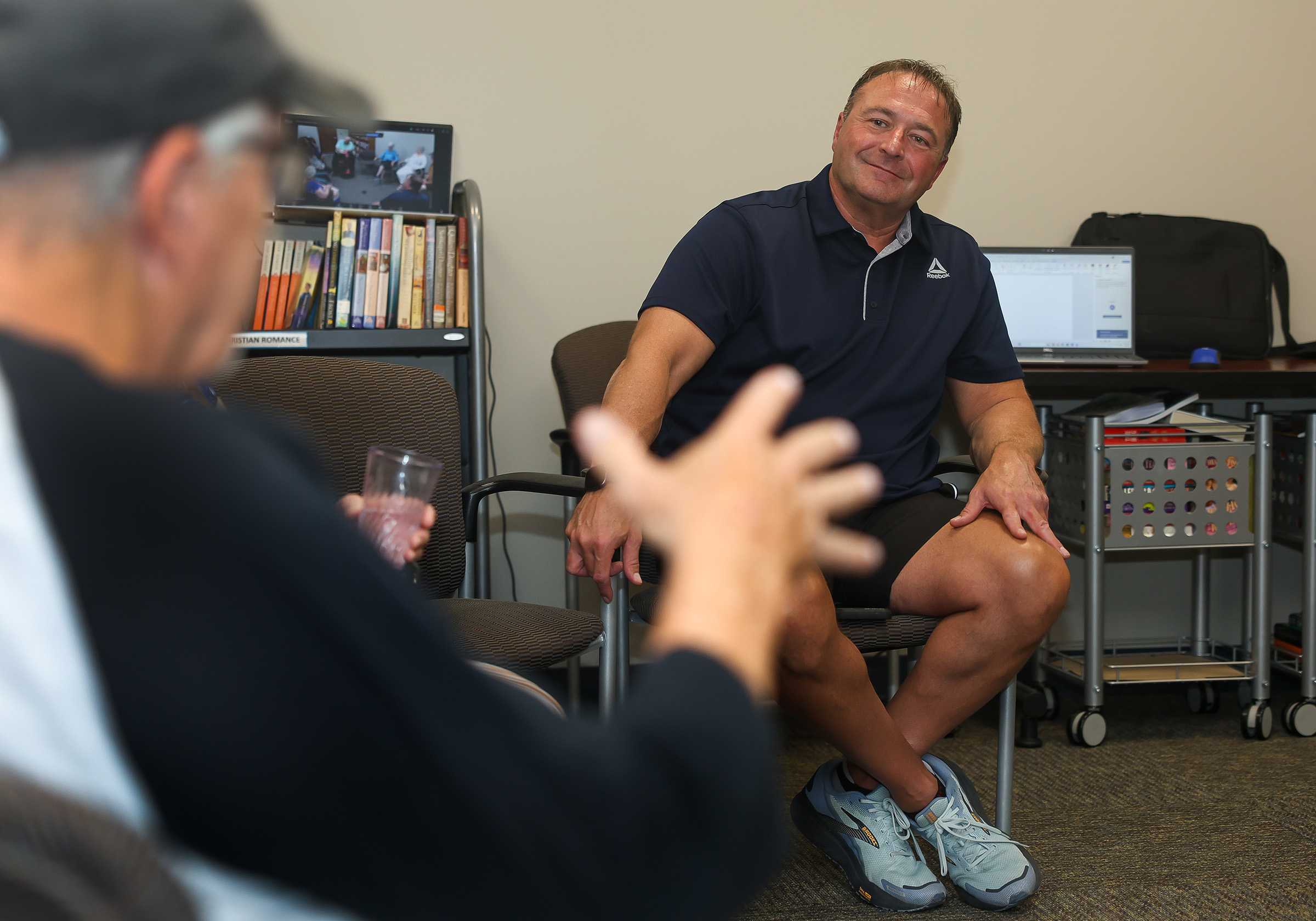
Learning to Listen
These stories – even the legend of the red hen – do more than lend a listening ear to local seniors. They’re helping Harshbarger and Morhain gain skills they’ll use to help others as future counselors.
For Harshbarger, one member of the group has known he would make a good counselor long before he enrolled in graduate school.
His father.
When Kern Harshbarger found out his son would be facilitating a reminiscence group, he immediately knew he wanted to join.
“He’s going to be a great counselor,” Kern Harshbarger said of his son. “He’s always been good with people.”
Before joining UNK as a full-time lecturer in the criminal justice department, Kyle Harshbarger served the Kearney community as a police officer for 24 years.
“When I stopped being a police officer, there was definitely a void there where I felt like I wasn’t helping people,” he said. “Some will say as a teacher I’m still helping, but it’s just different.”
His experience in the counseling program has helped fill that void while also making him a better teacher and adviser by giving him a deeper understanding of the student perspective.
The practicum experience has changed how he sees his future, too.
“Initially, I was heading toward drug and alcohol counseling,” he said. “But now I’m kind of questioning that because I love working with this group.”
Morhain’s connection to the group is rooted in a different kind of family. He enlisted in the U.S. Army Reserve at 17 and served for 10 years.
“The people I served with are not just friends, I consider them family,” Morhain said.
After graduating from UNK, he hopes to work with fellow veterans because he truly understands many of the experiences they carry. Despite the years that separate their service, Morhain feels a special connection with Johnson.
“There is a familiarity, an understanding that we – collective we, those who have served – share that allows us to connect,” he said. “Hearing Bob’s stories sounds like ones I would tell. I don’t have to work to empathize with him – it just comes naturally.”
For the two graduate students, this experience has become much more than earning hours for their required practicum.
It’s a weekly reminder that sometimes the most meaningful part of counseling is making sure someone knows their story is worth listening to.