By TYLER ELLYSON
UNK Communications
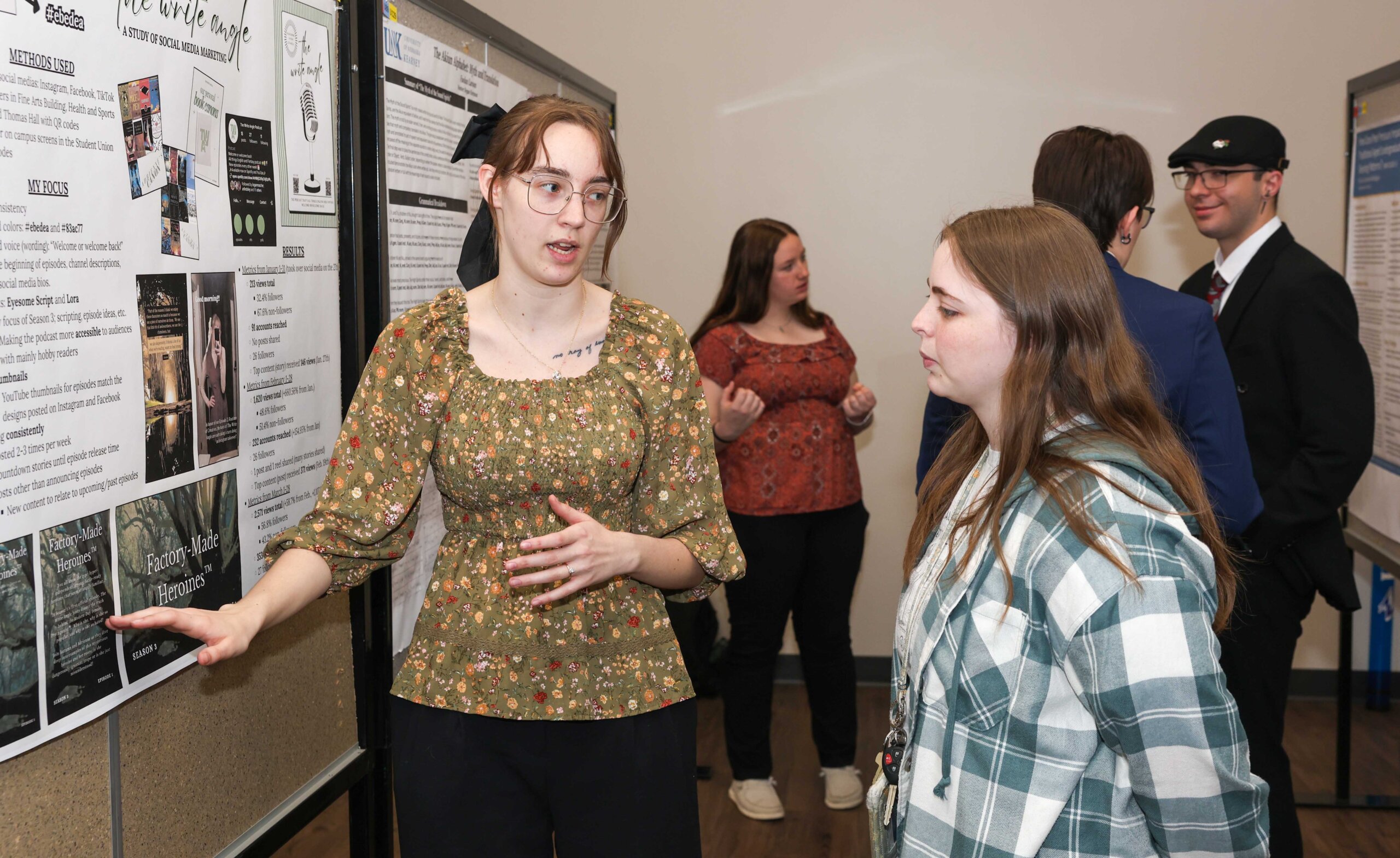
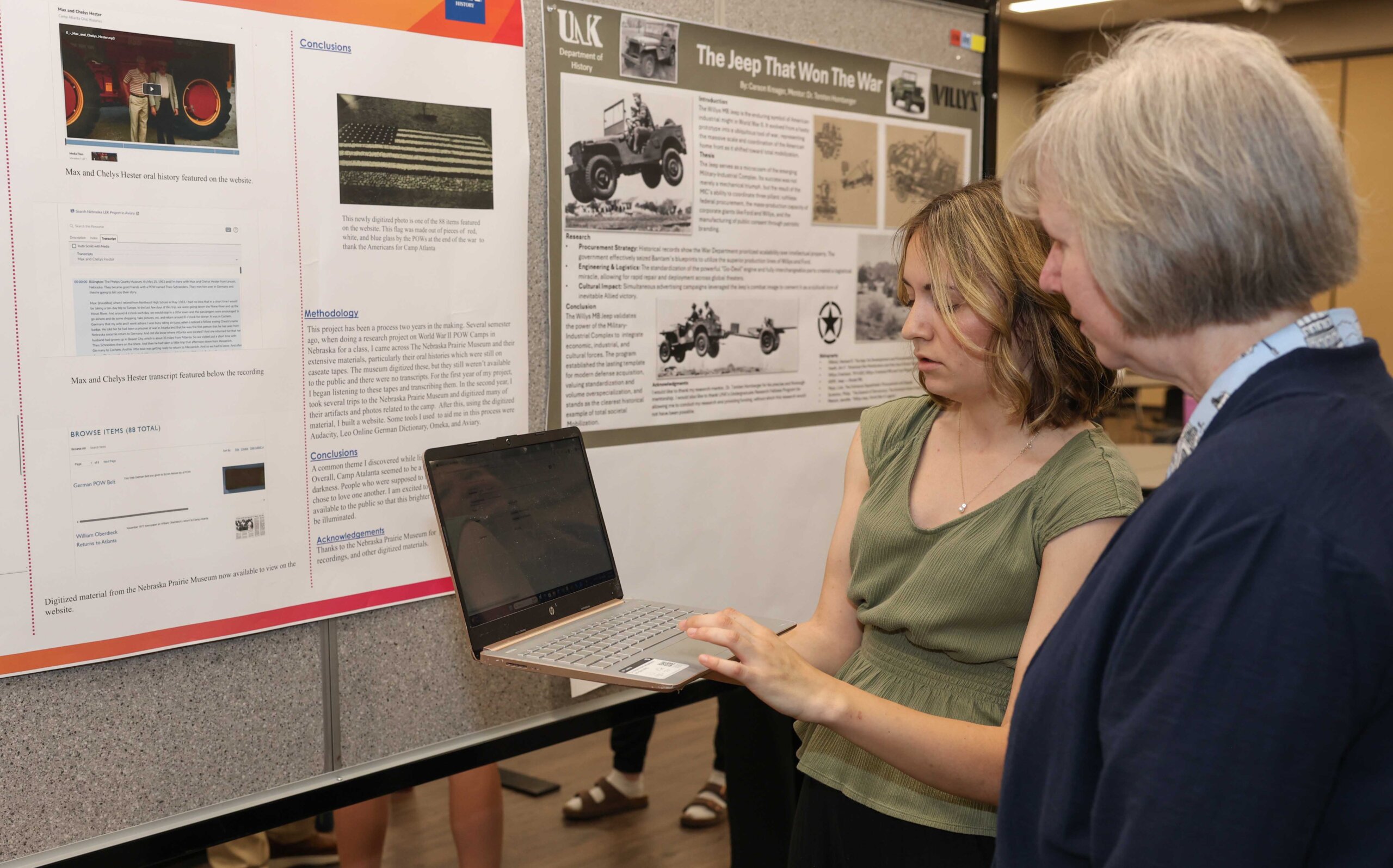
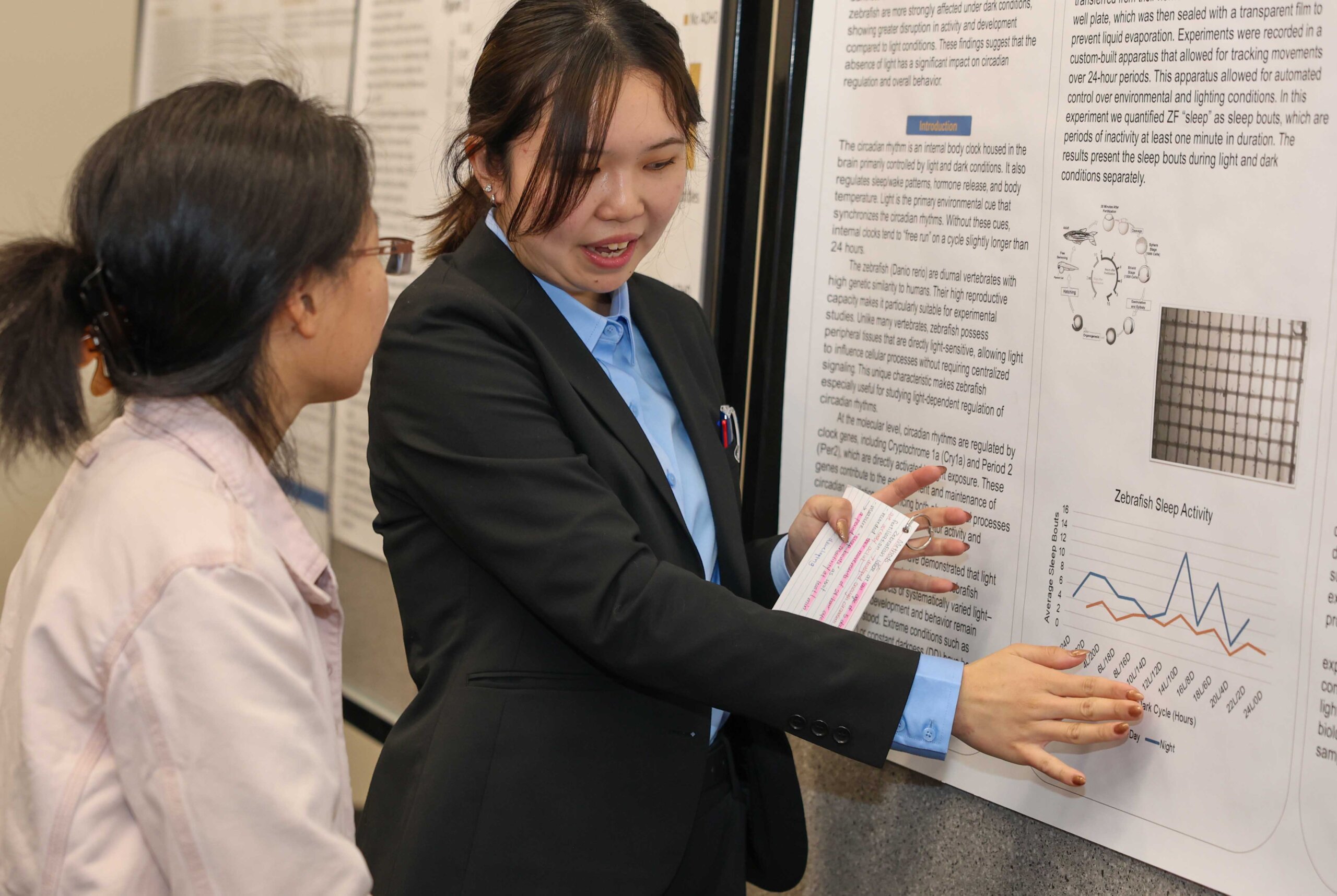
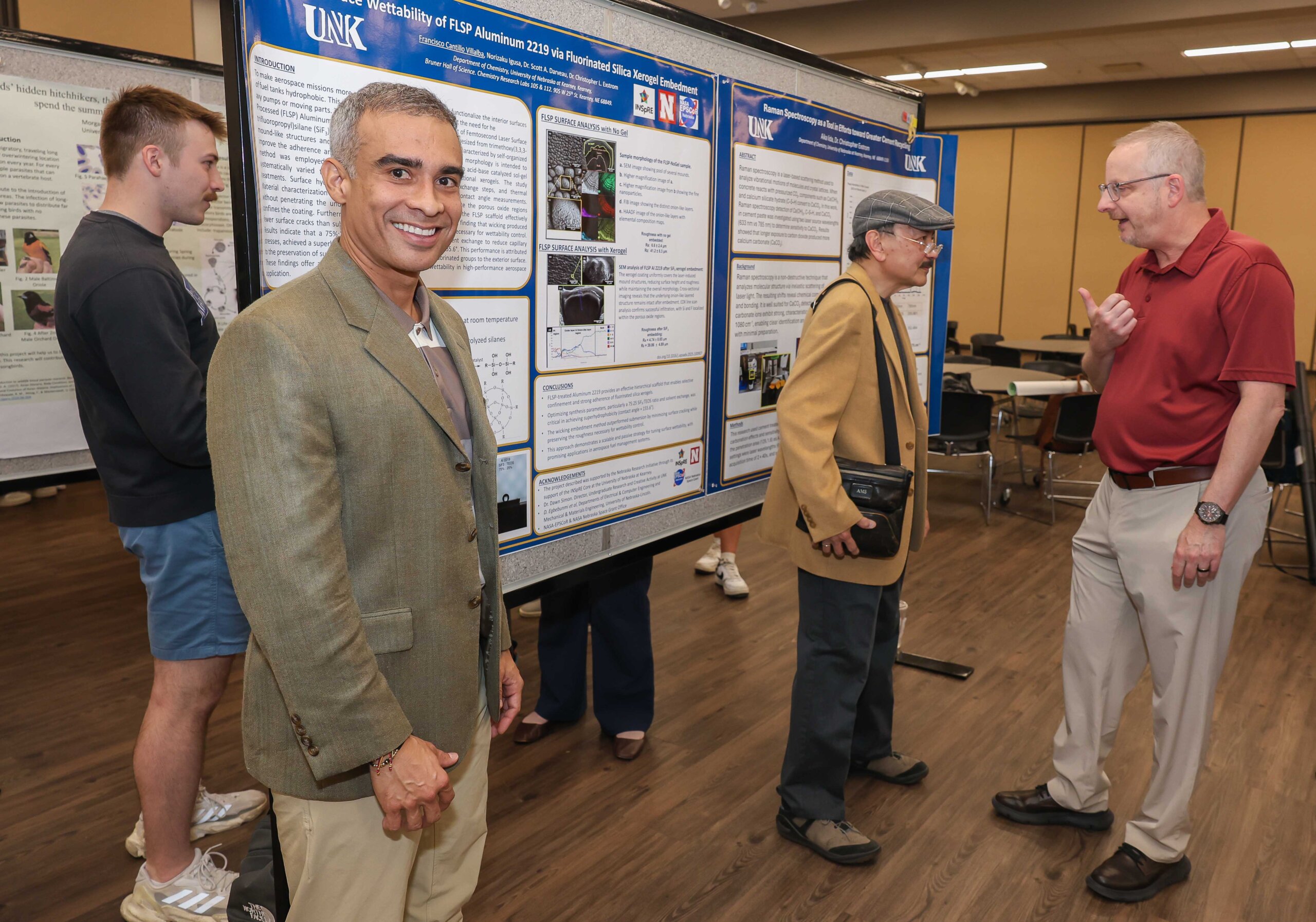
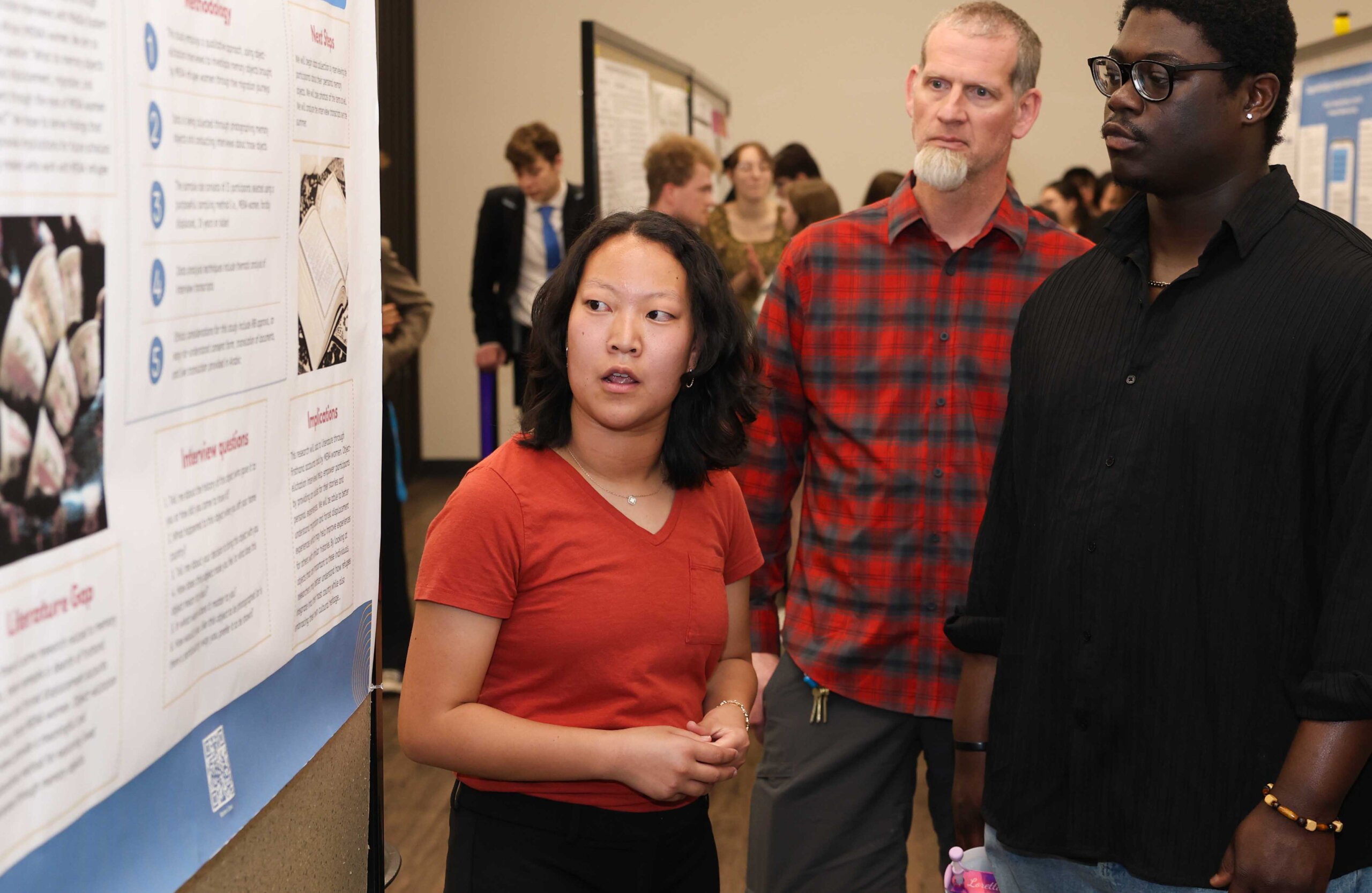
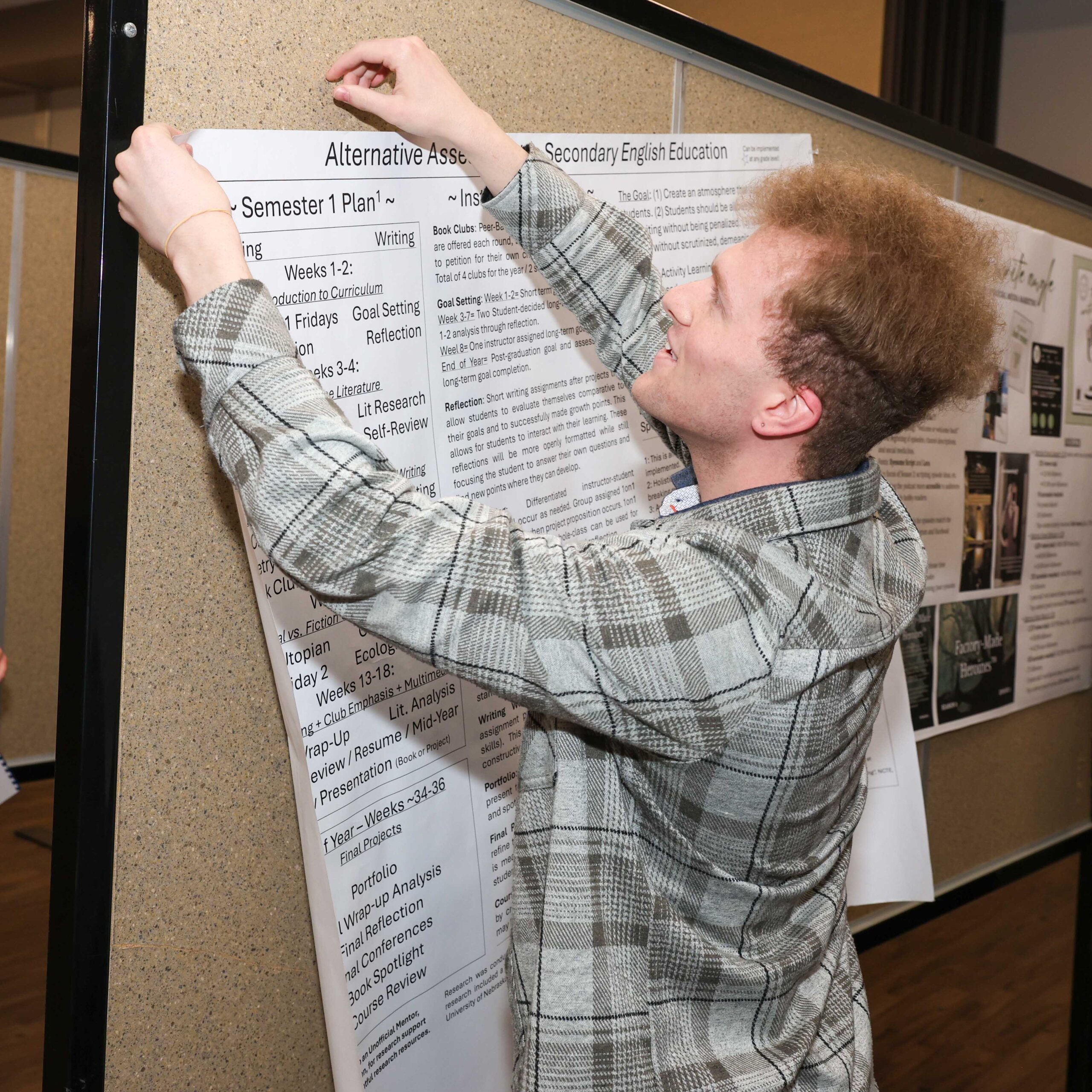
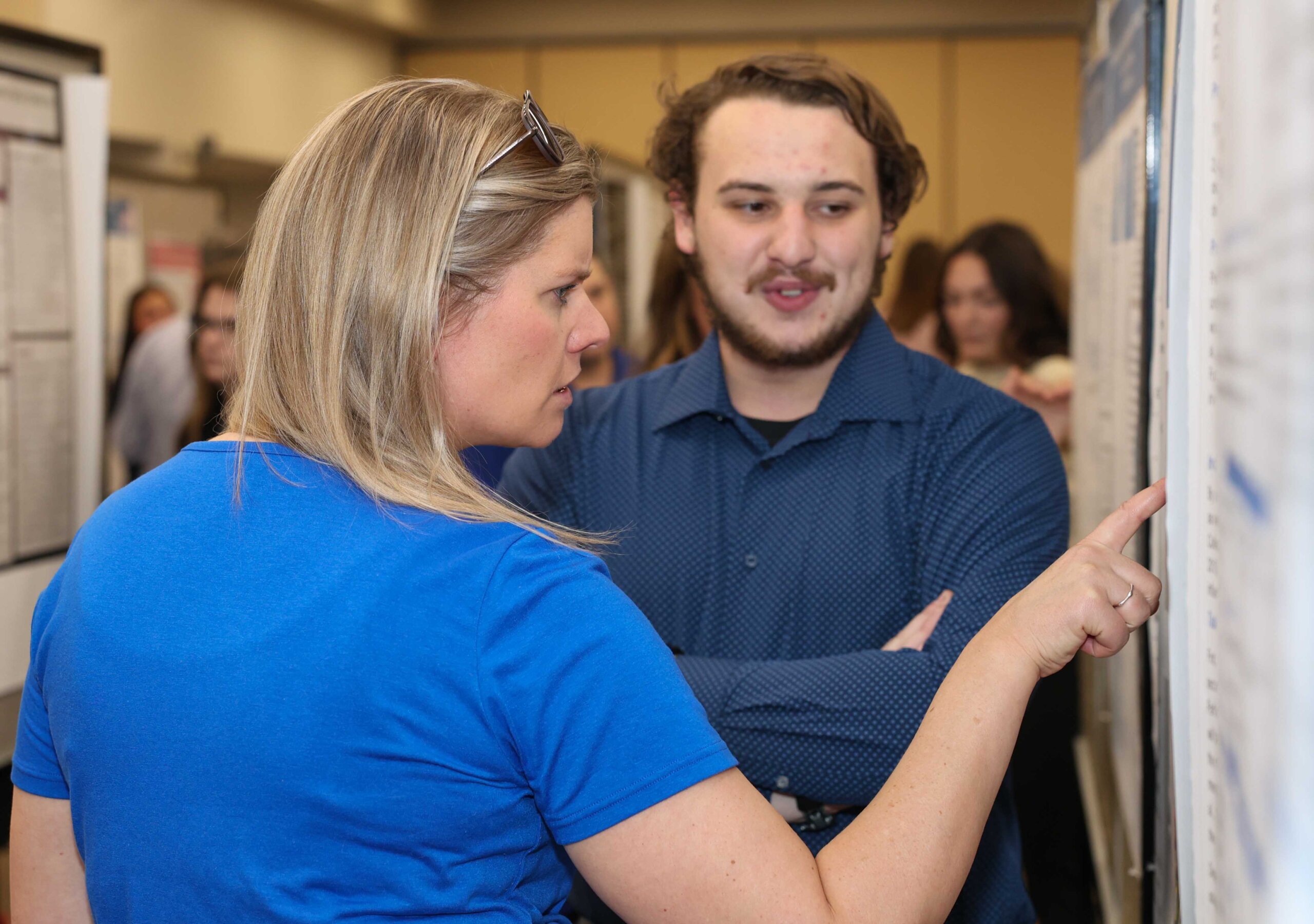
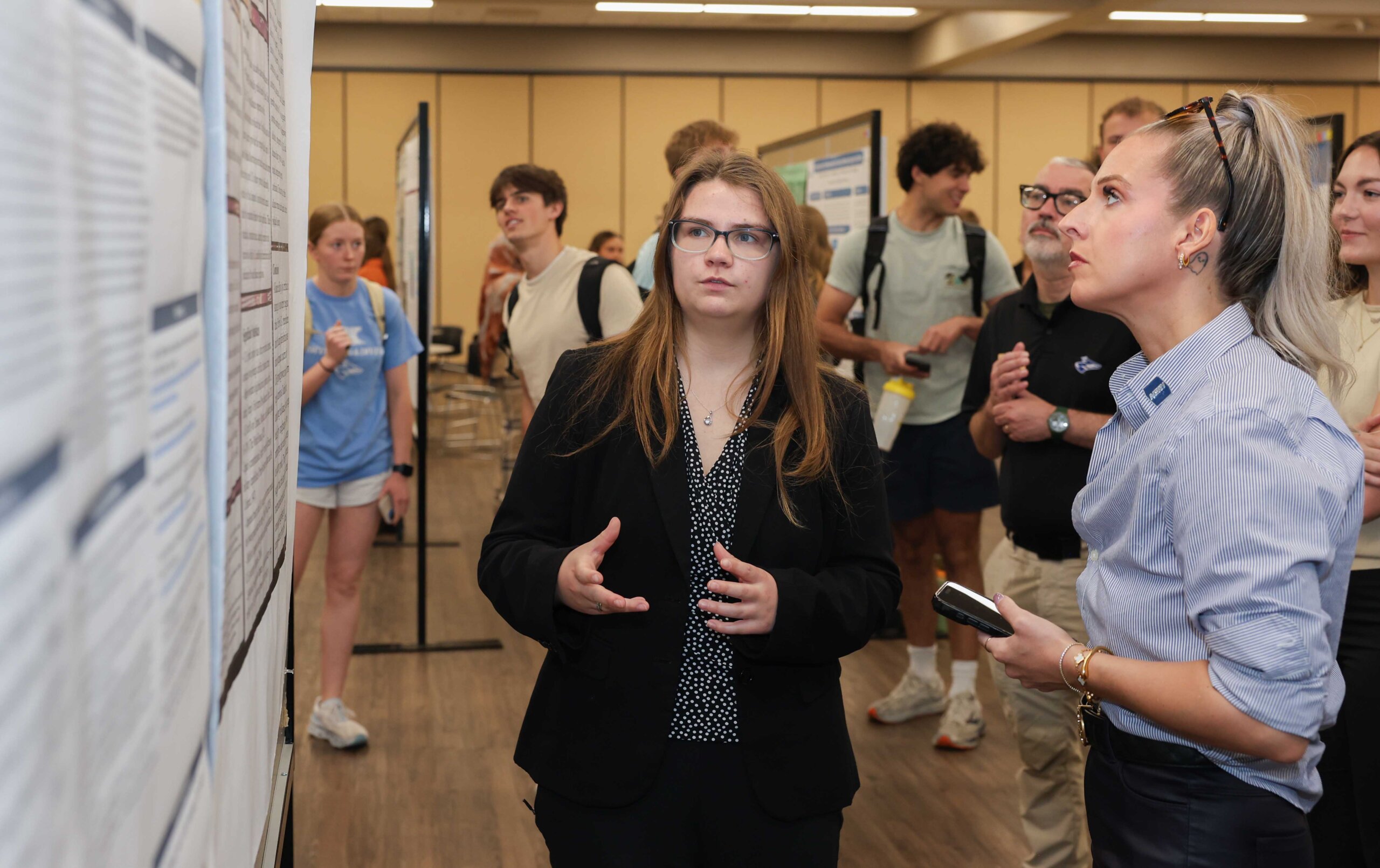
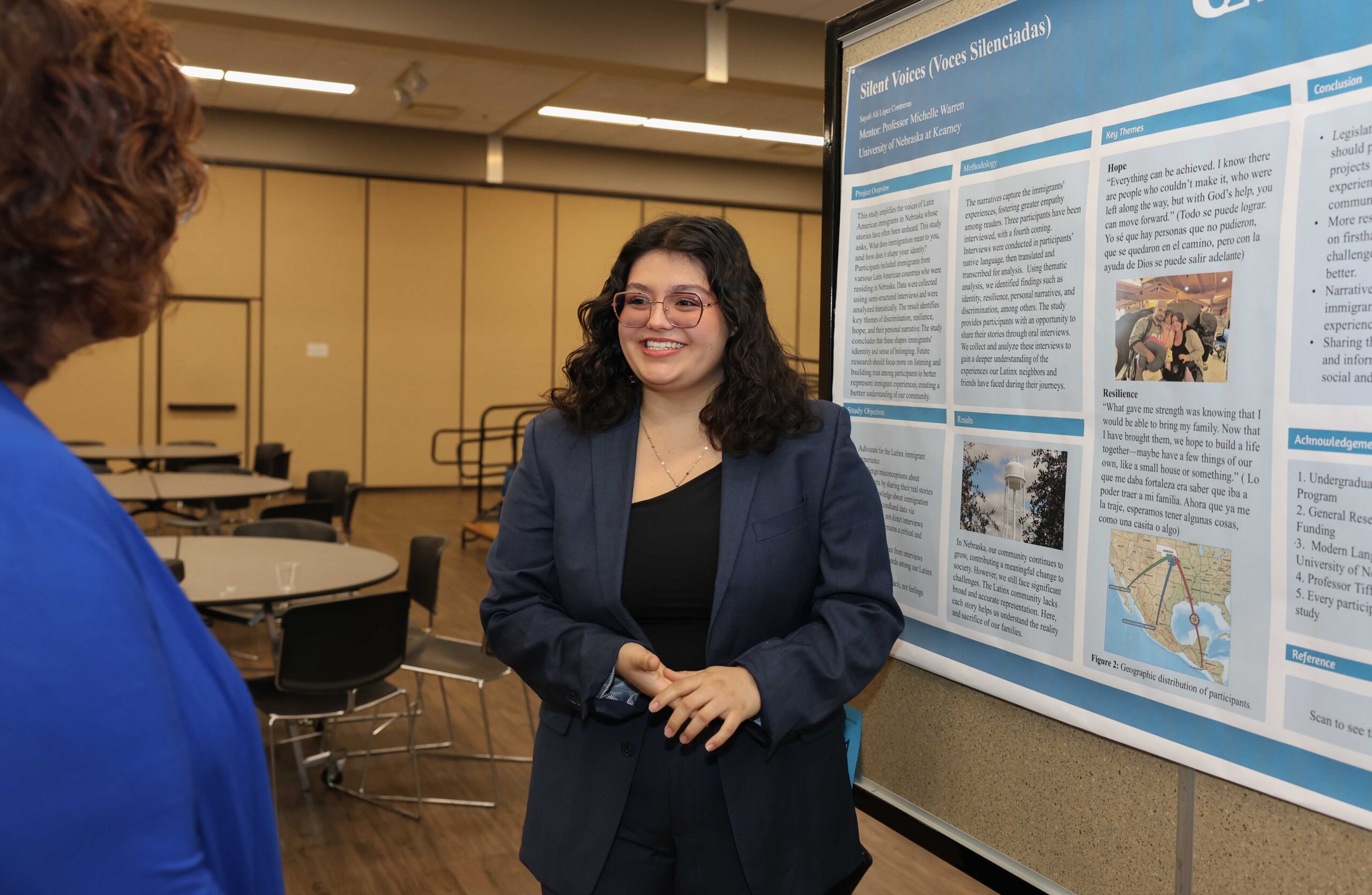
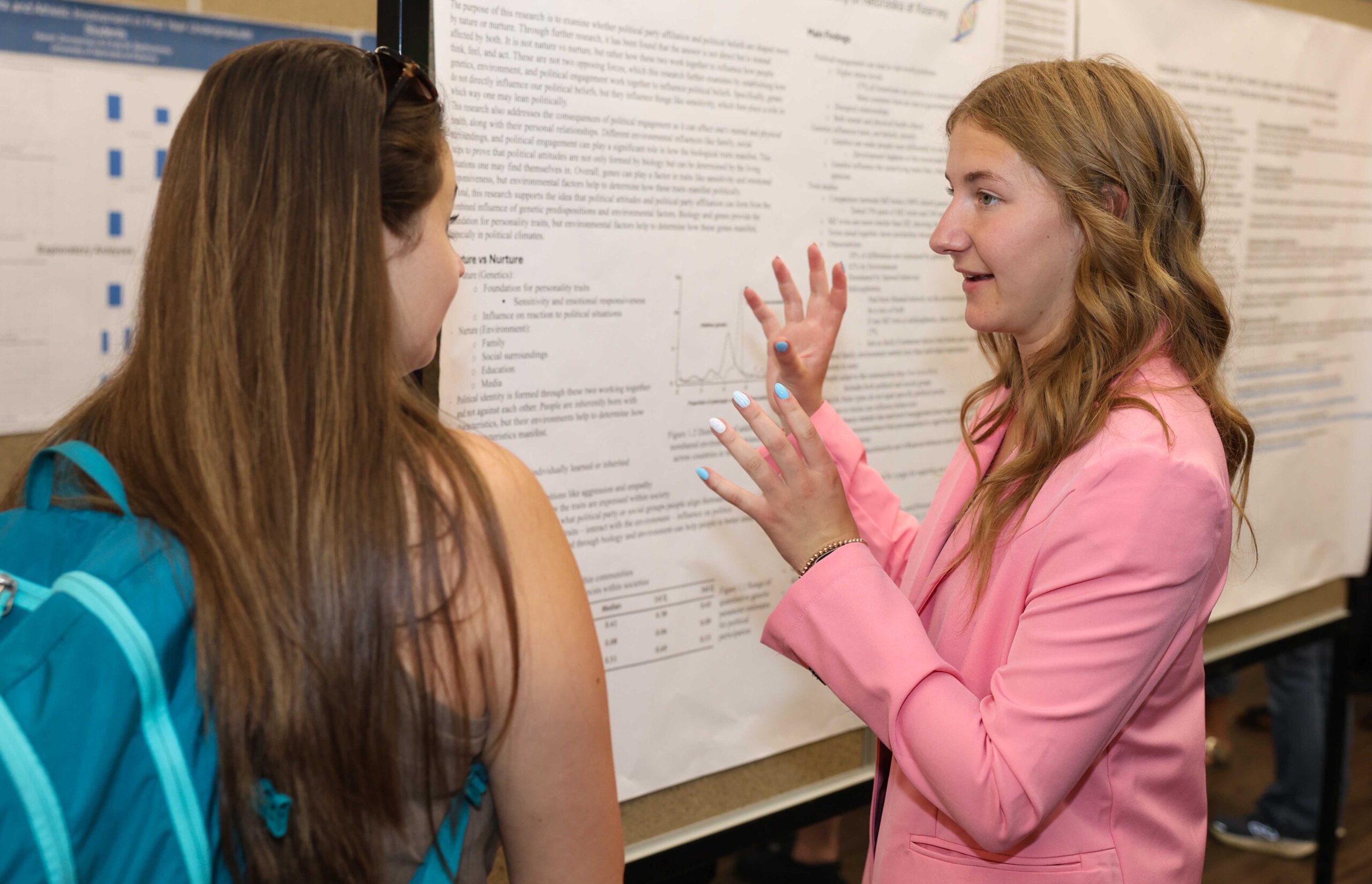
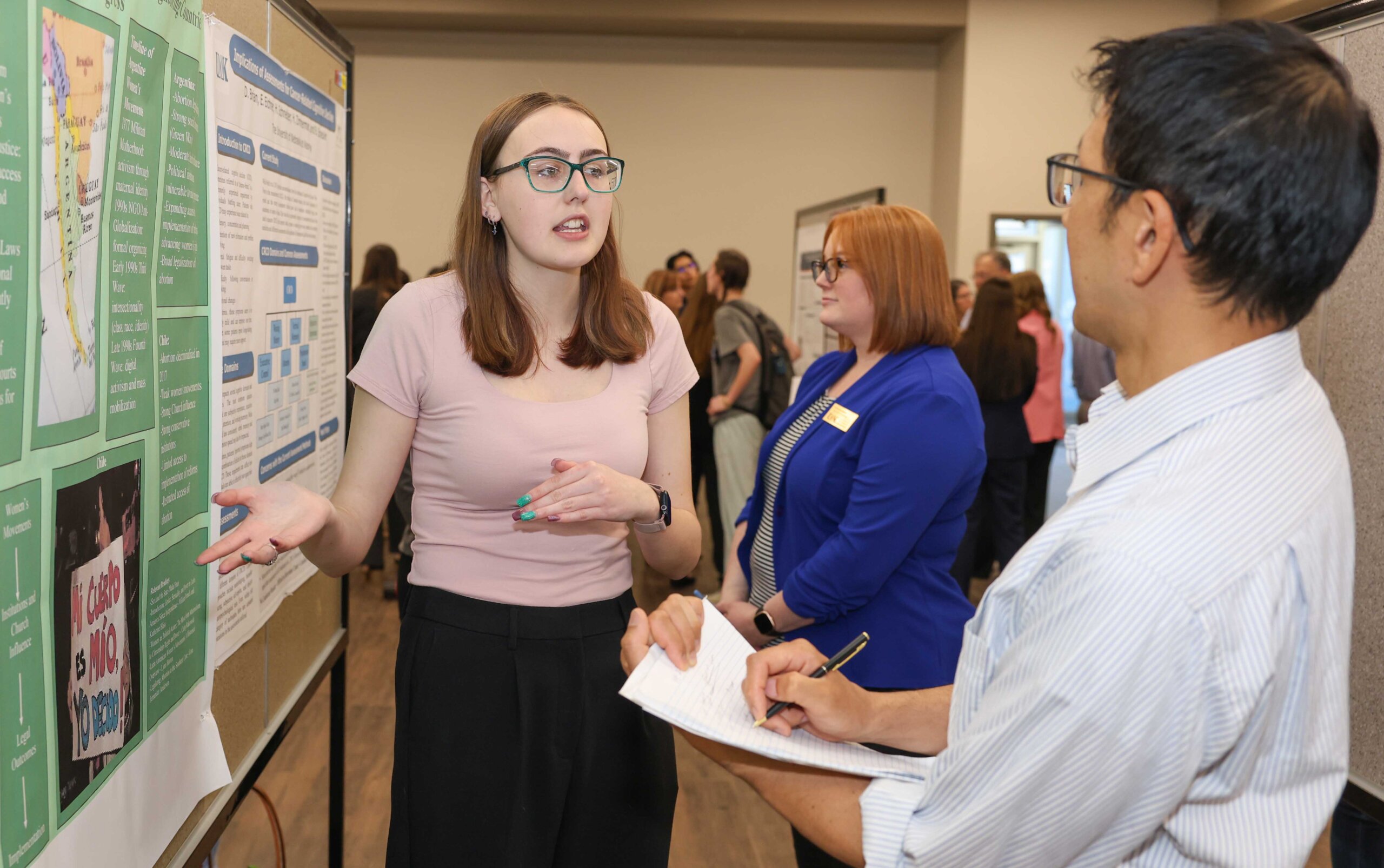
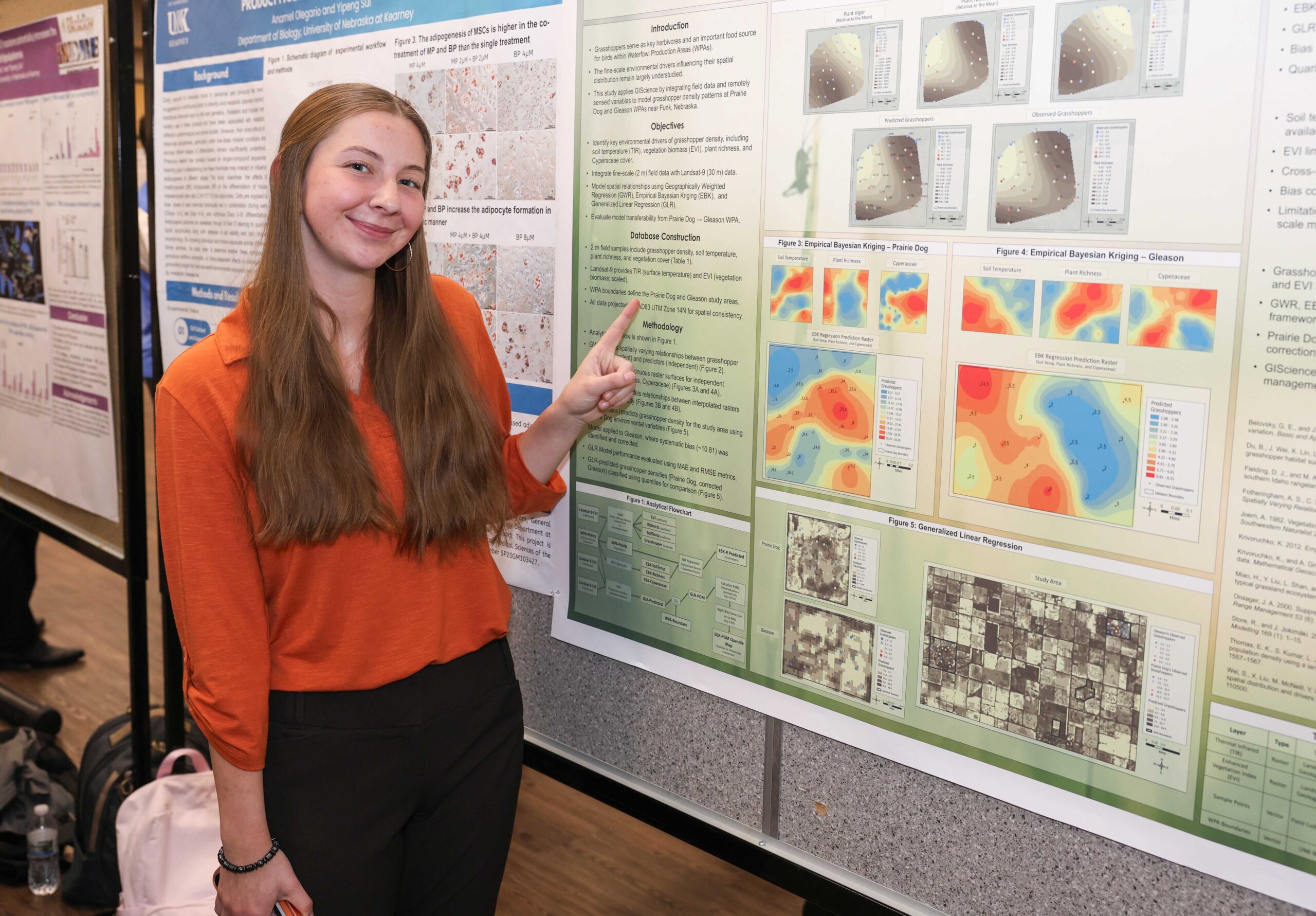
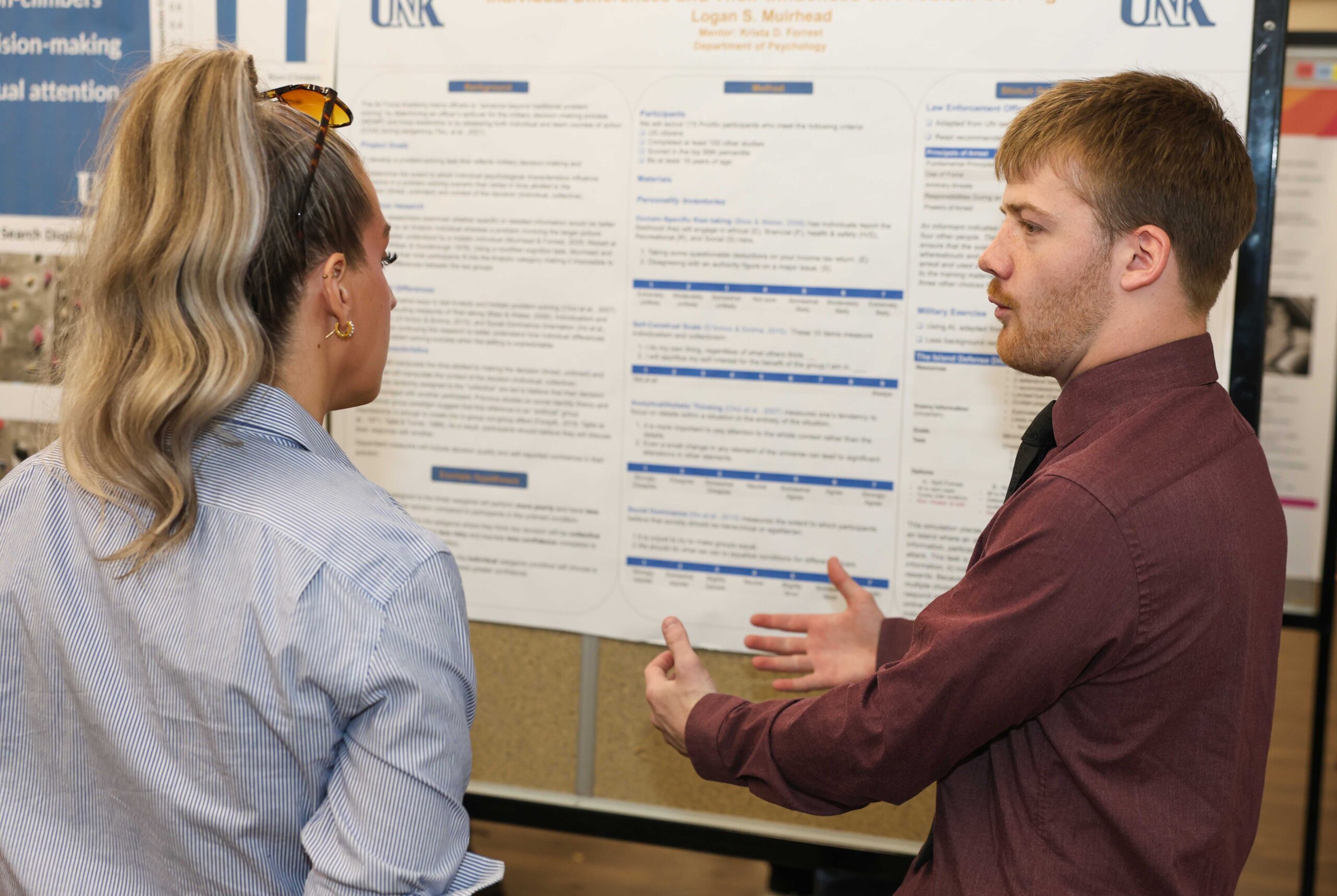
KEARNEY – Hands-on learning took center stage Thursday at the University of Nebraska at Kearney, where students shared projects that build real-world skills and expand classroom lessons.
The annual Student Research and Creative Activity Day showcased work from 180 Lopers representing 23 academic departments, with presentations covering everything from farming practices and lizard habitats to antibiotic resistance, aircraft maintenance and name, image and likeness licensing in college athletics.
Now in its 28th year, the event celebrates the scholarly and creative accomplishments of both undergraduate and graduate students while recognizing the faculty mentors who guide their work.
“UNK is known for its student-engaged research and creative activity. In fact, it is a strength of our learning environment,” said Kim Carlson, associate vice chancellor for research and creative activity. “Mentored by some of the best faculty in the Midwest, our students consistently produce high-quality work that contributes to their fields of study.”
This commitment extends beyond the event itself, reflecting a campuswide emphasis on ensuring experiential learning opportunities are available for all students, regardless of major or grade level.
“It isn’t an extra activity students do – it’s a key part of their education,” Carlson said.
Building research experience from the beginning
For students like Lydia Mekelburg, research is part of the college experience from the moment they arrive on campus.
The freshman from Yuma, Colorado, is studying wildlife biology and investigating chronic wasting disease, a fatal neurological illness affecting deer populations. Her research focuses on analyzing harvested deer data and exploring potential genetic factors that could influence the disease’s progression.
“Chronic wasting disease is really prevalent where I’m from,” Mekelburg said. “Seeing so many deer with visible symptoms in my own backyard led me to ask what managers can do to reduce those rates and protect the population numbers.”
She began the project during high school, earning recognition at the Colorado Science and Engineering Fair and competing at the international level. Now a member of UNK’s Undergraduate Research Fellows program, which provides a $1,200 annual stipend for participants, she continues to expand the study with support from faculty mentors.
Mekelburg has already worked with Colorado Parks and Wildlife and secured grant funding to analyze deer samples. Her next step is examining DNA to determine whether certain genetic traits may delay the disease.
“The research is there in captive populations, so it’s a possibility. But there are a lot of other factors that contribute to how the disease spreads,” said Mekelburg, who plans to add data from Nebraska deer to the study.
Beyond the science, she values the connections she’s built through the project.
“I really enjoy looking into new discoveries and talking with people who share the same passion,” she said. “Those relationships are going to help me when I’m working in this field.”
Mekelburg wants to pursue a career that combines research with public education about wildlife.

Developing skills outside the classroom
Graduate student Logan Osmera is also using research to better understand complex issues – in his case, the role of higher education and student culture.
The Big Springs native earned a bachelor’s degree in history from UNK in 2024 and is currently pursuing a master’s degree in public history. He presented his thesis topic, “Campus in Confusion: Kearney State College from 1970-1995.”
His work examines how national trends in student behavior and institutional expectations played out at a small, rural college in Nebraska.
“Kearney State College had a reputation as a party school, so I’m looking at why,” Osmera explained. “There’s something deeper there than students simply wanting to have fun.”
Drawing from decades of student newspapers, alumni interviews and archival materials, including graffiti that still exists in a rarely seen campus basement, Osmera found that student behavior in the 1970s and ’80s often reflected a shift from political activism to more social forms of rebellion.
“Instead of large protests, students were expressing their independence in other ways,” he said. “It was about creating their own culture away from the prying eyes of their parents and the college administration.”
Osmera also conducted research as an undergraduate student, participating in the Undergraduate Research Fellows program and working on a project examining the former Jenner’s Park attraction in Loup City as a reflection of early 20th-century museum culture.
A graduate assistant in the UNK Department of History, he’s worked closely with the G.W. Frank Museum of History and Culture on campus and held positions at Ash Hollow State Historical Park and the Keith County Historical Society’s Mansion on the Hill in Ogallala, opportunities that helped shape his career goals.
“Getting practical research experience is huge in public history,” he said. “Being able to apply what you learn in class to real-world projects is what prepares you for the profession.”
His thesis continues that approach, combining academic research with public-facing history to better understand how student experiences have evolved over time.
“It’s given me a deeper understanding of how we view the role of college in developing young people,” Osmera said. “Are we shaping students to fit a certain mold, or helping them think critically and define that for themselves?”
Opportunities like those highlighted during Student Research and Creative Activity Day go beyond individual projects. They help students grow personally and professionally while preparing them for the future.
“Research and creative activity are very important to our students,” Carlson said. “They provide transferable skills, such as critical thinking and problem-solving, and allow students to build confidence and independence. These are things they need to be successful in any career.”
PHOTOS BY ERIKA PRITCHARD, UNK COMMUNICATIONS