By TYLER ELLYSON
UNK Communications
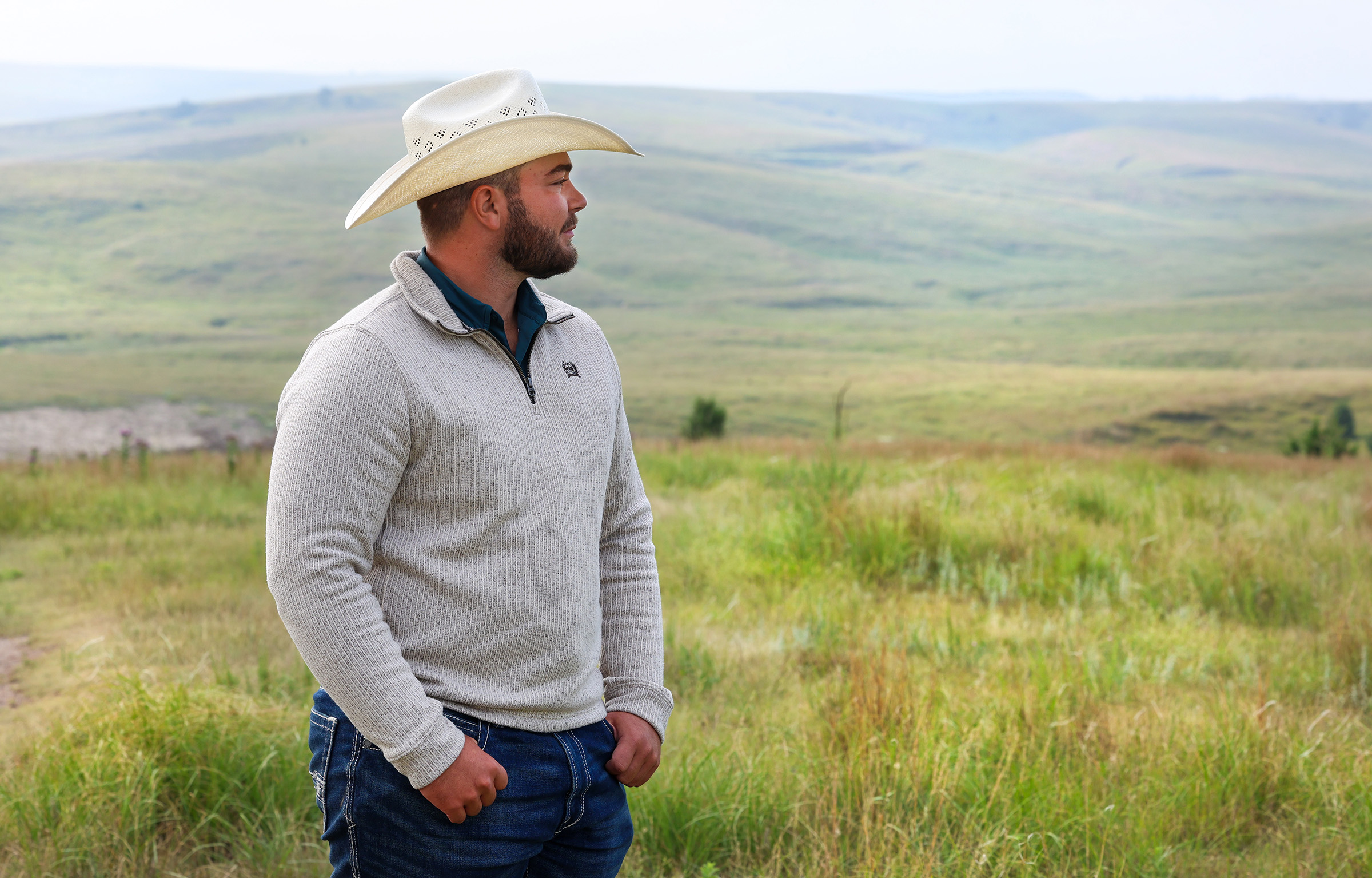
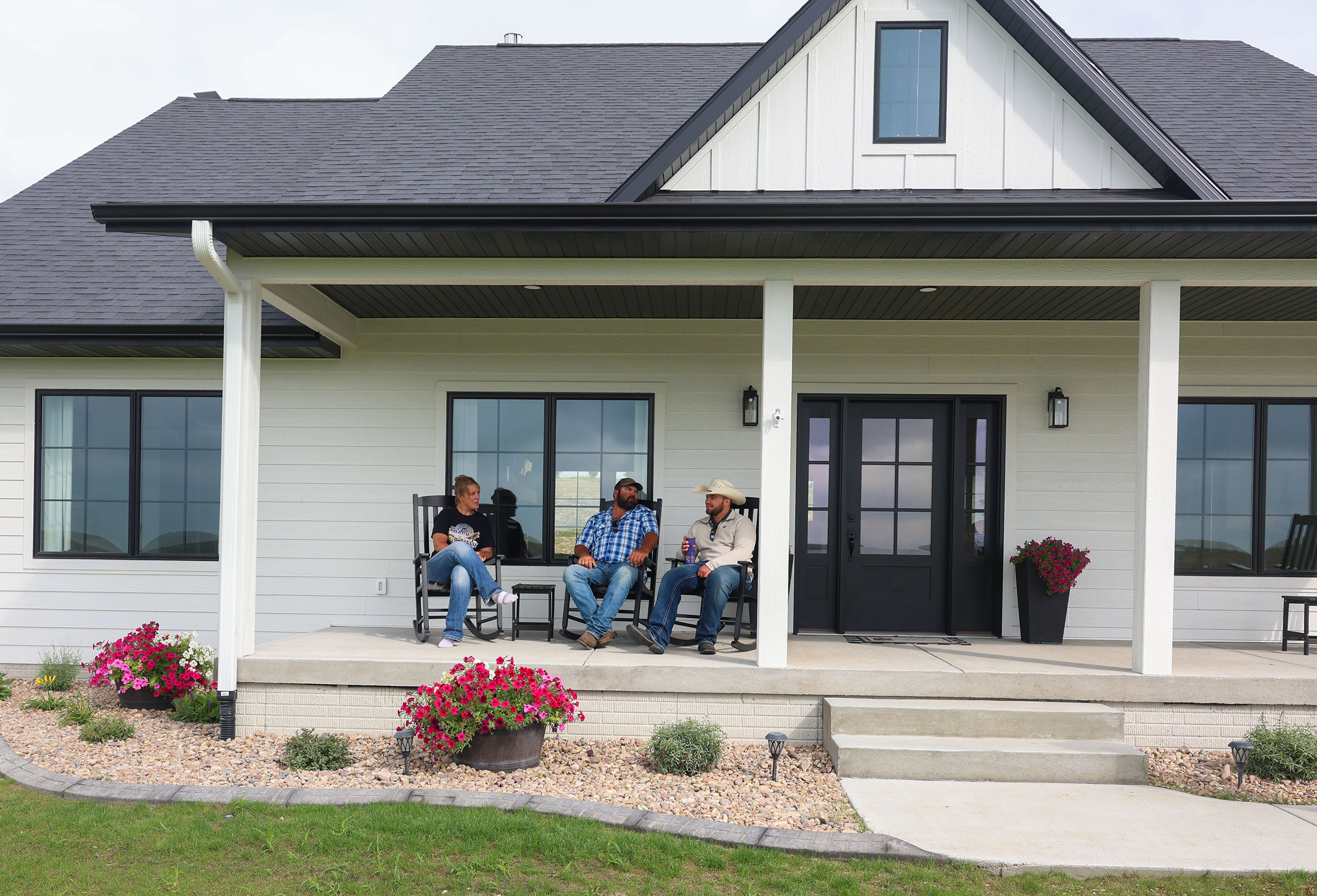
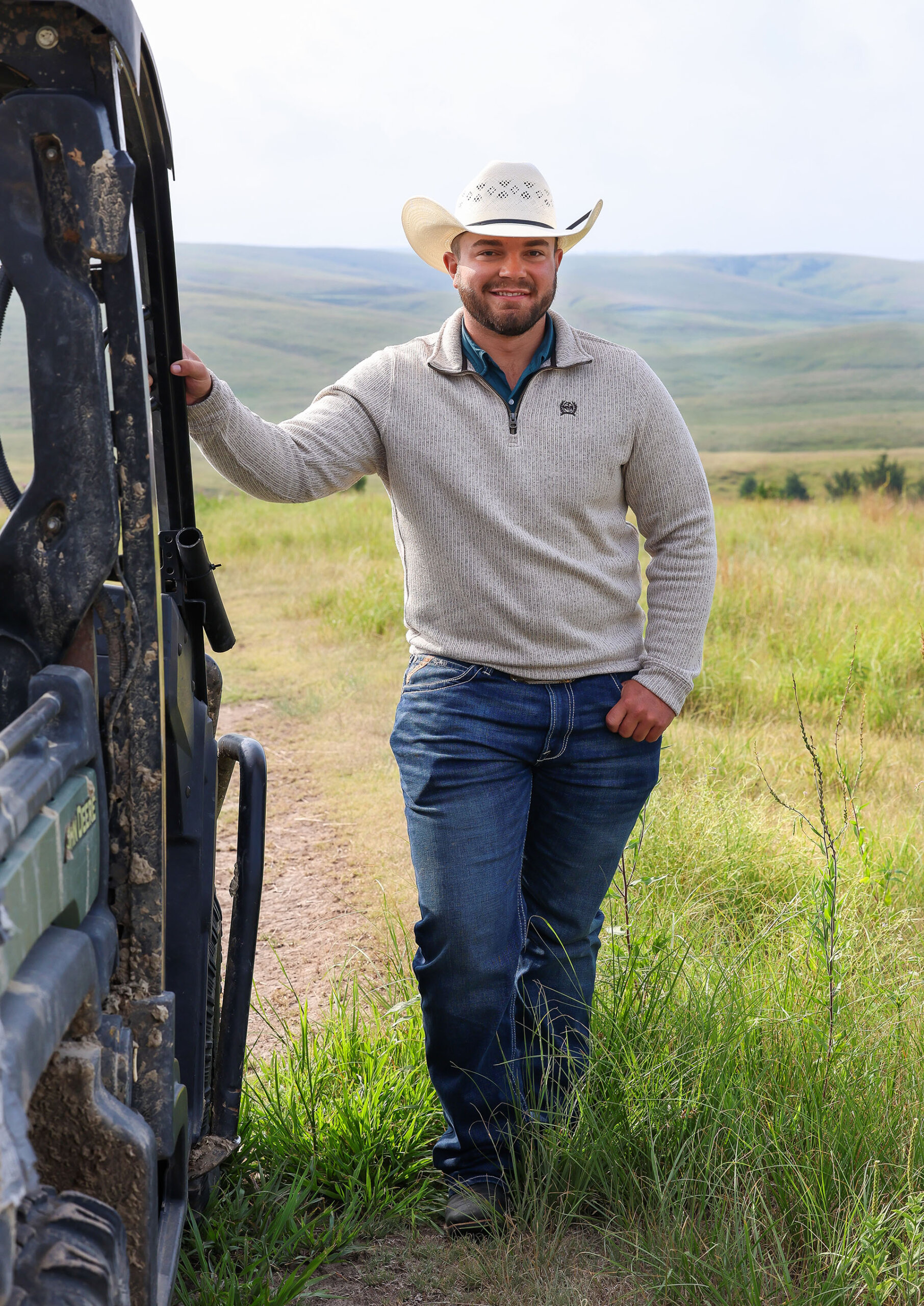
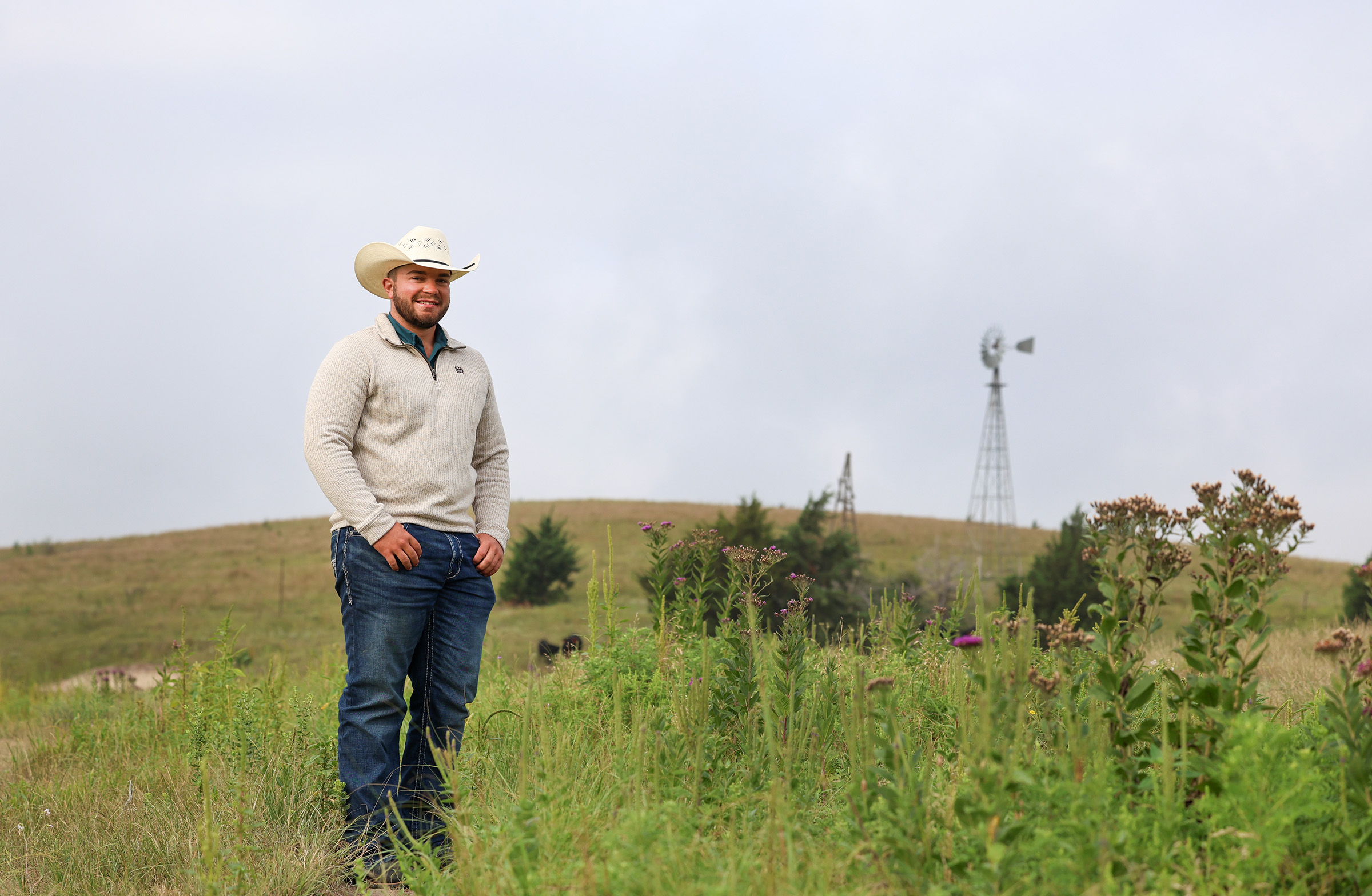
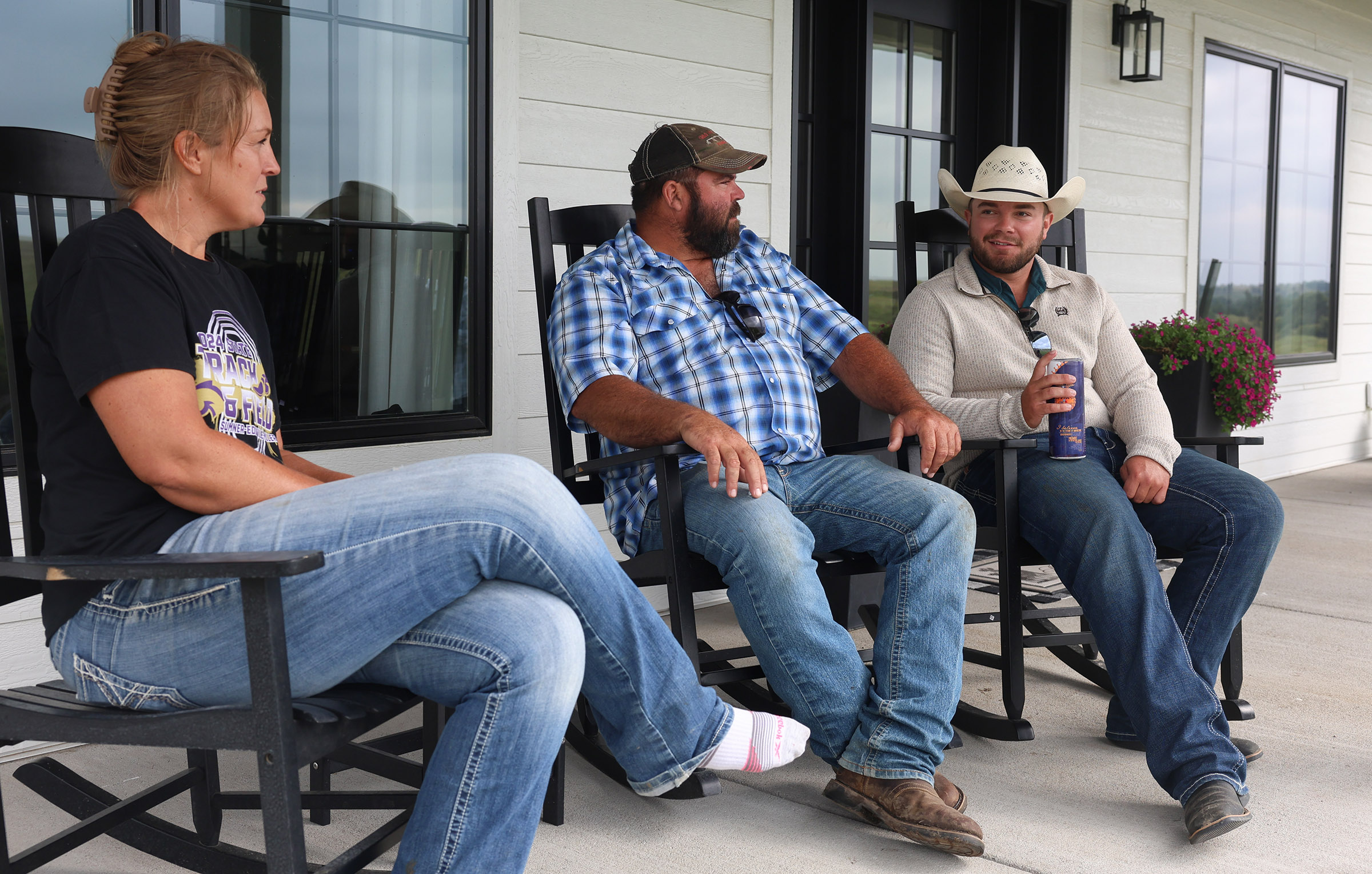
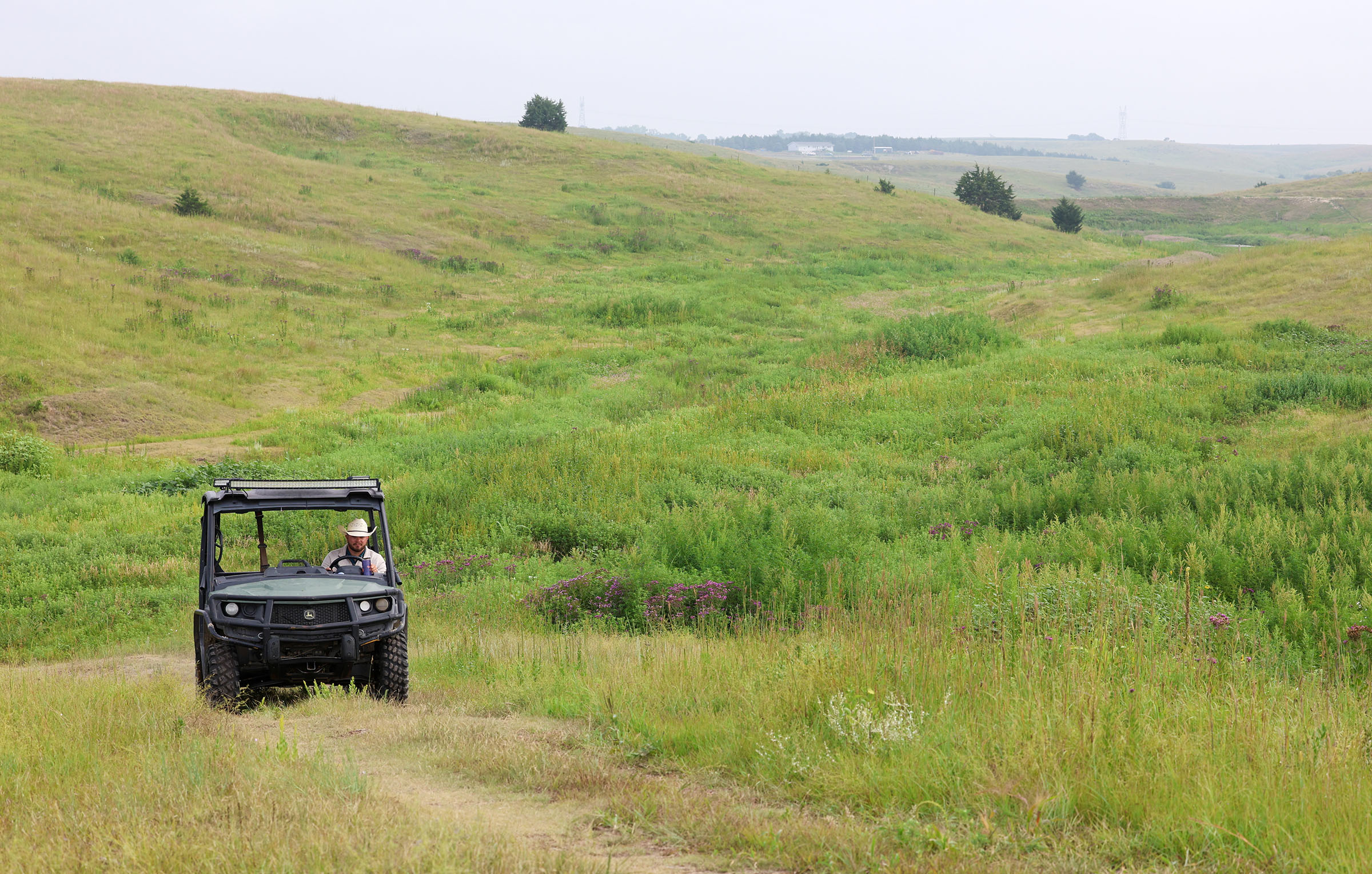
SUMNER – Ryan Arbuthnot leaned back in a rocking chair on the front porch of his parents’ house, looking across the rolling hills and pastures that surround the family ranch north of Sumner.
Native prairie grasses and wildflowers stretched across the open landscape, creating an idyllic backdrop as cattle grazed in the distance.
This is where the University of Nebraska at Kearney agribusiness student feels most at home.
“It means everything,” he said. “We’re right in the heart of Nebraska. The land is great, and we want to keep it that way, too.”
For Arbuthnot, this piece of ground represents more than a picturesque place to live. It’s his livelihood, his family’s legacy and the future he’s already working to build.
“I’ve just fallen in love with this way of life,” he said, “and it’s what I want to do forever.”
Rewarding Work
Arbuthnot grew up around agriculture, attending Sumner-Eddyville-Miller Schools and participating in FFA. His father, George, got into the cattle business several years ago, initially ranching on shares before establishing his own herd.
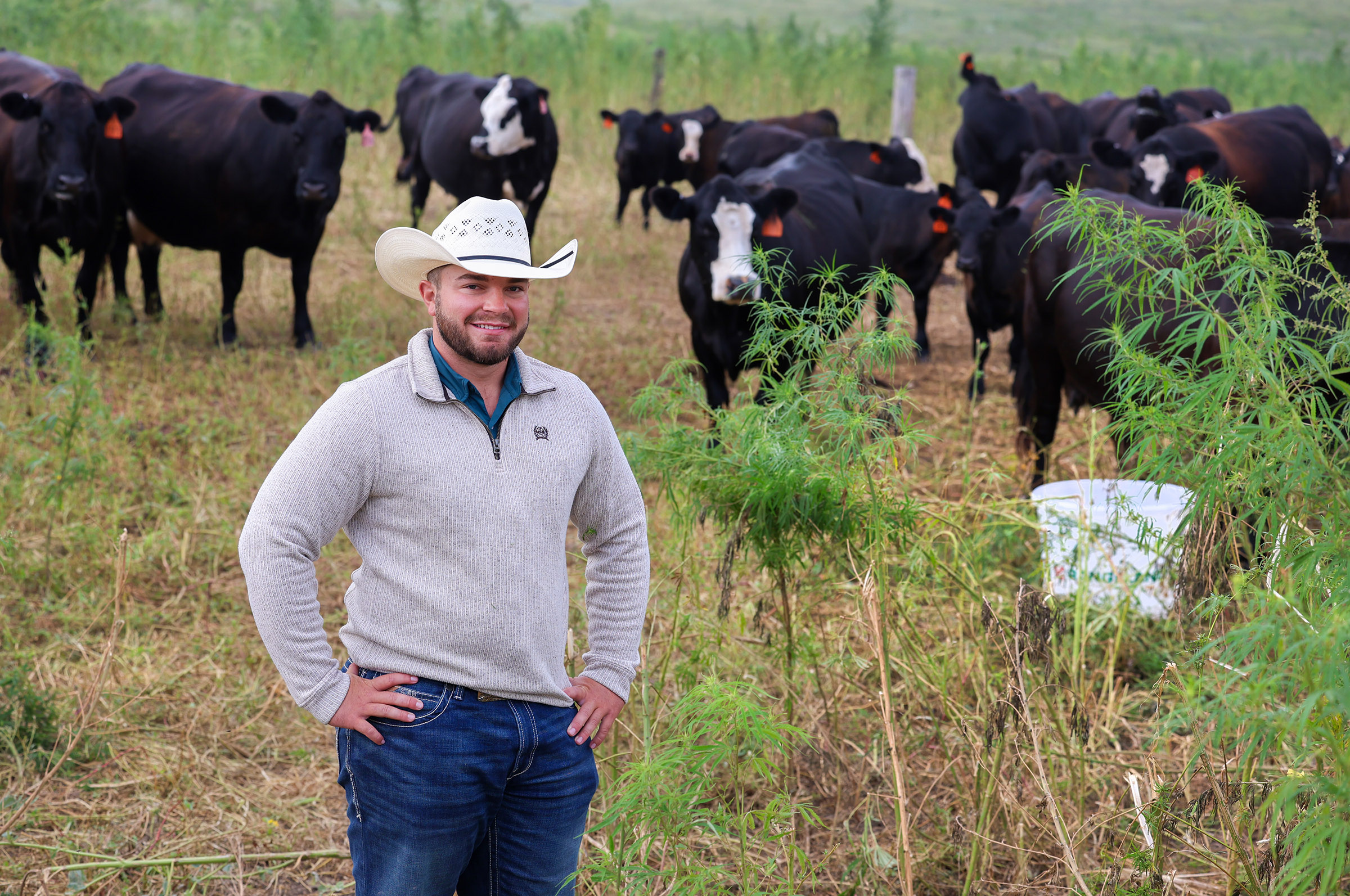
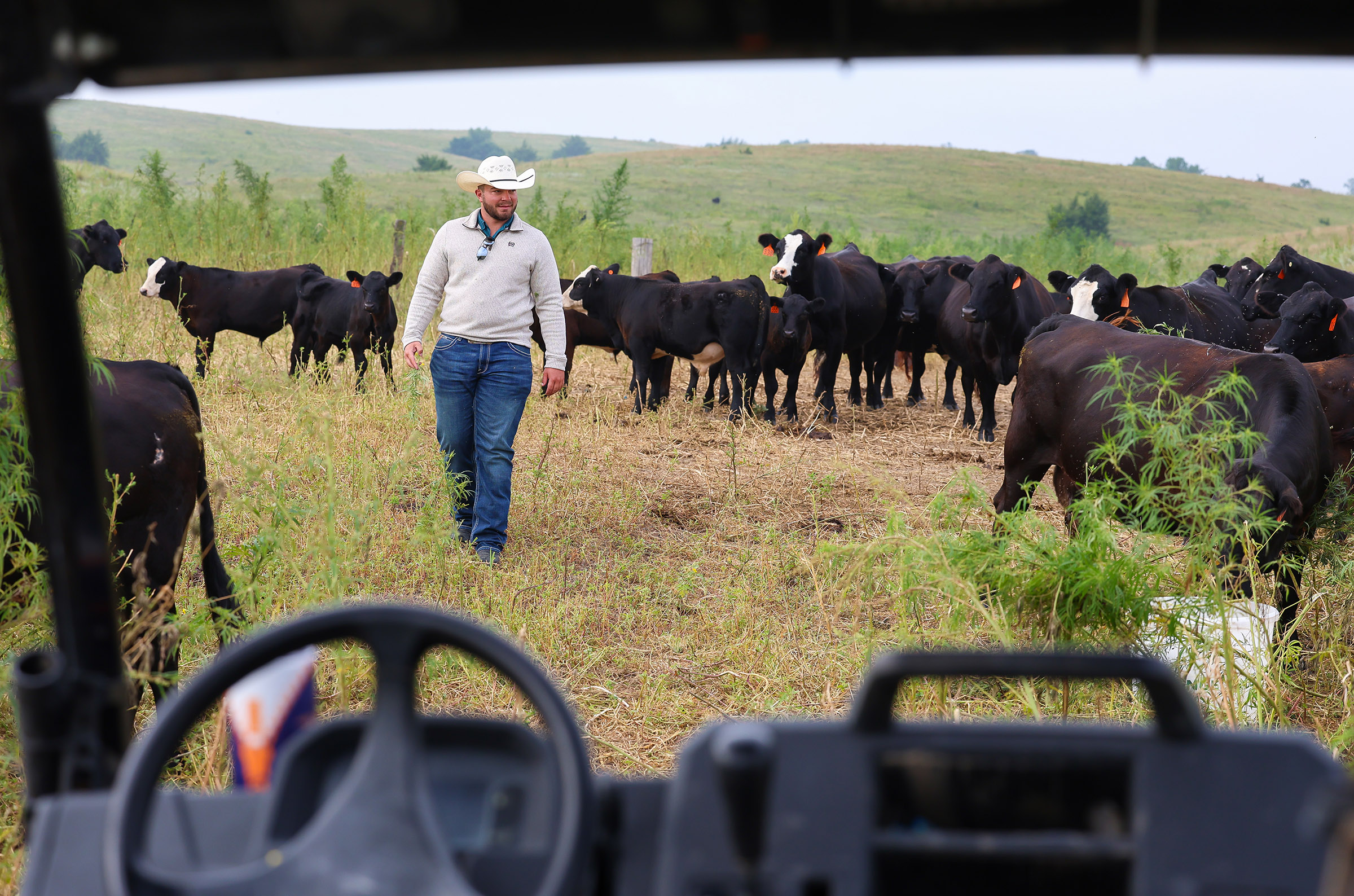
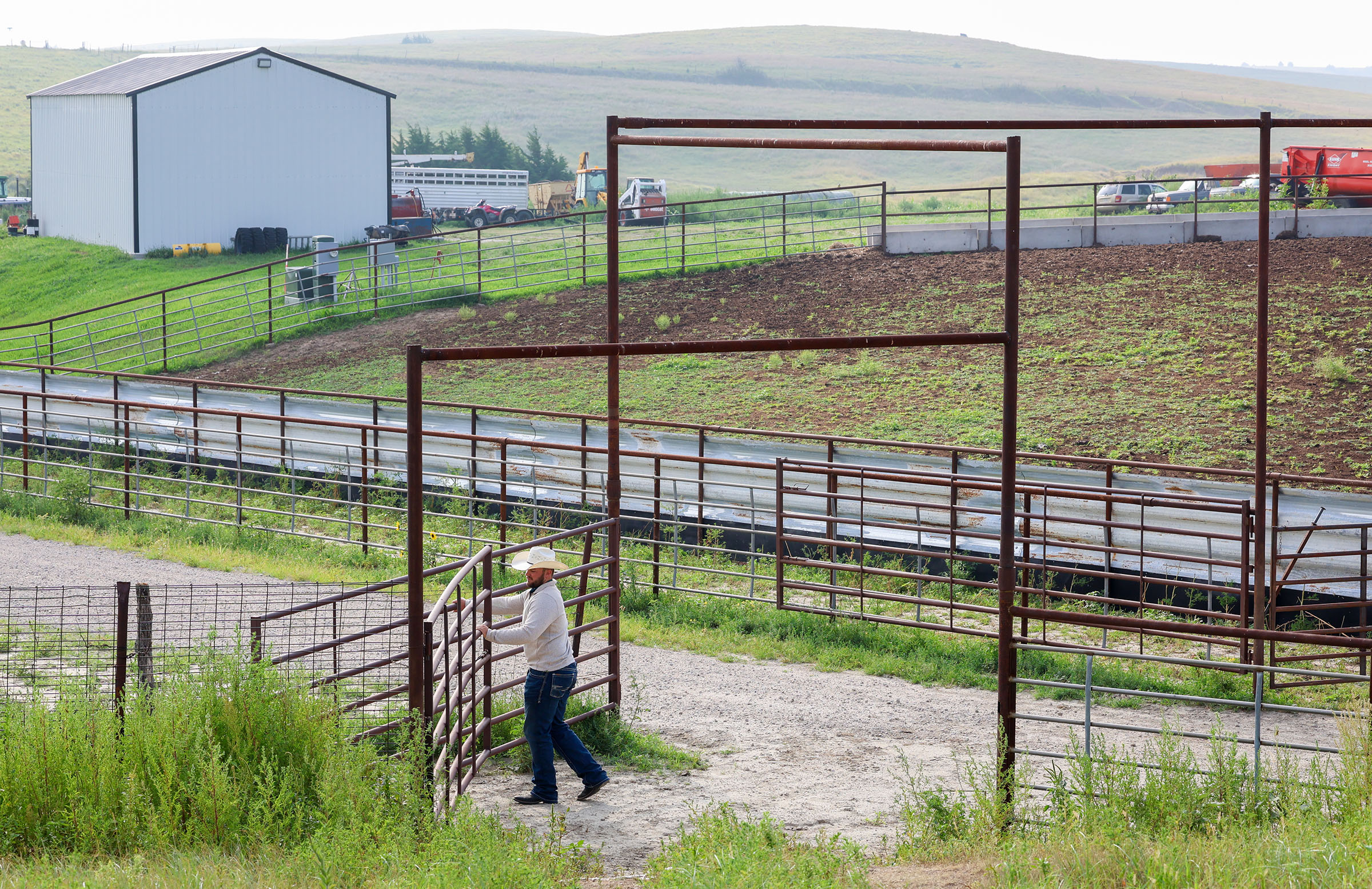
Today, the family operation includes more than 400 head of Simmental-Angus cattle spread across several properties and more than 3,000 acres. They raise alfalfa and prairie hay, as well.
Arbuthnot has his own stake in the operation, with 70 cow-calf pairs and 15 replacement heifers. When he’s not attending classes at UNK, he’s working with the cattle or helping his father install and repair center pivot irrigation systems.
The days can be long and the work demanding, but that’s part of the appeal.
“A lot of people use the word simplicity when talking about this way of life, but it’s not simple. There’s a lot that goes into it,” Arbuthnot said. “For me, there’s a pride factor. You’re helping feed the world and busting your butt every year to raise the best cattle you can and make sure they stay healthy.”
His father is proud to see another generation embrace that lifestyle.
“It makes my heart happy,” George said. “We work hard though. You have to to make it in this life.”
Arbuthnot started building his own herd at 19, taking on roughly $250,000 in debt to purchase cattle. He was able to secure the financing in part because his father had given him 12 first-calf heifers during his senior year of high school, providing the equity he needed for a loan.
That experience showed him just how difficult it can be for young people to enter production agriculture.
“I got lucky,” he said. “I was blessed to have the opportunity I did. I know there are kids my age who really want to get into this business, but that can be a challenge if somebody doesn’t take them under their wing.”
Thirty years ago, there were roughly 56,000 farms and ranches in Nebraska, according to the U.S. Department of Agriculture’s National Agricultural Statistics Service. Now, that number is about 44,000 – a 21% decline. Nationally, the number of farms and ranches has dropped by about 15% over that time.
Arbuthnot wants his family’s operation to buck that trend.
“I hope this ranch lasts generations,” he said. “Growing up in this life, yeah, you’re working a lot more than the average kid. And it sucks sometimes. But I think it made me a better person and a better man.”
Learning the Business Side
Arbuthnot knew how to care for cattle and put in the physical work required to run a ranch. He came to UNK to learn more about the business side.
Initially committed to play football for the Lopers, Arbuthnot’s athletic career ended before it began because of a blood-clotting condition. Staying close to home remained important, though, and UNK gave him the chance to earn an agribusiness degree while continuing to work on the family operation about 40 miles from campus.
“Being able to come back and help Dad and being able to get a good education close to home is really nice,” he said.
The UNK agribusiness program combines business courses with specialized instruction in areas such as farm and ranch management, agricultural marketing, finance and price management.
For Arbuthnot, those lessons have immediate applications.
“I knew how to do all the manual labor, but I didn’t know how to do all the paperwork,” he said.
His classes have taught him how to prepare balance sheets and financial projections, communicate with bankers and other business professionals and market his cattle. They’ve also expanded his network within the industry.
“Some of them force you to talk, which is good, because you need that in this business,” Arbuthnot said. “You see some guys who do a really good job on the ranch, but they don’t know how to go out and talk to people and go sell their cattle. It’s a good skill to have.”
That willingness to learn and apply new ideas stands out to assistant professor Jody Herchenbach, who leads the UNK agribusiness program with two other full-time faculty members.
“Ryan is a driven student with lofty but achievable career goals,” she said. “He is willing to learn and is always looking for ways to apply what he is learning in the classroom to his own operation.”
Bringing New Ideas Home
That connection between coursework and production agriculture was especially evident this summer.
As part of UNK’s experiential learning requirement, College of Business and Technology students choose among an internship, study abroad experience or entrepreneurship independent study. Arbuthnot chose the latter, working with Herchenbach to focus specifically on his own operation.
Instead of completing a traditional internship, he examined ways to strengthen the business he’s already running.
Herchenbach developed assignments that encouraged Arbuthnot to visit other operations, meet with producers and industry professionals and document the details of his own ranch so he can better communicate with bankers, attorneys and other key partners.
“An agribusiness degree helps students like Ryan put together the specifics for an operation and learn how to analyze situations to make them better and to never settle for ‘good enough,’” Herchenbach said. “In agribusiness courses, we are able to take what students already know and experience and push them even further to think outside the box. We can teach them tools to remain profitable when returning to the family farm or ranch.”
In Arbuthnot’s case, that meant sitting down with people in the industry and asking questions he hadn’t necessarily asked before – how they started, how their operations evolved and what allowed them to survive across generations.
It’s the kind of knowledge he can bring directly back to the ranch.
“The connections you make within the agribusiness program are great. Just getting to meet those people is a really good opportunity, especially for a guy like me,” said Arbuthnot, who plans to graduate in December 2027.
Preserving the Future
Arbuthnot isn’t interested in simply maintaining the family operation. He’s looking for ways to make it more efficient and sustainable.
Rotational grazing is one example.
After attending a grazing school in South Dakota last summer, Arbuthnot began using a grazing stick to measure the amount of forage available in a pasture. That information helps determine how many days cattle should remain in a particular area before moving, giving grasses more time to recover and improving soil health.
The results are visible across the ranch. Arbuthnot has noticed healthier grass and more wildlife since the family implemented the practice.
“It’s a process that works, and it will sustain your soil and your plants and your native grasses for generations if you do it the right way,” he said. “I would like to get even deeper into it.”
He’s considering other possibilities, too, including expanding the family’s farm-to-finish beef production. They currently finish about a dozen cattle annually, but Arbuthnot sees potential for more.
Herchenbach isn’t surprised.
“He is definitely passionate about ranching and agriculture,” she said. “He has done his homework on the industry and has ideas to make operations better and more efficient. He seems to be a problem-solver at heart.”
Arbuthnot’s plans are firmly tied to this part of Nebraska.
He lives about 5 miles north of his parents and will marry his fiancée, fellow UNK student Kinsey Pflaster, next summer. They got engaged atop Arbuthnot’s favorite hill on the ranch, another reminder of how closely his future is connected to the land.
That’s what he sees from the rocking chair on his parents’ front porch – not simply cattle, grass and rolling hills, but a place worth preserving.
He feels the same attachment to the close-knit community around him, where neighbors support one another and Friday night football can bring even the busy harvest season to a brief pause.
“It’s really cool to see. Everyone kind of has each other’s back,” Arbuthnot said. “It’s just a great place to grow up.”
And, if everything goes according to plan, a great place for his family to remain for generations.