By TYLER ELLYSON
UNK Communications
KEARNEY – “Work is love made visible.”
Christopher Strickland uses that line from poet Kahlil Gibran to describe his passion for teaching.
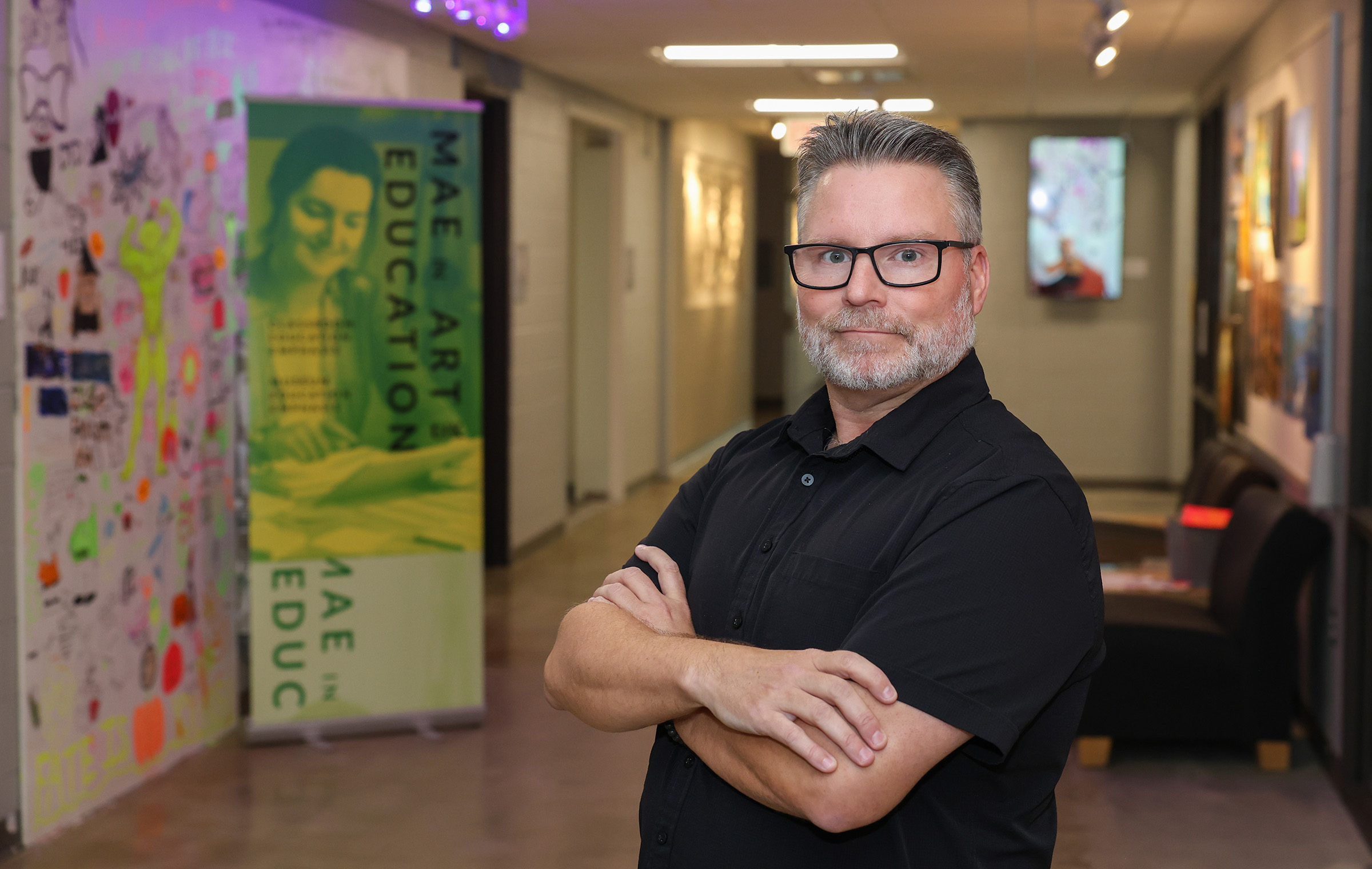
Education is more than a career for the University of Nebraska at Kearney faculty member. It’s a calling shaped by creativity, connection and the transformative power of the arts.
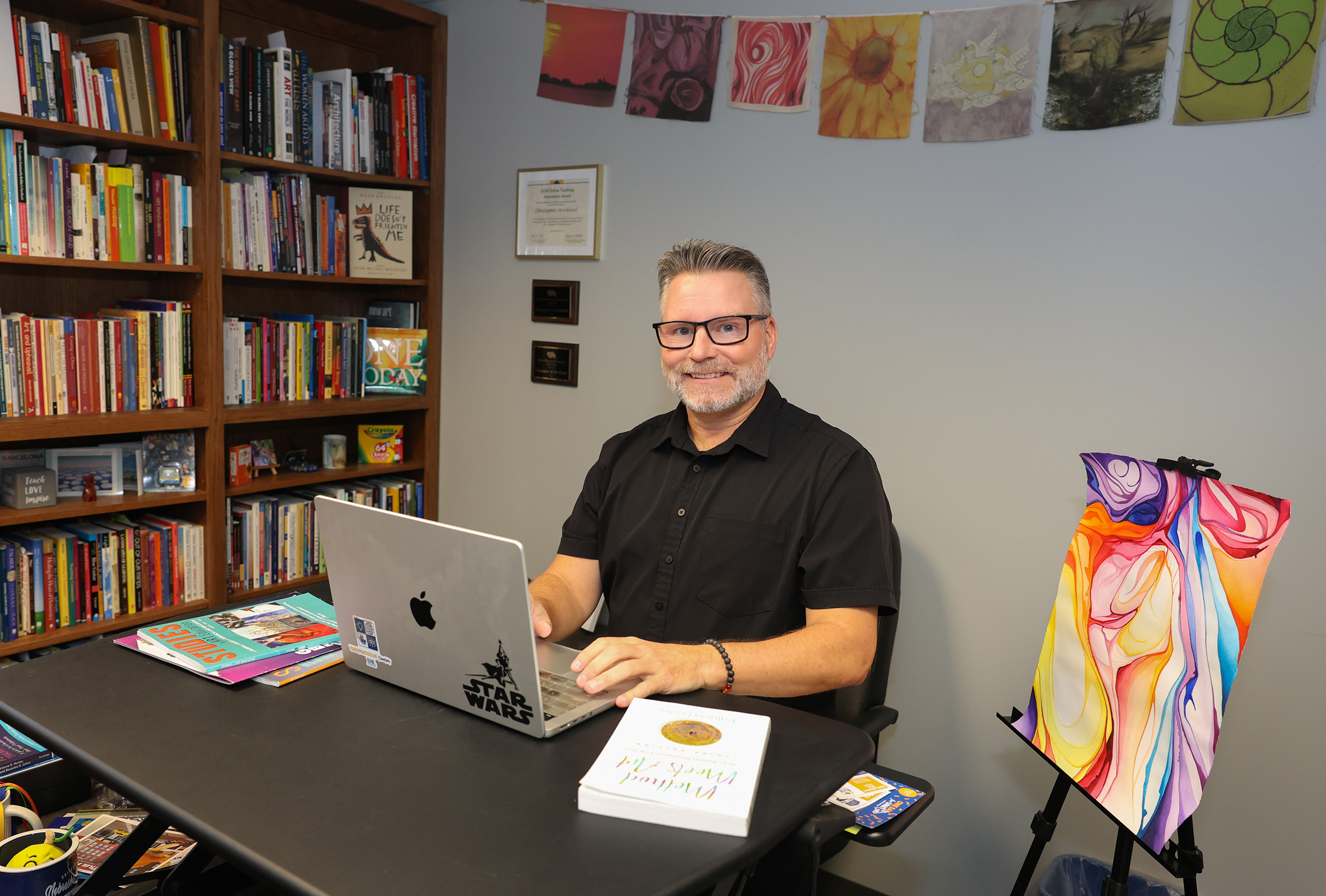
That belief has guided him from his childhood classrooms in New England to his role as an assistant professor and director of UNK’s online master’s program in art education. And it continues to define the impact he has on students and colleagues across the state and country.
Finding a Home at UNK
Born in Maine and raised just outside Boston, Strickland had the same art teacher from kindergarten through eighth grade. She nurtured his creativity, introduced him to art history and modeled what it meant to be both an artist and an educator.
“I was enthralled with this idea that she was this artist who was teaching children how to be artists,” he said. “I just thought, ‘I want to be her when I grow up. This is what I want to do.’”
That early foundation inspired him to pursue a bachelor’s degree in art and art education and, eventually, a job teaching elementary and high school art in New Hampshire for 16 years. Over time, he began to explore deeper questions about purpose, identity and the role of the arts in learning.
“I wanted to discover more,” he said. “What kind of legacy do I want to leave? Where am I finding purpose in my life?”
The answer led him to a master’s degree in arts integration and a doctorate in educational leadership, expanding his interest in how art shapes teaching, learning and the human experience.
After some adjunct work on the East Coast, a friend encouraged him to “cast his net wide” while looking for opportunities in higher education. That strategy landed him a full-time position in Nebraska, where he spent three years assisting with the design of the freshman seminar program at Hastings College before joining UNK in 2022.
“I feel very privileged and honored to be here,” said Strickland, who also serves as associate dean of engagement and retention in UNK Graduate Studies and Academic Innovation. “I love being a Loper. I’m where I’m supposed to be.”
The fully online art education master’s program offers two emphases – classroom education and museum education – along with an asynchronous structure that allows teachers and other working professionals to connect, collaborate and study on their own schedules. About 40% of the students are located outside Nebraska, and many come from rural districts where they may be the only art teacher in their school or community.
“Being part of our program helps build that community and that infrastructure for networking so they’re not isolated or alone,” Strickland said. “Some of our teachers discover a sense of worth and value they didn’t expect. A lot of them come away saying, ‘I think I got more than expected – in a very good way.’”
Strickland sees his students not as learners separated from him by age or experience, but as colleagues and fellow educators engaged in meaningful work.
“Art can be a force of good in this world. The arts can help transform and the arts can help heal,” he said. “It’s pretty powerful to be working with other adults who are coming to an understanding of what we can do – how we can use our skills, gifts and intelligence to care for ourselves and our communities. That’s a profound purpose. That’s why this is a calling.”
Setting a ‘Benchmark for Excellence’
Those who have worked with and learned from Strickland say his impact is unmistakable.
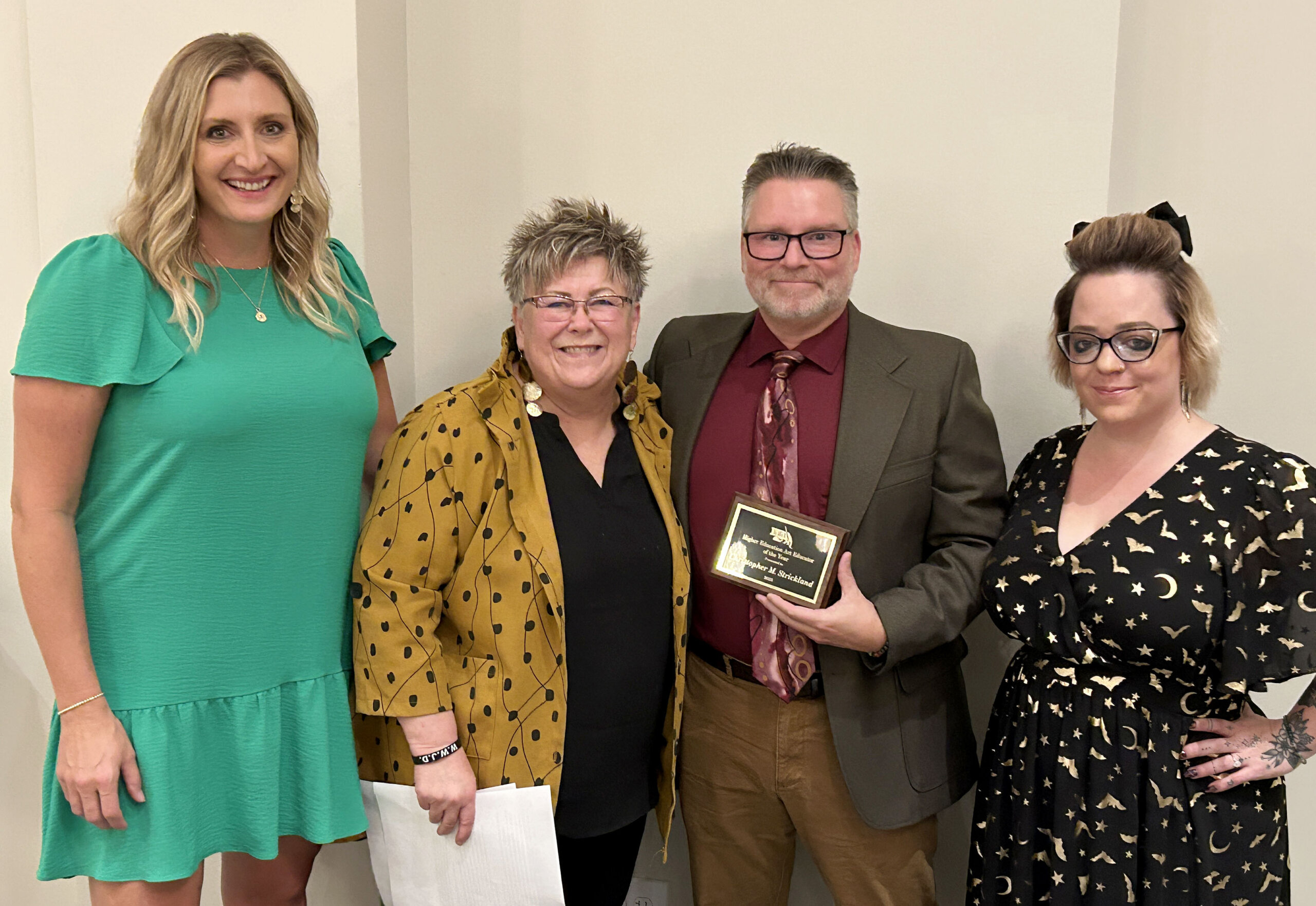
He was recently recognized by the Nebraska Art Teachers Association (NATA) as the 2025 Outstanding Art Educator of the Year and Higher Education Art Educator of the Year. Both awards were presented last month during the association’s fall conference in Omaha.
UNK senior lecturer Christy Kosmicki, a past recipient of the awards, describes him as a “benchmark for excellence” whose contributions in teaching, scholarship and service elevate the field.
“A dynamic and reflective educator, Dr. Strickland brings innovation, empathy and rigor into the art education programs at UNK,” Kosmicki wrote in her nomination. “His student-centered philosophy encourages inquiry, risk-taking and critical engagement.”
Strickland goes “far beyond the traditional expectations of service,” she added.
“He serves as a dedicated adviser and mentor to students, often working closely with individuals to help them navigate both their academic and professional journeys,” Kosmicki stated. “Within our department and university, he is a leader who contributes thoughtfully to curriculum development, faculty governance and program assessment. In the broader community, Dr. Strickland is known for his outreach efforts facilitating workshops, leading professional development sessions and advocating for the arts in public education and civic life.”
UNK alumna Kameran Dostal, now a Kearney Public Schools art teacher and NATA communications coordinator, echoed those sentiments in her nomination letter.
“His kindness and helpfulness create a supportive and encouraging learning environment where students feel empowered to explore and take risks,” she wrote. “His genuine passion for art education is infectious, inspiring students to become dedicated and thoughtful educators themselves.”
Dostal, the 2023 Elementary Art Educator of the Year, also credits Strickland with expanding the program’s use of arts-based research, helping graduate students see creative inquiry as a legitimate and impactful academic methodology.
“Through his mentorship and guidance, he fosters innovative research that bridges artistic practice and scholarly investigation, contributing new knowledge and perspectives to the broader academic landscape,” she stated. “His enthusiasm for this evolving area inspires students to recognize the valuable insights that creative processes can offer. This dedication to advancing arts-based research underscores his commitment to the intellectual vitality and relevance of art education within the wider academic community.”
The Impact That Matters Most
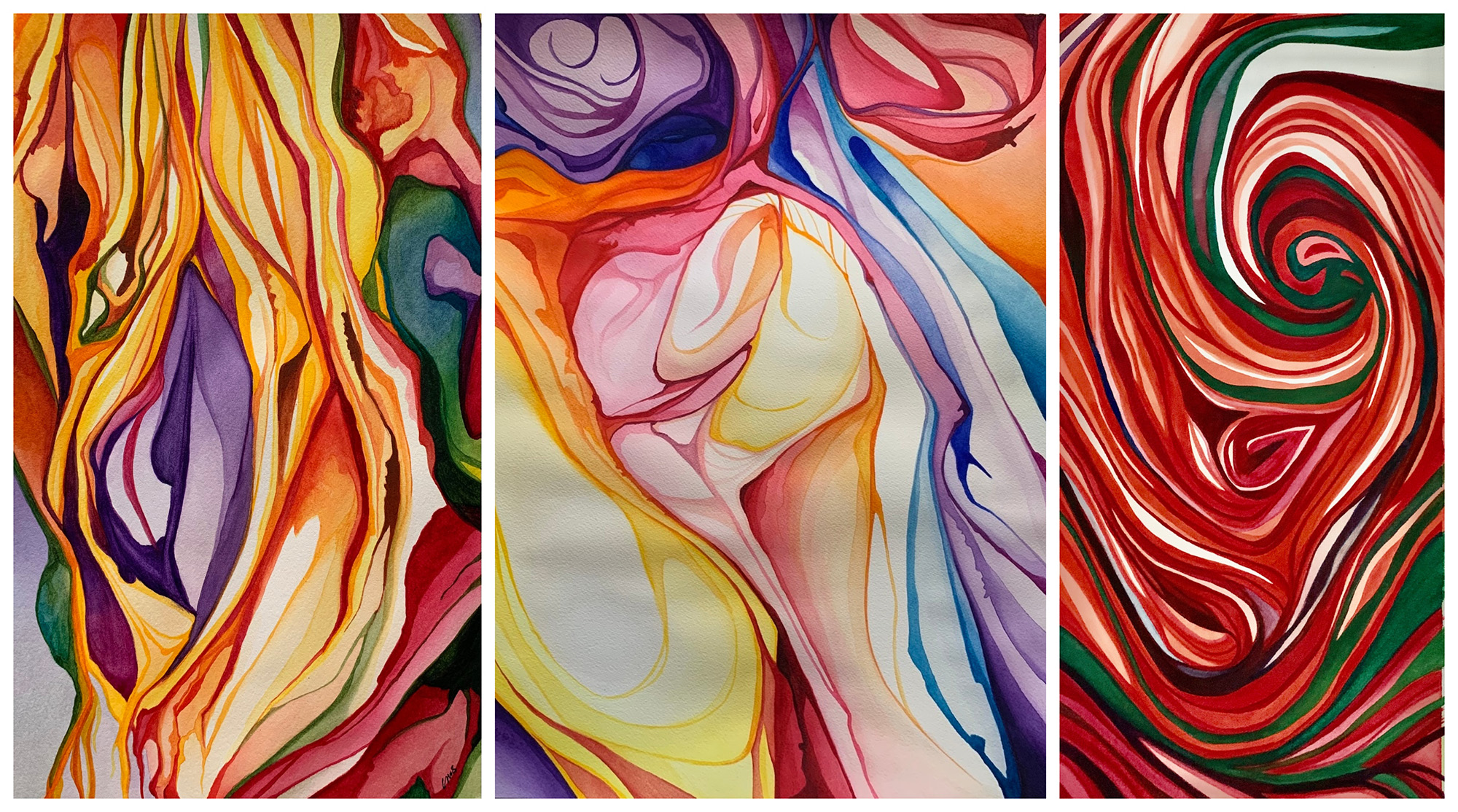
Strickland continues to work as a visual artist, primarily in abstract watercolor painting. His pieces have been accepted into juried exhibitions across the country, including the International Visual Literacy Association’s “Art and Memory” online show, the Modern Visual Arts Gallery’s “Seeing Red” exhibition in Pennsylvania and the NATA juried show in Omaha.
“Painting has become a means for artistic inquiry and research,” he said. “It’s a form of expression, communication and exploration – a way to reflect on how we engage with the world.”
His dual identity as an artist and educator shapes how he teaches.
“Art helps us understand ourselves and our world. It’s innate. It’s intuitive. It’s part of the human experience,” he said. “That’s why art education is so important.”
Although recognition isn’t his motivation, Strickland was deeply moved when the NATA honored him with the Art Educator of the Year awards. He called the moment “very humbling and very validating.”
“It’s not about the recognition. It’s about the impact,” he said. “These awards symbolize the collective effort that we bring to our students. Even though I’m not directly in the classroom of a PK-12 system, the people I’m working with are. And they’re helping shape these students’ lives through art.”
For Strickland, the meaning of Gibran’s words is most evident when he receives a thank-you note from a student or listens to them to talk about the difference he’s made in their lives.
That’s the truest measure of success.
“Work is love made visible, and teaching is one of those careers that proves that truth,” he said. “That’s why I do what I do. I get to live the creative life that I’ve wanted to live since I was a little kid.”