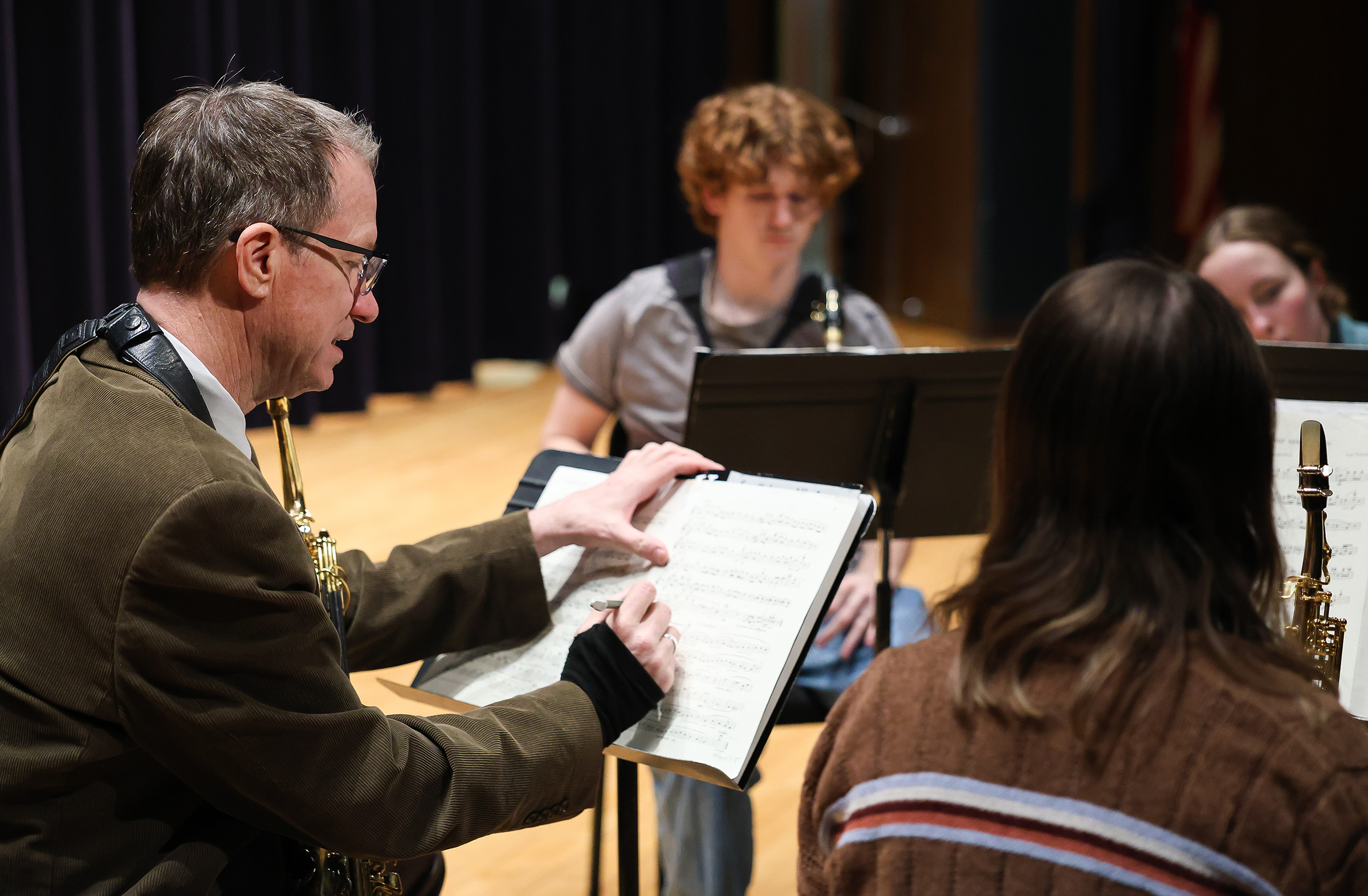
THIS STORY IS FEATURED IN THE 2026 NEW FRONTIERS MAGAZINE
By TYLER ELLYSON
UNK Communications
KEARNEY – On the afternoon of Feb. 26, 2000, David Nabb was sitting at his dining room table, talking on the phone about the future.
The University of Nebraska at Kearney music professor was discussing plans with a Realtor. He and his then-wife were thinking about having another child, so they’d need a larger home for their growing family.
Life felt busy, ordinary and full of possibility. Then, without warning, everything changed.
“Suddenly, the phone fell out of my left hand,” Nabb recalled.
His speech became garbled. Confusion set in immediately.
His wife rushed over and quickly ended the phone call. Nabb tried to stand, but his body wouldn’t cooperate. She helped him to the couch as the terrifying reality of the situation began to unfold.
Friends urged them to call 911. An ambulance rushed him to a local hospital, where doctors confirmed what no one expected to hear about an otherwise healthy 37-year-old.
He had suffered a stroke.
“At that point, we didn’t know if it was transient or if it was permanent or if it was going to get worse,” Nabb said.
For hours, uncertainty consumed the room.
“It was terrifying. We didn’t know if it was going to get worse and I would end up on machines for the rest of my life.”
The left side of his body was paralyzed. His future felt unknowable.
Yet even in those earliest moments, one thought rose above everything else.
“When am I going to get better? I’ve got a rehearsal tomorrow.”
Music wasn’t just a profession. It was his life.
And he had no intention of letting it go.
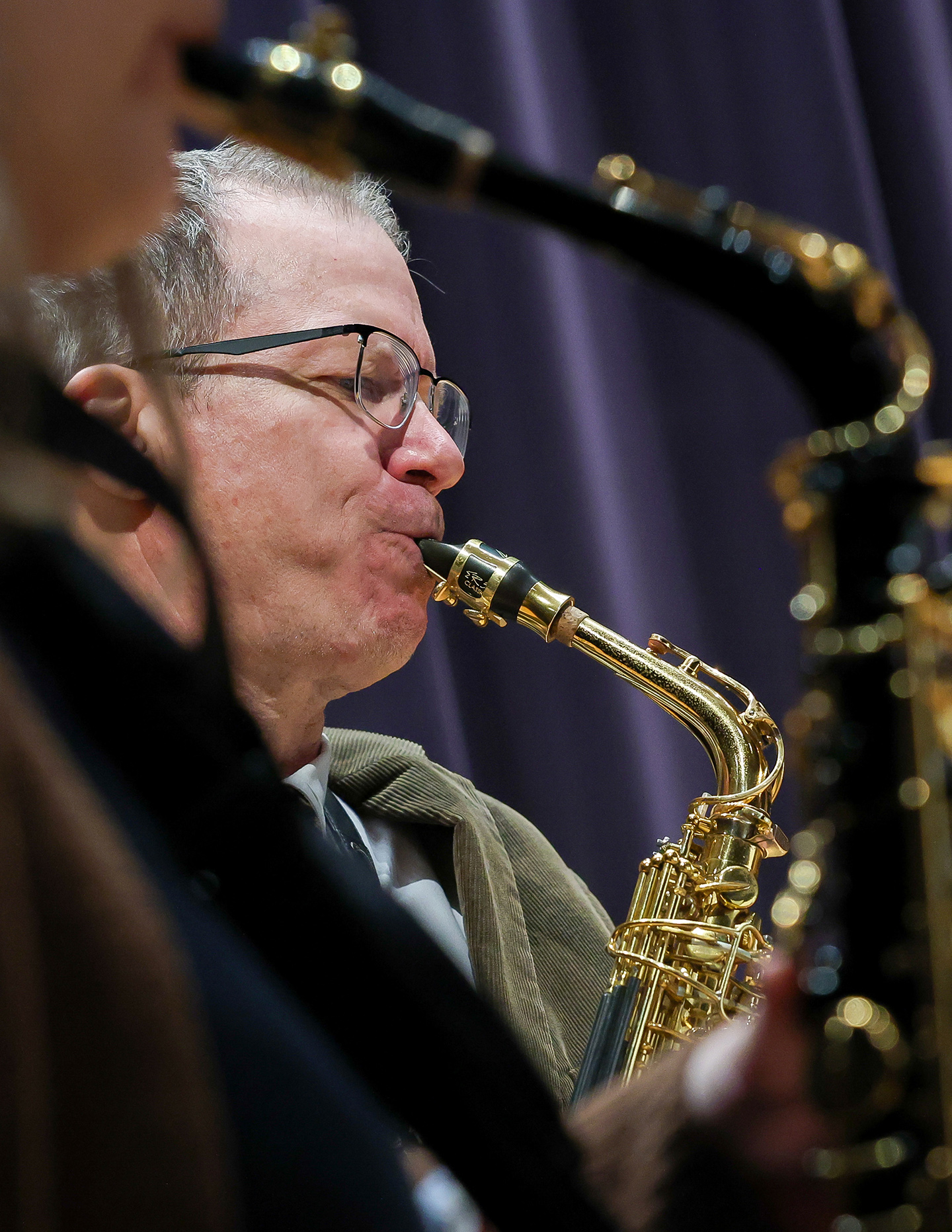
LEARNING HOW TO BEGIN AGAIN
The prognosis was grim.
Doctors initially believed recovery might come quickly, perhaps within hours. Then they said days. Then weeks. Then months.
Eventually, the reality became far less certain.
Nabb still vividly remembers hearing his wife ask the neurologist the question that mattered most.
“Will he be able to walk, talk and teach again?”
The doctor’s response offered little comfort.
“I don’t think so, but we don’t know.”
After about a week at the Kearney hospital, Nabb was transferred to a rehabilitation center in Lincoln, where he spent another month beginning the long process of rebuilding basic functions many people take for granted.
Speaking. Walking. Feeding himself. Moving his hand.
The recovery process stretched far beyond weeks or months. For the next six years, Nabb continued outpatient therapy while slowly regaining function on his left side.
The smallest victories felt monumental.
It took nearly a year before he could move the index finger on his left hand.
“When I could finally open my hand, that was a great turning point,” he said. “I was laughing and smiling. I was so happy that happened.”
There were darker moments, too.
The saxophonist who had spent his life making music suddenly faced the possibility that he might never play again.
“I was terrified,” he said. “I realized I had to go all-in on this thing, because there’s no holding back now. This is the real deal. This is a real test of who you are. If there is a way to do it, I was going to do it.”
What motivated him most in those early days wasn’t music. It was family.
“It was mostly for my kids, primarily, and for my wife. It was for my family, because that was what was most important for me.”
Still, the loss of music created a deep void. His entire world had revolved around it.
Teaching. Performing. Earning a living. Relationships. Identity.
“I just love it so much. I always have,” he said. “It was really the focal point of my life for so long. It was hard to imagine going on without it.”
AN IMPOSSIBLE CHALLENGE
While recovering at the rehabilitation hospital, Nabb stumbled across a story that would alter the course of his life.
It featured a musician named Kenneth Carter, who played an adapted one-handed saxophone.
The idea stopped him cold. He immediately began wondering whether something similar might allow him to return to performing.
There was just one problem. No professional-quality version really existed.
The few adaptive instruments he knew about were limited and incomplete. None offered the full functionality required for serious musicianship.
Still, he couldn’t stop thinking about the possibility. And he knew someone uniquely qualified to tackle the challenge – Jeff Stelling.
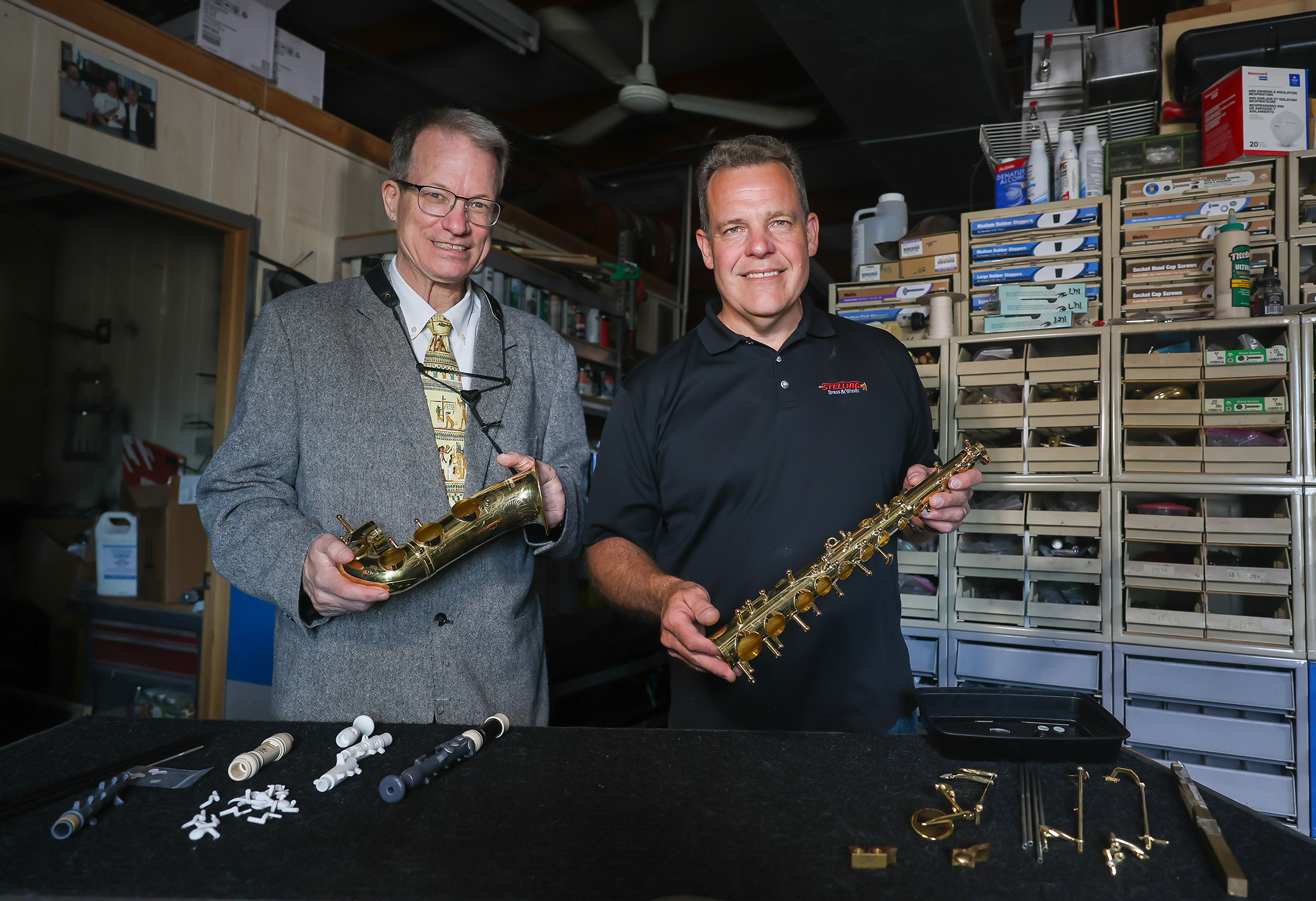
A UNK graduate and owner of Kearney-based Stelling Brass & Winds, Stelling had spent years repairing Nabb’s instruments. His younger brother had studied under Nabb at UNK. More importantly, he possessed the rare combination of musical knowledge and mechanical brilliance required for a project unlike anything either man had attempted before.
“The guy is truly a genius,” Nabb said.
At first, even Nabb hesitated. Everybody told him it couldn’t be done. Then his wife offered unexpected motivation.
“She told me, ‘Jeff Stelling is going to make a one-handed saxophone whether you’re going to play it or not. And if you’re not going to play it, he’s going to give it to somebody else.’”
Nabb laughed remembering the moment.
“Then I decided – I’m in.”
ONE-OF-A-KIND INSTRUMENT
The engineering challenge was extraordinary.
Traditional saxophones require both hands to operate the keys that control pitch and airflow. To make the instrument playable with one hand, those functions somehow had to be consolidated without sacrificing musical quality.
That responsibility largely fell to Stelling.
“This was so far removed from anything we’d ever done,” Nabb said. “It took a while for each of us to get our heads wrapped around this. It’s so different.”
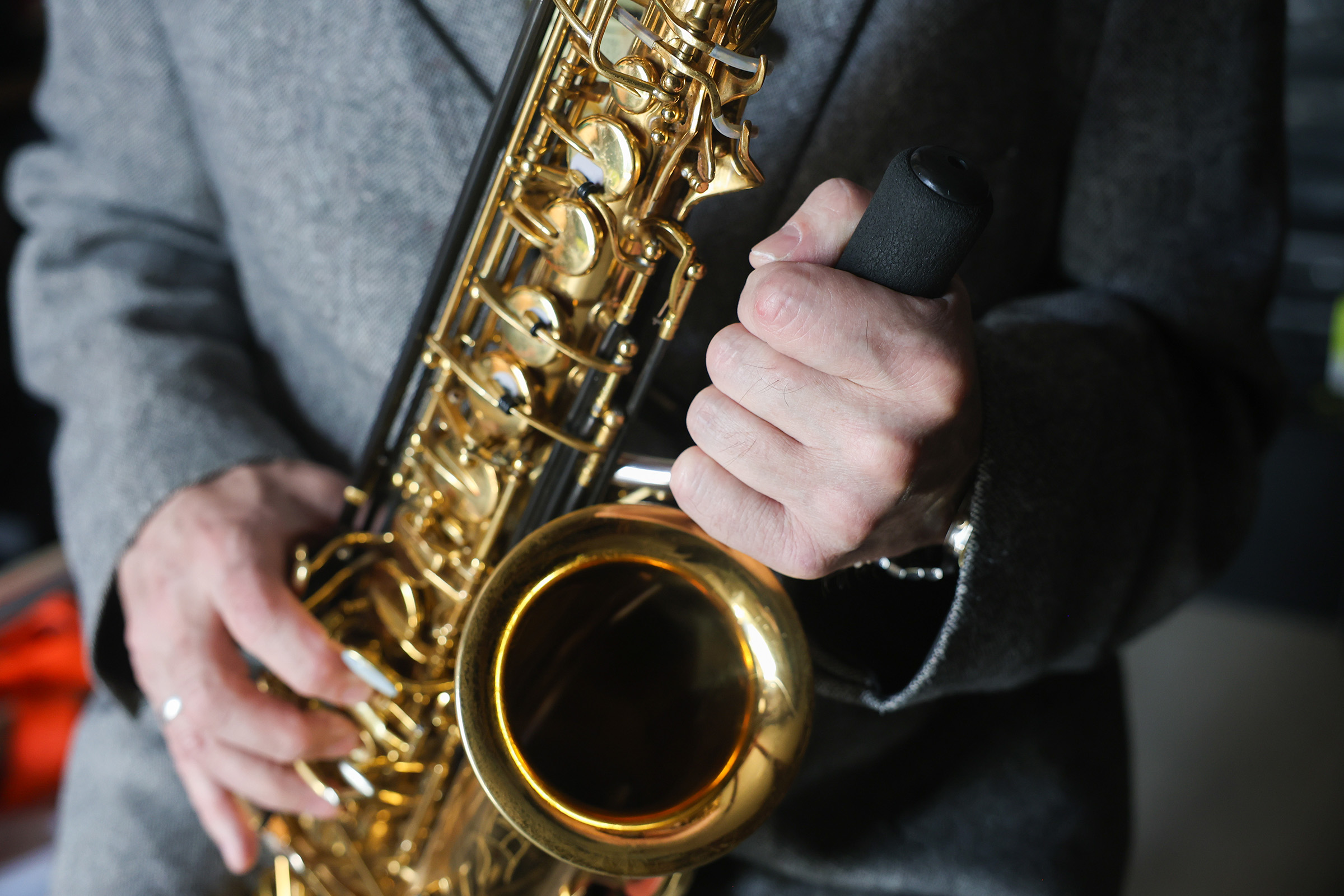
The solution became what is now known as the “toggle-key” mechanism – the technological heart of the adaptive saxophone. Using three specialized toggle keys, a player’s right hand can perform the functions typically requiring both hands.
“It was a matter of moving the responsibilities of the left hand to the right hand,” Nabb explained.
The work required roughly 1,600 hours of design, experimentation and refinement.
Nabb never hesitates when describing Stelling’s contribution.
“It’s just a brilliant idea,” he said. “What Jeff Stelling has done with this mechanism is truly remarkable.”
When the prototype was finally finished, Nabb began playing again at the very beginning.
Elementary band books. Basic scales. Simple exercises.
He slowly rebuilt the skills he feared were lost forever.
In fall 2001, he returned to the UNK music department carrying something extraordinary – a one-of-a-kind instrument many thought impossible.
“I was so happy.”
THE WORLD STAGE
The first instrument was only the beginning.
After continued refinements, Stelling built a fully professional version that Nabb still plays today. And it performs at the highest level.
Beyond returning to teaching, Nabb has spent the last two decades performing around the world with the adaptive instrument.
Canada. England. Scotland. Thailand. The Philippines. Japan. Singapore. Germany. France. Croatia.
He’s played for the House of Lords at the Palace of Westminster in London and recorded music at Abbey Road Studios.
In 2023, he became the first disabled musician to perform on a one-handed saxophone during a prestigious evening concert at the North American Saxophone Alliance Biennial Conference. Most recently, the instrument was featured in an installation at the National Association of Music Merchants Museum of Making Music in California.
The recognition has validated years of work.
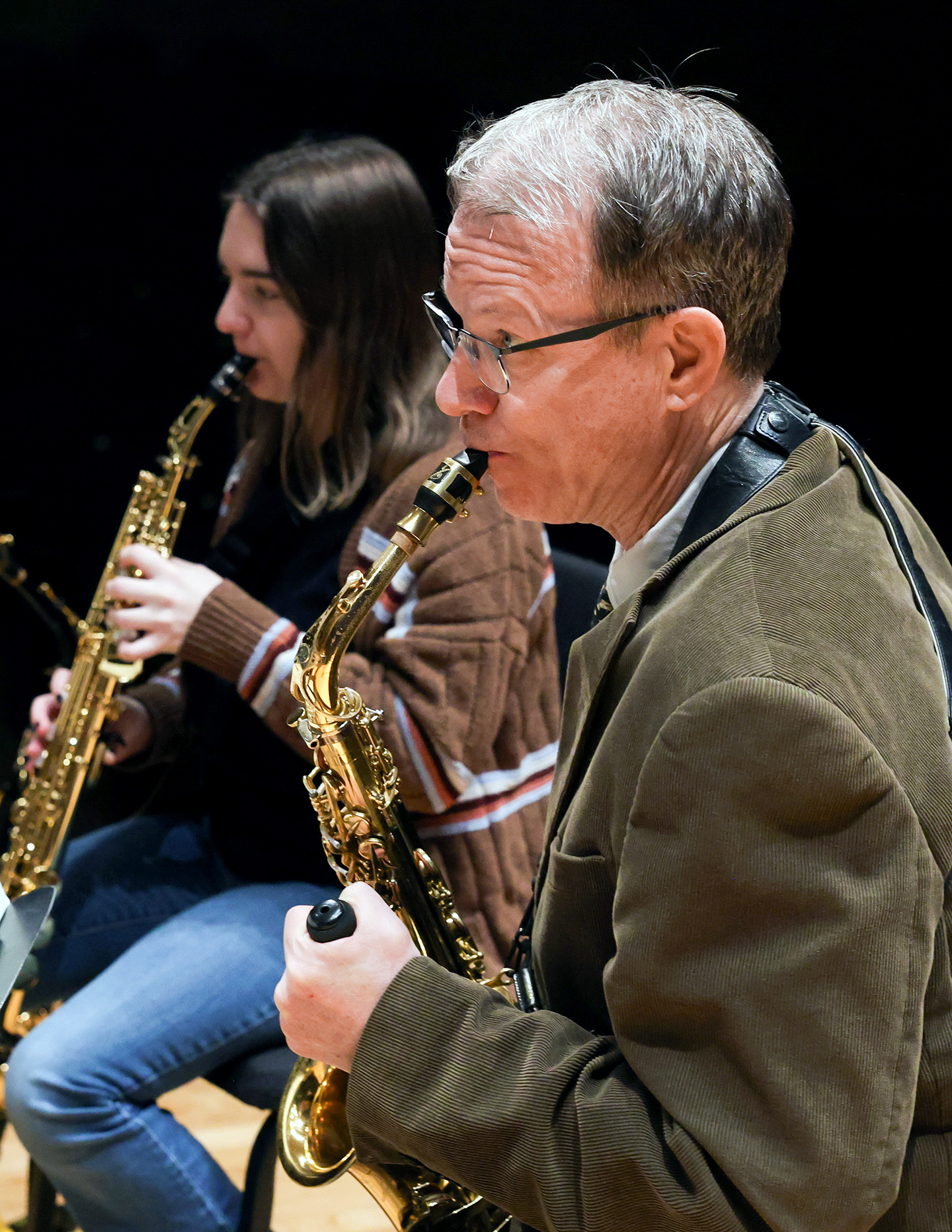
“The instrument turned out to be much more capable than I had ever imagined, more capable than anybody I know imagined. Everybody who sees it for the first time is amazed,” said Nabb, who performs locally with the Kearney Municipal Band, Flatwater Jazz Orchestra and UNK saxophone quartet Saxothology.
Eventually, a bigger realization began taking shape.
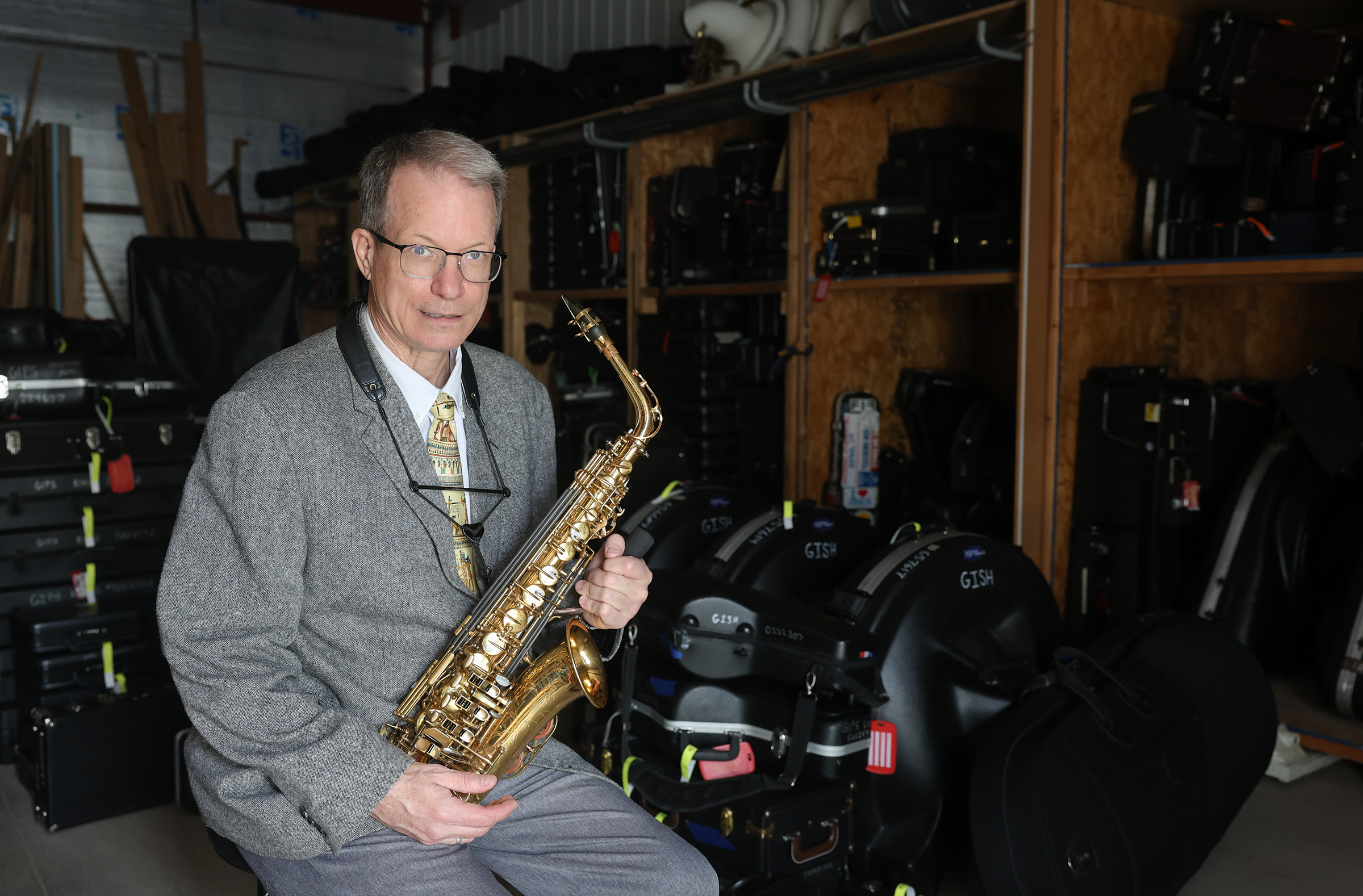
The instruments shouldn’t belong to him alone.
MUSIC BELONGS TO EVERYONE
As word spread through conferences and performances, emails started arriving and calls came from people living with disabilities who desperately wanted to play.
Families searching for options. Musicians unwilling to give up their craft.
Nabb realized something important.
“It just seemed wrong for me to have two of the world’s best one-handed saxophones.”
That thinking led to creation of the UNK One-Handed Woodwinds Program, an initiative focused on building adaptive instruments and making them available to musicians with disabilities through long-term leasing.
The mission is simple: remove barriers.
“It’s not that they can’t make music,” Nabb said. “It’s do they have the opportunity? And that is what we’re going after, providing the opportunities for people to make music.”
His belief runs deeper than accessibility alone.
“Music making and spoken language are the two things that every human culture since the beginning of time has had that differentiates us from other animals,” he said. “It’s part of our DNA. It’s part of who we are.”
A SECOND CHANCE
The first person to benefit from the program was Kyungsun Orr, a teenager living in South Carolina at the time.
He had just returned home from his first high school summer marching band camp when tragedy struck during a birthday celebration flight with his grandfather.
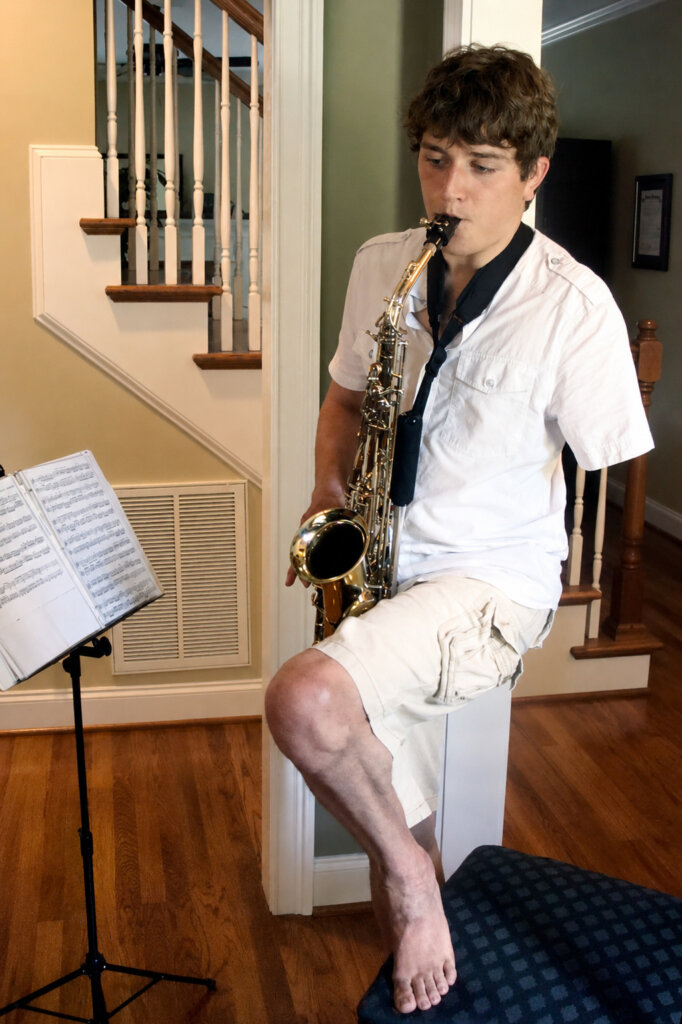
Two people died in the crash. Orr suffered severe burns covering much of his body and doctors amputated his left arm.
Through the trauma and recovery, one thing remained unchanged. He still wanted to play saxophone.
His family learned about Nabb, and Orr became the program’s first lessee.
The impact was immediate.
“To pick up such a complex instrument as the saxophone and make music exactly the way I had done before … it felt natural,” Orr said. “It felt right. It was just like picking up where I’d left off.”
He returned to performing as first chair saxophonist in high school and later played while studying architecture at Clemson University. Orr even performed at his own wedding in 2008.
Reflecting on the instrument’s impact, he keeps his answer simple.
“It helped maintain the continuity of my life choices,” he said. “Thanks to Dr. Nabb, I managed to continue as much with life as usual.”
Today, Orr lives in the Netherlands, where he owns an architecture firm.
LEVELING THE PLAYING FIELD
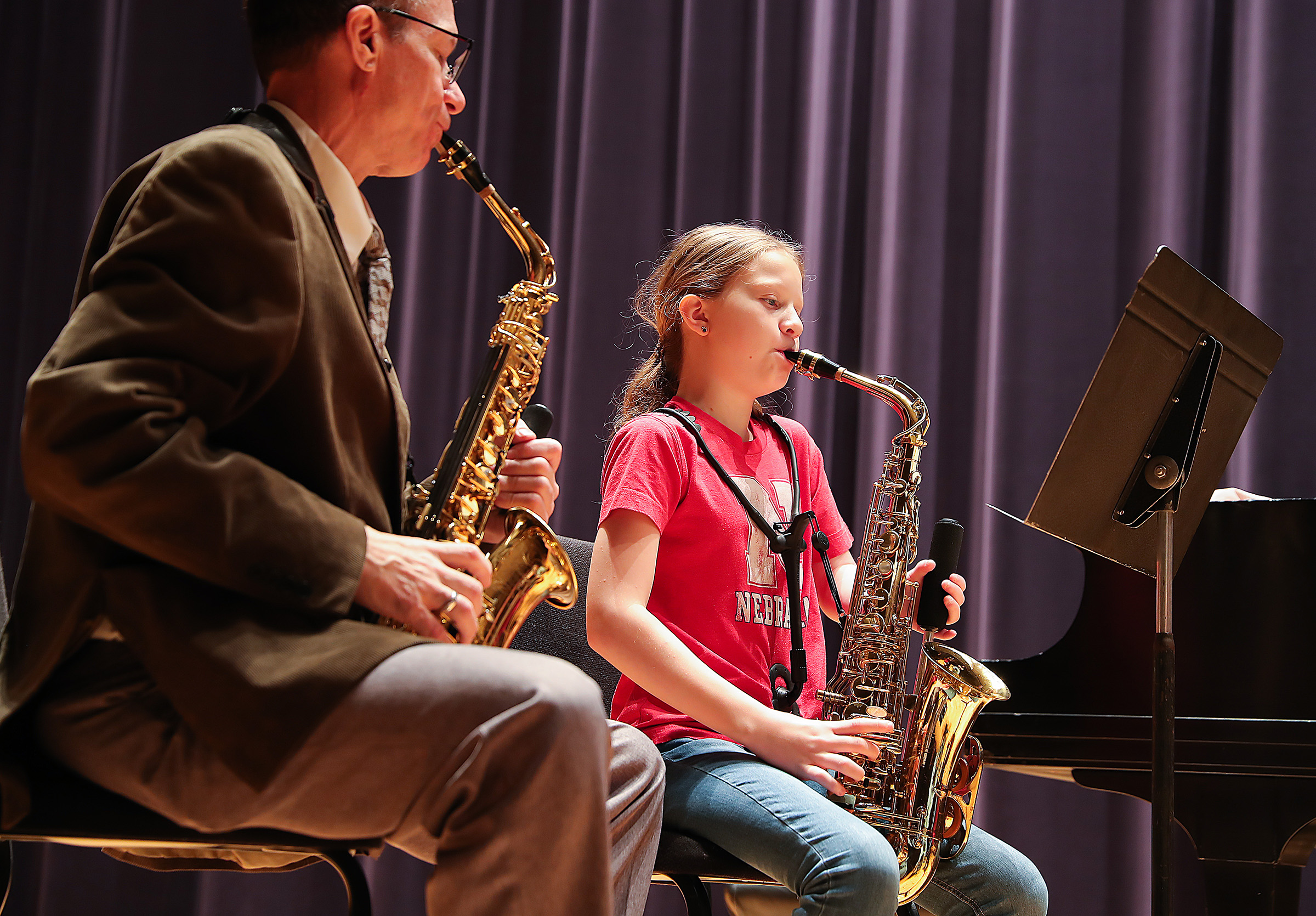
The original prototype Nabb used to teach himself how to play again has now served six different musicians over the years, each with their own story of perseverance and possibility.
Its current home is with Claire Bahensky, a Lincoln teenager whose family discovered firsthand what access to music can truly mean.
Claire was born with a brachial plexus injury that severely limited function in her left arm.
When she discovered a love for saxophone in elementary school band, her parents worried disappointment would follow. A traditional instrument simply wouldn’t work for the young girl.
Megan Burkle, a close friend and UNK graduate, introduced them to Nabb and the One-Handed Woodwinds Program.
Now, Claire is a freshman at Pius X High School in her fifth year playing the adaptive saxophone.
According to her mother, Brenda, the impact of this opportunity goes far beyond music.
“It’s normalcy,” she said. “Fitting in matters a lot to junior high and high school kids. Having a disability, she’s had to endure so many things that most kids her age never even think about. She faces a lot of obstacles just to do things most kids take for granted – if she even gets to do them at all.
“Having the one-handed saxophone means that, as least for this one activity, she’s just like everyone else. She practices, goes to band class and plays in concerts. She’s able to develop her talent without limitations from her disability, in the same way as any other student would. Ultimately, the saxophone levels the playing field. It gives her the same chance as any other student, which is all she really wants.”
A sign of her talent as a musician, Claire was selected for a Pius-sponsored honor band last academic year. She’s also been an inspiration for her younger sister, who joined band and started playing the clarinet after watching Claire succeed.
“We’re always so grateful that this opportunity came to us,” Brenda said. “Dr. Nabb and Jeff Stelling have been tremendously supportive of us and of Claire’s band experience. We’re incredibly thankful that Dr. Nabb chose to take his own very difficult situation and use it as a catalyst to help others, and that Mr. Stelling uses his time and ingenuity to literally make it possible for Claire and other disabled musicians to have the same access to playing as anyone else.”
WORTH THE INVESTMENT
The success of UNK’s One-Handed Woodwinds Program has only increased interest.
In addition to the instruments played by Nabb and leased to other musicians with disabilities, work is underway to build one more. This newest project – a left-handed alto saxophone designed for musicians with disabilities affecting their right hand – will take roughly 2 1/2 years to complete.
The adaptation alone costs approximately $25,000.
UNK students in the local chapter of the National Association for Music Education (NAfME) kick-started the fundraising campaign in collaboration with the Nebraska Music Educators Association and NAfME chapters at other colleges and universities across the state. Additional support has come from the Arthur Klinkacek Community Enrichment Fund, Ted Baldwin Donor Advised Fund, Nebraska Arts Council and numerous individual donors, as well as corporate contributions from JodyJazz and Rousseau mouthpieces.
“This is a big endeavor, and the support has been tremendous,” Nabb said. “They all see it as viable and truly worth the investment.”
The effort also continues expanding nationally.
In March, the U.S. Department of Veterans Affairs contracted Stelling Brass & Winds to build a toggle-key saxophone for a veteran with a disability – the first project of its kind.
“That’s the kind of credibility we wanted,” said Nabb, who’s written articles on adaptive instruments for national and international publications. “That’s a huge stamp of credibility.”
Nabb’s work increasingly extends beyond Nebraska.
Last summer, he was part of the Cincinnati Adaptive Arts and Music Camp, a weeklong program bringing together musicians, engineers and educators focused on creating artistic opportunities for people with disabilities. The UNK faculty member introduced students and teachers to affordable one-handed recorders – instruments once prohibitively expensive but now manufacturable for roughly $100 thanks to new design innovations.
The work connects him with others tackling the same challenge from different angles.
“It’s very gratifying to be part of this group,” he said. “It makes me feel good about what I’m doing, and it makes me stronger.”
LASTING IMPACT
Twenty-six years after suffering the stroke that left his future uncertain, Nabb sees the journey differently now.
The disease changed his life permanently.
Some physical limitations remain. His left side still carries weakness. He still walks with a slight limp.
“It’s given me a lot more self-confidence in some ways, and it’s also humbled me in some ways,” Nabb said. “It depends on the day of the week. Some days I still feel pretty small, and other days I’m walking tall. But I’m always trying to be grateful for what I have, because I have so much.”
He stands tallest when talking about students who have benefited from the program and the impact these adaptive instruments will make now and well into the future.
“This is everything. This is the best thing that’s ever happened in my life. It’s the biggest success ever,” he said before pausing momentarily.
“I don’t have words for it. I’m just so happy.”
For Nabb, the One-Handed Woodwinds Program extends beyond personal redemption.
The pain he endured can never be erased. But it created something lasting.
Something bigger than a single musician.
Something capable of changing lives long after he is gone.
“These instruments should be around for 100 years if they’re taken care of properly,” he said. “A lot of people should be able to use them.”
Then he offered the thought that best captures what this journey has meant.
“This represents a lifetime of work.”
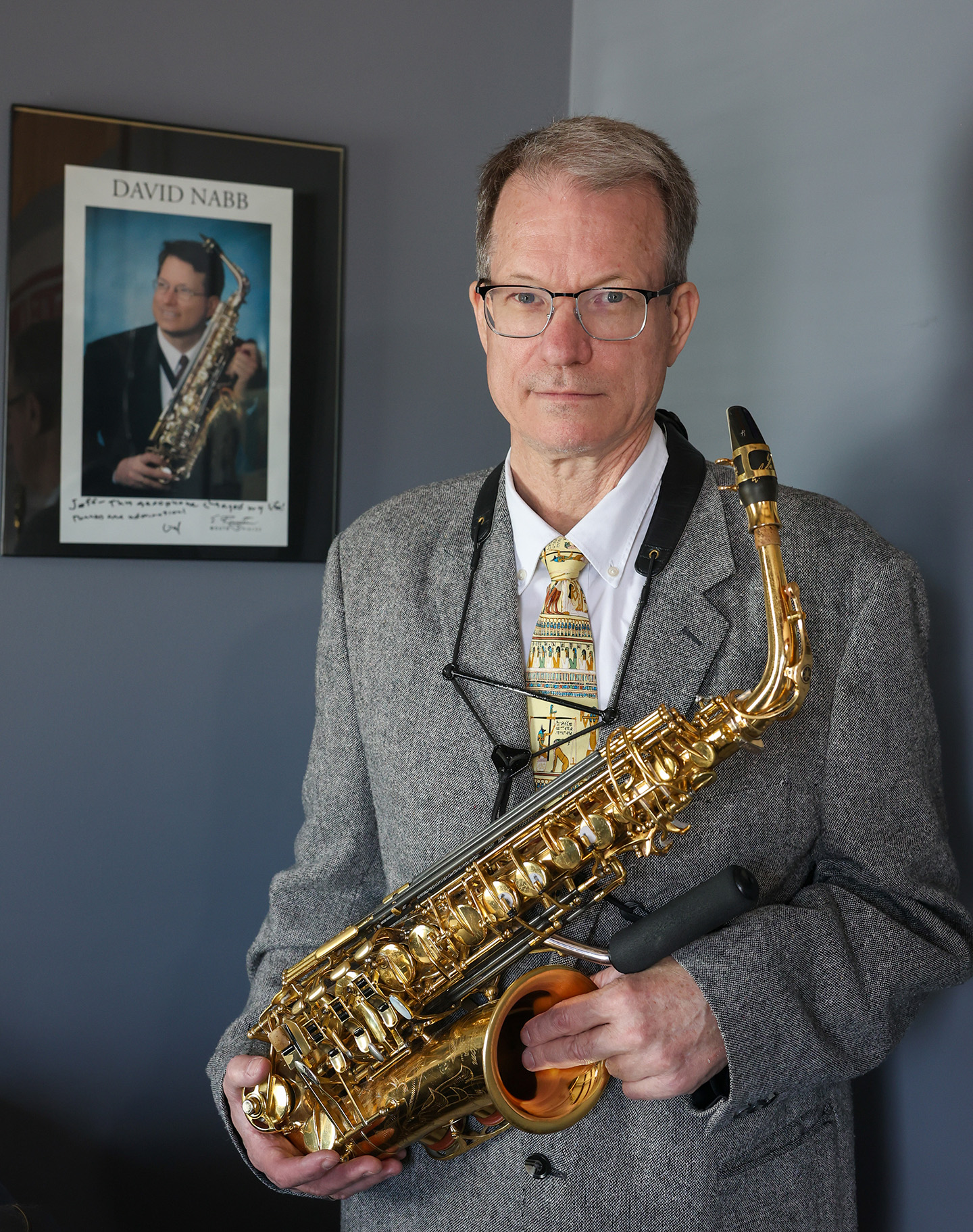
DAVID NABB
Title: Professor of Music
College: Arts and Sciences
Education: Bachelor of Music, Indiana University, 1984; Master of Music, Indiana University, 1986; Ph.D. in music education, University of North Texas, 1995.
Years at UNK: 32
Areas of research/specialization: Nabb’s work focuses on woodwind performance and developing musical opportunities for persons with disabilities. Since surviving a stroke in 2000, he has created and directed the University of Nebraska at Kearney One-Handed Woodwinds Program. In partnership with Stelling Brass & Winds of Kearney, the program designs, builds and demonstrates adapted one-handed woodwind instruments, including the professional “toggle-key” saxophone. The program also researches innovative production methods, leases adapted instruments to musicians with disabilities and promotes awareness of the musical potential of persons with disabilities. Nabb’s work has been featured at the Museum of the Royal Colleges of Music in London and the NAMM Museum of Making Music in San Diego.
Courses Taught: Woodwind Instruments, Music History, undergraduate and graduate courses.
Recent Creative & Professional Activity: U.S. Department of Veterans Affairs partnership with Stelling Brass & Winds to build a “toggle-key” saxophone for a veteran with a disability, 2026; Installation featuring the toggle-key saxophone and video performance displayed at the NAMM Museum of Making Music in San Diego, 2024-25; First performance by a disabled musician on a one-handed saxophone at the North American Saxophone Alliance Biennial Conference, 2023.