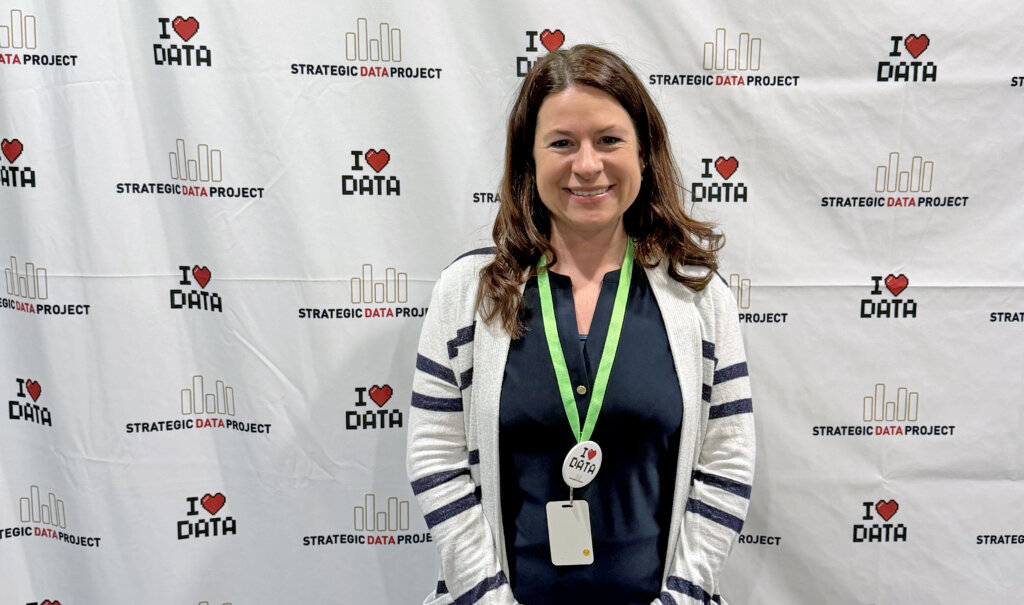
KEARNEY – Megan Fryda will represent the University of Nebraska at Kearney in the inaugural cohort of fellows for the Nebraska Strategic Data Leadership Network.
The director of Academic Resources and Institutional Research at UNK, Fryda joins 26 other fellows from Nebraska’s public and tribal postsecondary institutions, including community colleges, the Nebraska State College System, University of Nebraska System and Little Priest Tribal College.
The Strategic Data Project (SDP), an initiative of the Center for Education Policy Research at Harvard University, is launching the Leadership Network this month in collaboration with the Nebraska Statewide Workforce and Educational Reporting System (NSWERS).
Over the course of the two-year fellowship, participants will engage in a rigorous sequence of in‑person and virtual workshops, ongoing virtual professional learning, individualized technical support and cross‑institutional collaboration. Each fellow will be paired with an expert SDP faculty adviser to guide a strategic data project aligned with both their organization’s priorities and NSWERS’ key outcome indicators.
Projects in the inaugural cohort will address a range of pressing analytic and policy questions across postsecondary persistence, postsecondary graduation and employment outcomes. Sample projects include analyzing students’ course taking patterns to identify combinations of courses linked to higher rates of withdrawal or delayed completion; tracking the relationship between students’ involvement in athletics and student organizations and retention; and understanding outcomes for students who transfer out of an institution.
Through this collaboration, SDP and NSWERS aim to build a sustainable, statewide model for strategic data leadership that strengthens Nebraska’s educational ecosystem, informs policy and practice, and supports long‑term student success.
Fellows were nominated and supported by senior leaders within their organizations and selected for participation based on their demonstrated commitment to using data to improve postsecondary and workforce outcomes across the state.