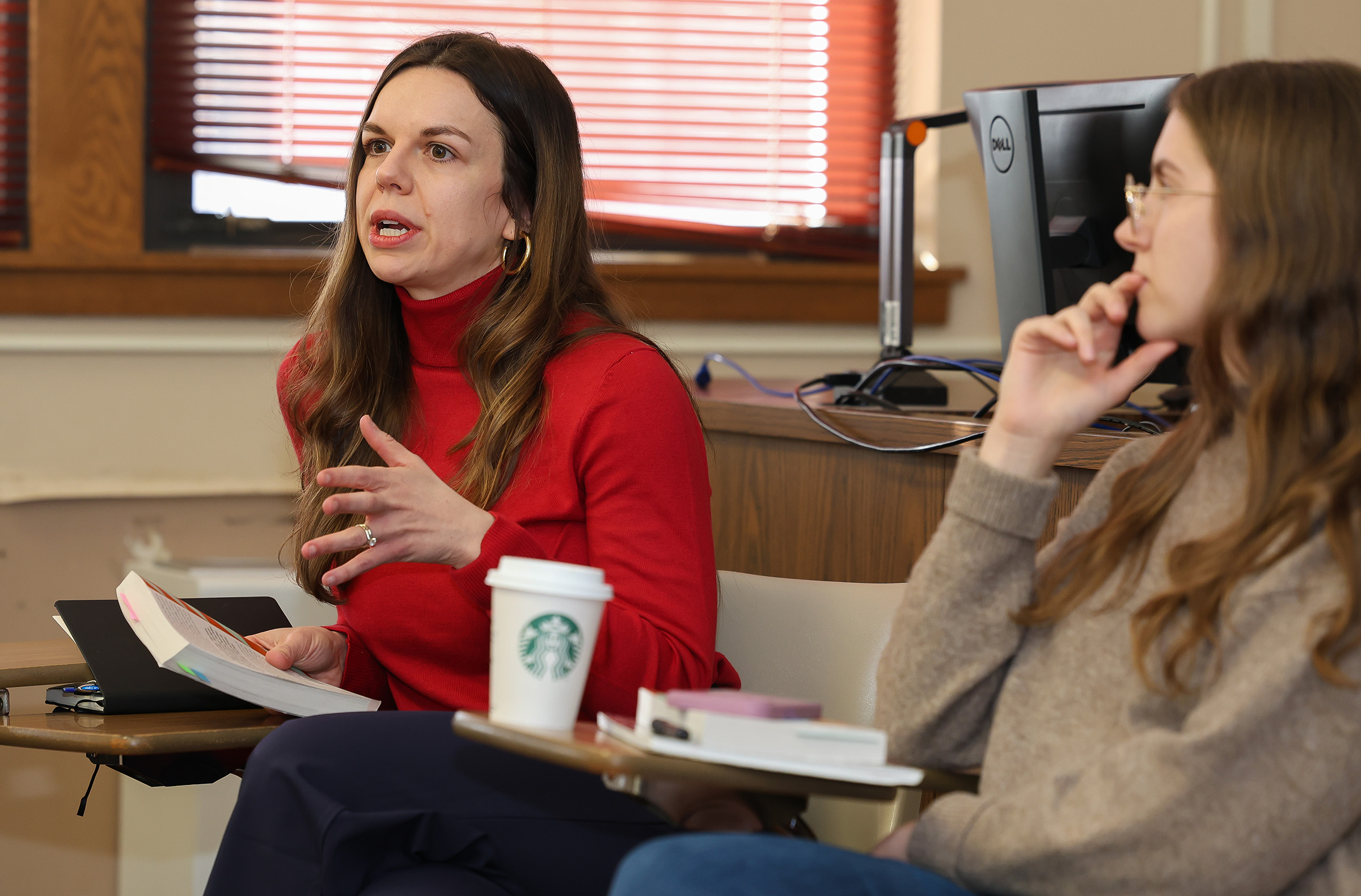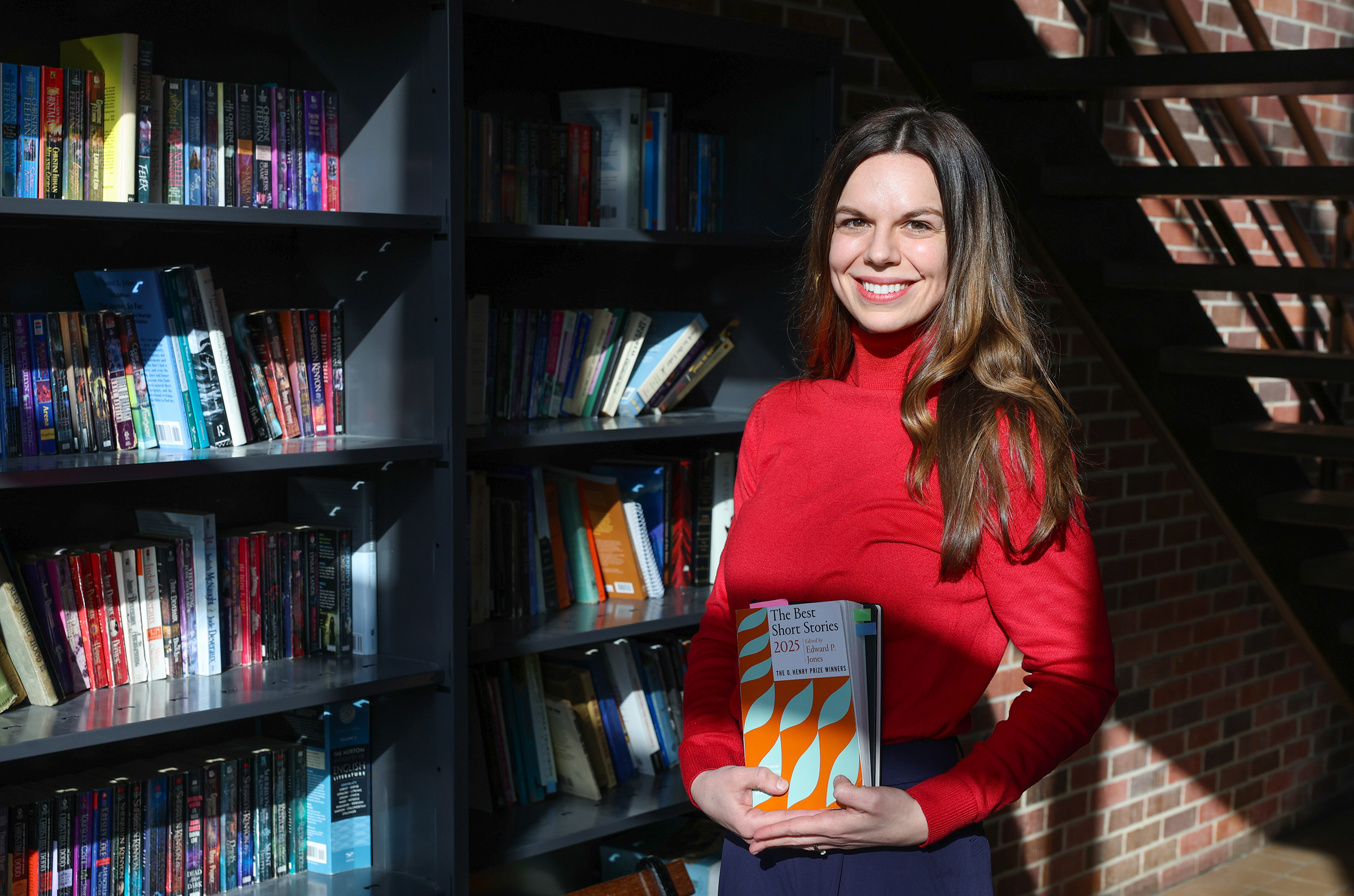
Writing sits at the center of Theodora Ziolkowski’s life. It’s a passion that led her as naturally to the classroom as it did to the page.
Now an assistant professor of English at the University of Nebraska at Kearney, she combines her love of creative work with a deep commitment to teaching and mentorship.
Ziolkowski joined UNK in fall 2022 after earning a bachelor’s degree in English from the University of Vermont, master’s degree in creative writing from the University of Alabama and doctorate in creative writing and literature from the University of Houston. She pursued a career in teaching because it allows her to balance the solitary work of writing with a public commitment to sharing the craft and engaging in the literary community.
“I believe that I was born to be a writer; I have no choice but to be one,” Ziolkowski said, crediting an upbringing that valued books and creative expression as foundational to her development.
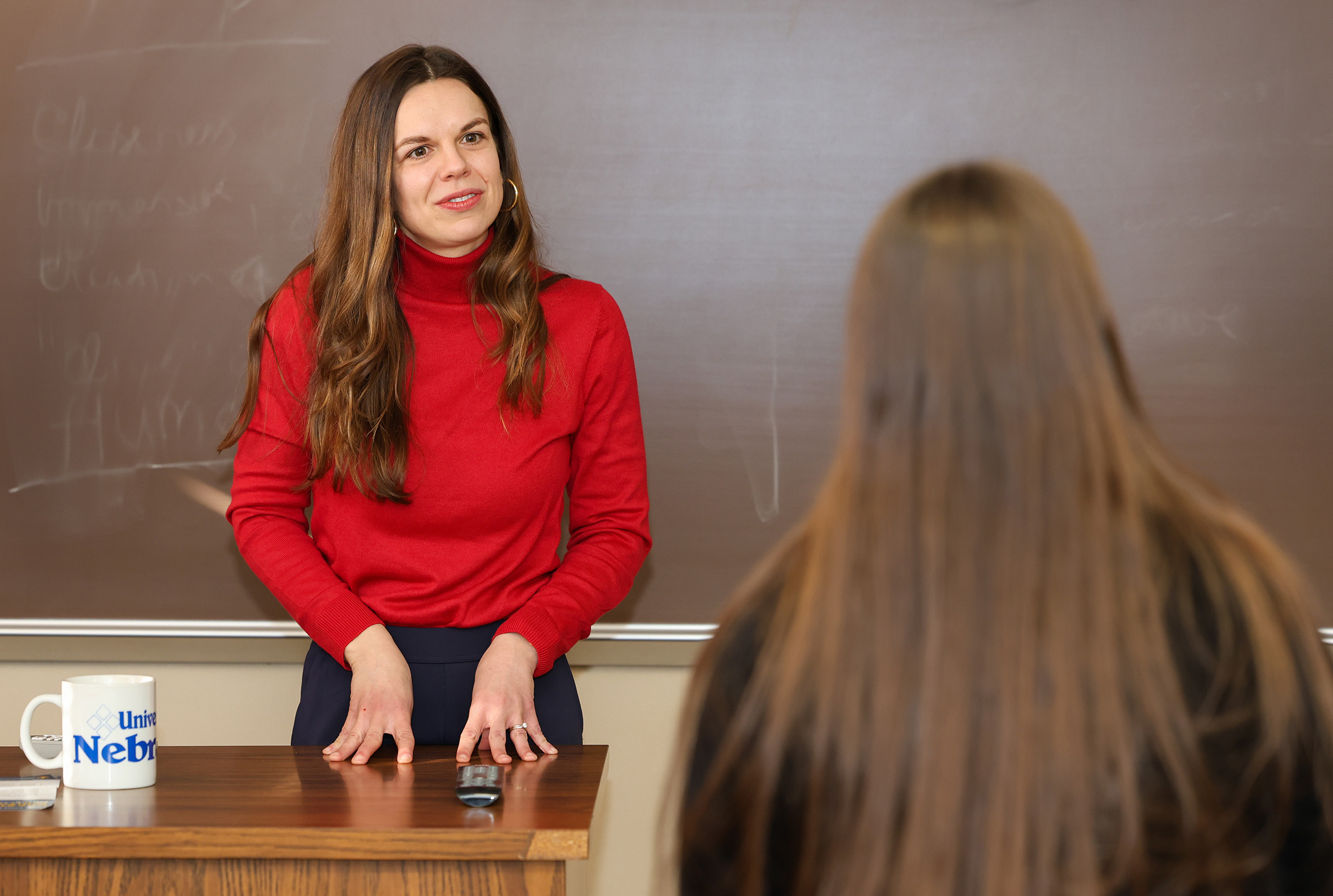
That sense of purpose extends naturally into the classroom. Ziolkowski was drawn to UNK by its emphasis on mentorship and the culture of care she felt when visiting campus.
“As a creative writing professor, I have the honor of working with UNK’s students – students who are not only dazzlingly smart and hardworking, but who are also unabashedly curious,” she said.
What classes do you teach?
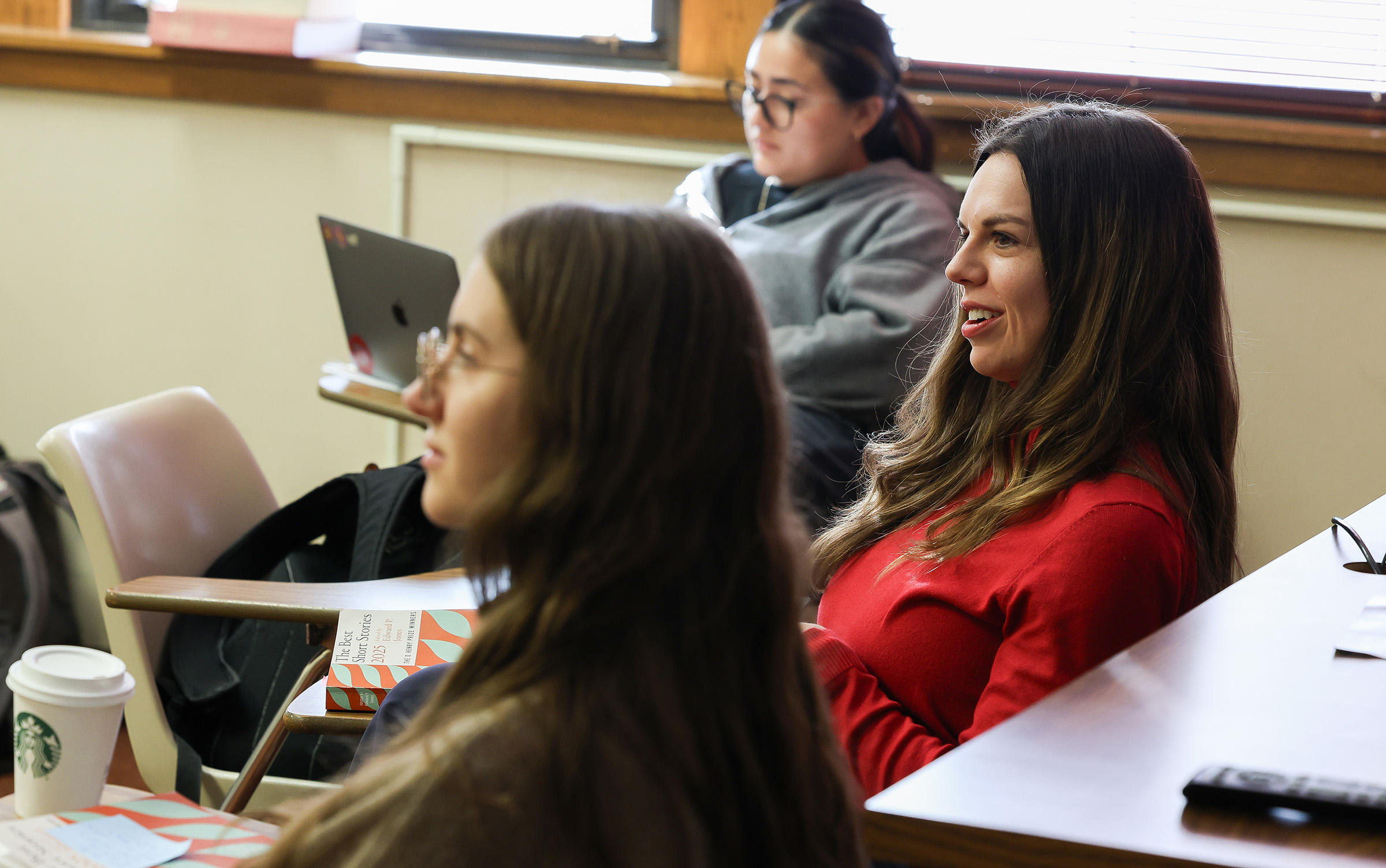
I teach a range of creative writing classes at UNK: Introduction to Creative Writing, all levels of fiction writing on the undergraduate side (Beginning Fiction, Advanced Fiction Writing, Narrative Strategies), as well as graduate versions of Fiction Writing and Narrative Strategies in the English MA program. I have also taught graduate Poetry Writing, a wellness-themed composition course for undergraduates, as well as Creative Writing Professionalism, an upper-division experiential learning class that provides our creative writers with the knowledge and resources to revise and submit their poems, stories and novels for publication, along with the skill set to apply to and pursue admission into Master of Fine Arts programs. Students in Creative Writing Professionalism also plan their own public reading at the course’s conclusion.
This semester, I am teaching a graduate course, Creative Nonfiction, with the special theme of caregiving. I became a mother last spring and have a background in working as a lifecare specialist at a memory care facility, experiences that inspired the class theme, along with the projects I am currently pursuing in my own writing. The course is only a few weeks underway, and I have already been impressed by the students’ writing. They all have a unique and personal relationship to caregiving that is fascinating to see them explore.
What is your goal for students in these classes?
Across every creative writing class that I teach, my hope is that students leave the course recognizing that writing and sharing their work are brave acts, and that their ideas – and experimenting with the art of articulating them on the page – are important and necessary for others to read and/or hear. As their professor, it is also essential that I establish an atmosphere where creative thought and expression flourish. Another goal is for students to identify fellow writers in each course who are strong readers of their work. My hope is that the bonds they foster with these peers continue well beyond the course’s conclusion.
Do you have any other roles on campus?
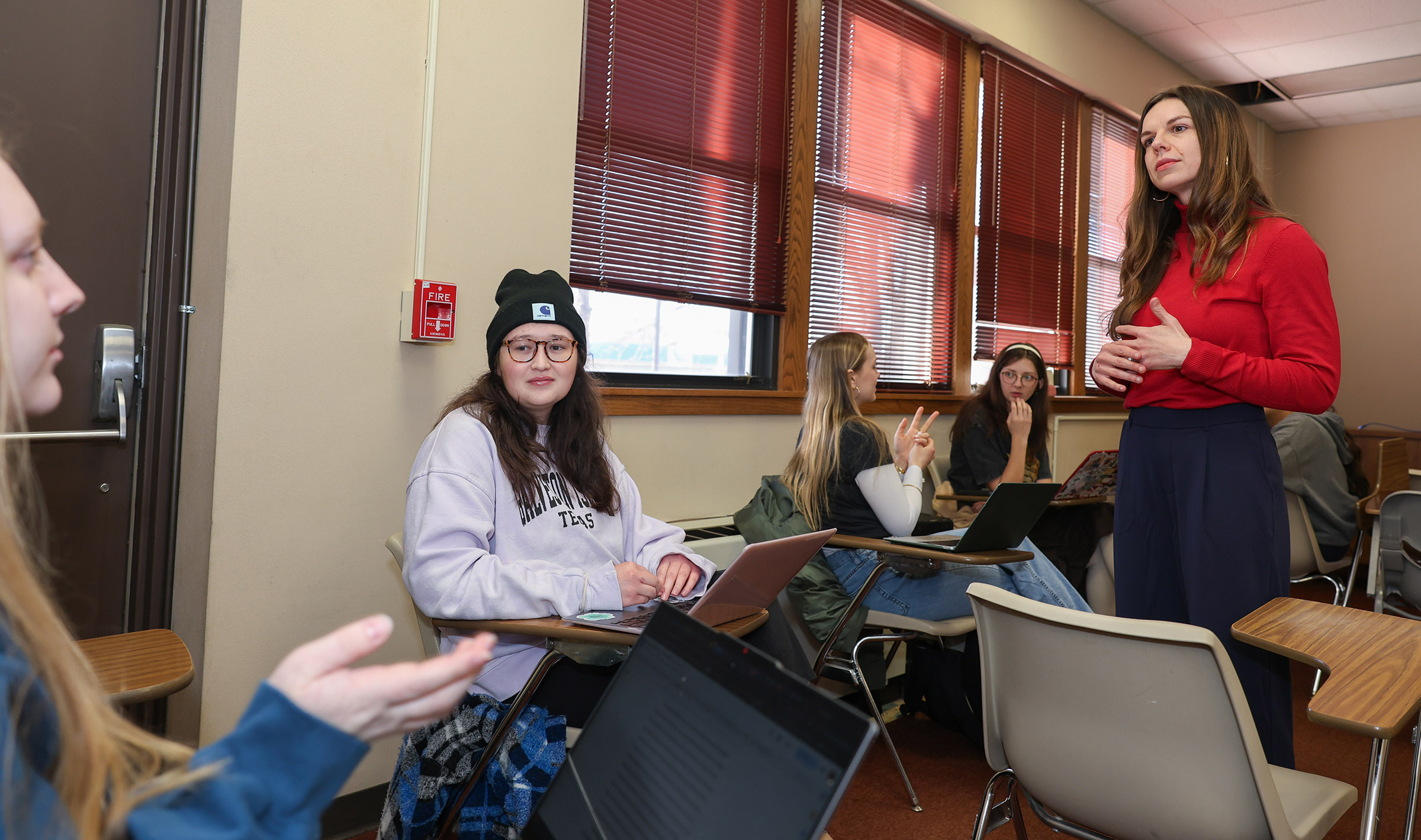
I currently serve as the assistant chair in the English Department and recently joined Dr. Annarose Steinke as co-adviser for our department’s chapter of the international English honor society, Sigma Tau Delta. In addition, I enjoy regularly mentoring students through the Undergraduate Research Fellows program, as well as through chairing creative theses through our department’s graduate program.
How do UNK English programs prepare students for their futures?
“What can’t you do with an English major?” is among our department’s mottos, and for good reason. Students who graduate with a degree in English are armed with the skills in critical, analytical and creative thinking that are a boon in the workforce, especially in the age of AI. Alumni in our program have gone on to become teachers, writers, lawyers, doctors … the possibilities are truly endless.
Tell us about your writing. What is your style? What topics do you like to explore?
I write poetry, essays and fiction (short stories, novella, novels). I guess you could say I’m a bit of a glutton for genre! Writing is how I make sense of the world; practicing my craft across a variety of genres multiplies the ways in which I can express my thinking.
I write about a variety of topics, though I am often drawn to writing about memory and women’s experiences. The novel I have on submission is a literary drama about two sisters, which takes place in Nebraska. The one I am currently revising is about four friends from high school who are reuniting in their hometown. Old jealousies surface; chaos ensues … the book is darkly funny. Meanwhile, the poems in my first collection, “Ghostlit,” consider feminist pop culture and the porousness of memory, while the poems in the second collection on which I am now at work concern motherhood and our natural environment.
Do you have a favorite place to write?
I love writing at home but will also happily write anywhere. If I’ve been immersed in a project for a while, I’ve found it can be good to shake things up and read what I’ve written, or add to what I’ve written, from another location. Changing locations can be helpful for students, too, which is why I take my in-person creative writing classes on mini campus field trips. Every semester, we go to the Frank Museum for a tour, then follow that tour with writing and doughnuts in the museum’s exquisite rooms.
Among your published pieces, which is your favorite?
My short story, “We Thank You for Your Cleanliness,” is about a widower and mother of a teenage son whose grief propels her to fantasize about a cleaner she befriends (who may or may not be real). It isn’t necessarily my favorite story I’ve written, but it stands out because it was the first story I placed in a well-known magazine with wide circulation, and the first time I was compensated for my writing. The editors of the magazine even mailed that year’s contributors a pound cake at Christmas. I was a graduate student at the time. I will never forget it!
What is your favorite book to read?
I always point to Henry James’ “The Turn of the Screw” as a book that haunts and obsesses me. I opted to stay in my cabin to read it during sleepaway camp in middle school because I’d rather lose myself at Bly Manor than learn archery or whatever. Another book, because I can’t stop at one, is “Mrs. Caliban” by Rachel Ingalls, which I teach in both my undergraduate and graduate levels of the Narrative Strategies course. It’s a perfect novella.
On the poetry side, the poem that made me want to become a poet was “Song” by Brigit Pegeen Kelly. I fell further in love with poetry when I heard Tracy K. Smith read from her collection, “Life on Mars,” as an undergraduate student at the University of Vermont. “Life on Mars” would go on to win the Pulitzer, and Smith would be recognized as the U.S. poet laureate. I can vividly remember sitting in the audience listening to Smith read and feeling like my skin was on fire (in a good way).
What has your experience been like in Kearney?
Prior to Kearney, I lived in Pennsylvania, Vermont, Alabama and Texas. I also spent a semester in Scotland and part of a summer in Italy, the former during my undergraduate studies and the latter for a research trip while I was earning my Ph.D.
My writing has always been deeply informed by place; as such, wherever I live or travel is always finding a way into my writing, which may explain how Nebraska came to occupy the setting of one of my novels. Another Kearney-based source of awe and endless inspiration are the sandhill cranes. I enjoy, too, how much UNK is part of the community, and vice versa. One of the things I appreciate most about Kearney is how close-knit, friendly and family-oriented it is. I feel so lucky that my husband and I get to raise our son here.
Because my mother is from a farm in mid-Michigan, I grew up spending summers visiting relatives there. In some ways, my affinity for the Midwest began at a young age. It took very little time for Kearney to feel like home.
What do you love most about UNK?
Working with the students and the one-on-one mentorship that UNK champions. I am thankful to have the opportunity to share a subject I’m so passionate about with the students in my classes and those I mentor in programs like Undergraduate Research Fellows. I also consider myself wildly fortunate that the students trust me enough to share their work with me. I am grateful to be teaching at UNK, where my teaching as well as my writing are valued.
Share something unique about yourself:
Before pursuing my graduate studies, I worked as a copywriter for a women’s fashion and home goods company. I got to do things like describe a pair of Eileen Fisher pants in three sentences and craft headlines for the company’s catalogue. I think there was a point when I also had to make a wastebasket sound enticing enough to buy.
It’s also perhaps worth noting – especially for our students considering pursuing creative writing – that one of the reasons I got the copywriting job was because I had an undergraduate background in studying and writing poetry.
PHOTOS BY ERIKA PRITCHARD, UNK COMMUNICATIONS