By TYLER ELLYSON
UNK Communications
KEARNEY – “My social anxiety is the reason I don’t have friends.”
“I would give anything to not be mentally ill.”
“I’ve learned SO much in college. Like what depression is and that I have it.”
The anonymous comments, posted recently by University of Nebraska at Kearney students on the social media app Yik Yak, offer a glimpse into a much larger issue facing college campuses nationwide.
Mental health challenges have become increasingly common among young adults, with 69% of college students reporting they experienced a mental or behavioral health concern during the past year, according to a national survey released this spring by UnitedHealthcare. Anxiety and stress, depression and ADD/ADHD were reported at their highest rates in the survey’s four-year history.
The numbers at UNK are equally concerning.
About 40% of UNK students surveyed this year reported experiencing suicidal thoughts at some point in their lives, and 1 in 3 students completing an initial assessment through UNK Counseling indicate they’ve had suicidal thoughts within the previous two weeks.
“We’re seeing students come to counseling with more intense symptoms,” said Kiphany Hof, director of counseling at UNK. “From their perspective, things feel more difficult than what we were hearing five or 10 years ago.”
At the same time, Hof sees an encouraging change. The stigma surrounding mental health is decreasing, she said, making students more willing to seek professional help.
UNK Counseling served 307 students during the 2025-26 academic year, accounting for 1,898 total sessions.
Those services are important not only for students’ well-being, Hof said, but also their ability to succeed in college.
Mental health concerns and overwhelming stress can interfere with academics, relationships and other areas of a student’s life, and they can contribute to a decision to leave college.
“That’s a big deal,” Hof said. “That’s getting in the way of them accomplishing what they want to do and reaching their goals in life.”

Focusing on prevention
Although counseling remains a critical resource, UNK is putting greater emphasis on reaching students before they experience a crisis.
“We don’t want it to get that bad,” Hof said. “The question is, how can we intervene a little earlier?”
That proactive approach is a major focus for Sally Wiarda, assistant director of counseling, who joined the office in January in a newly created position focused on outreach, prevention and wellness.
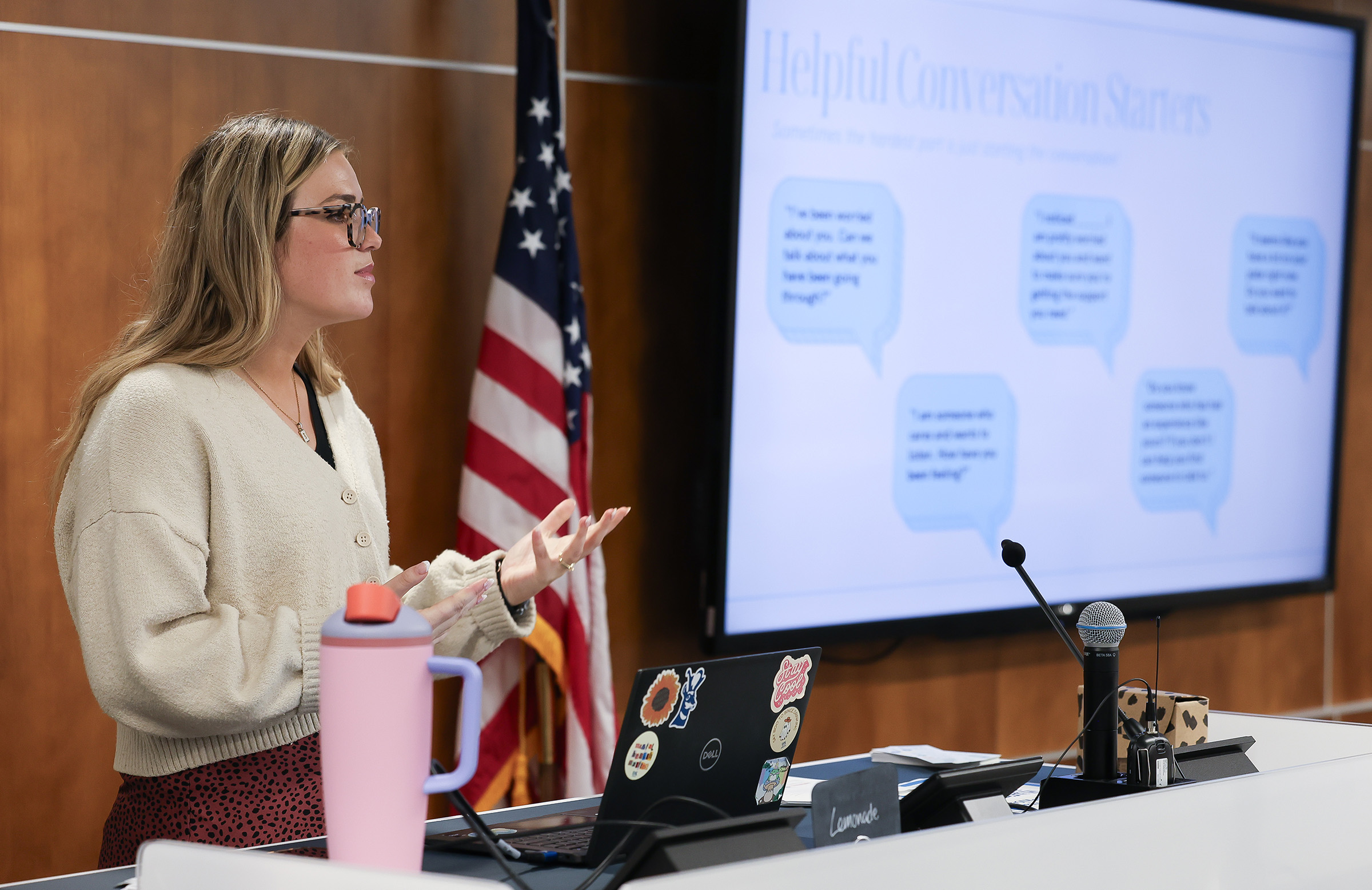
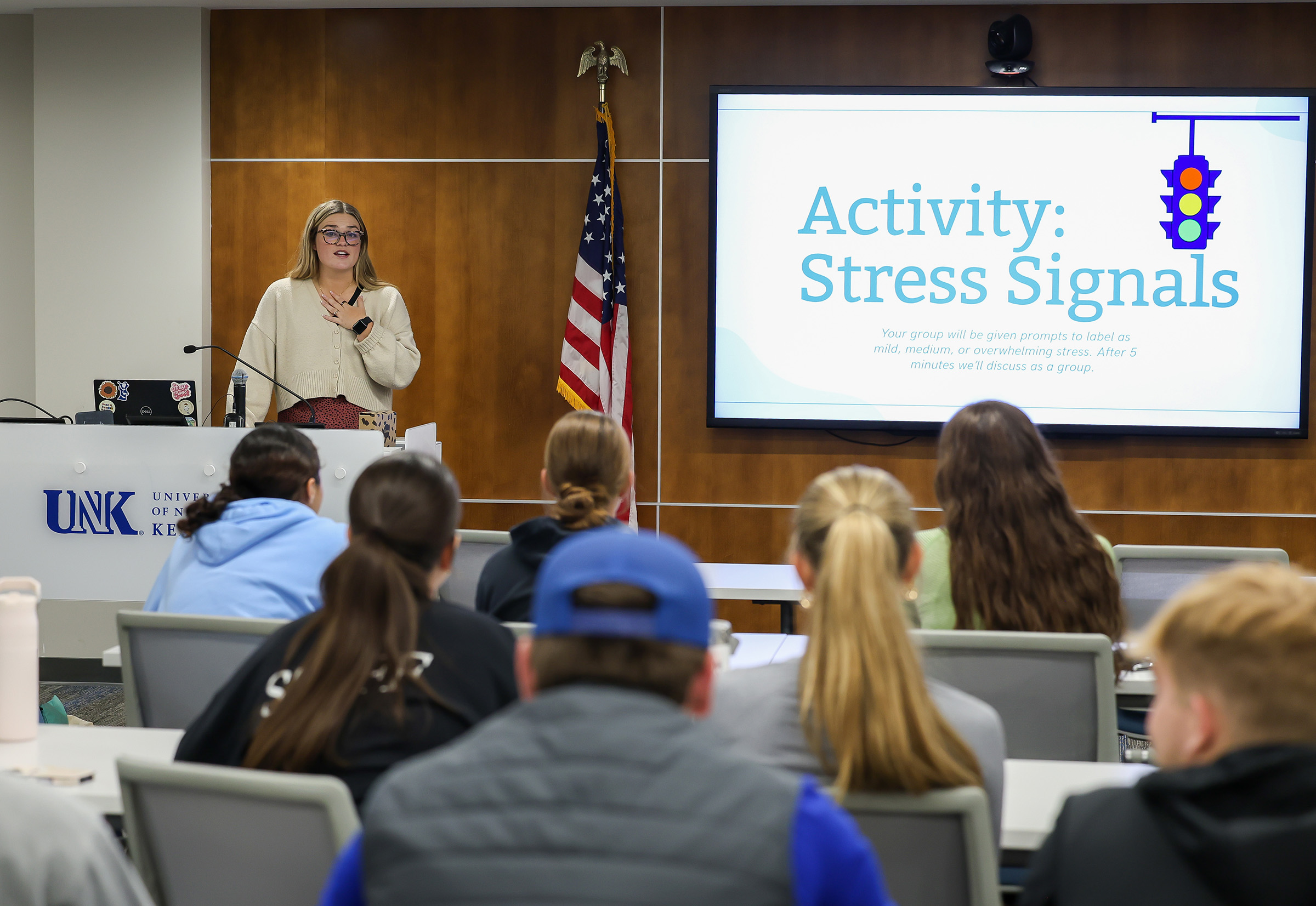
Her work includes suicide prevention and stress management training, classroom presentations, social media outreach and other campus initiatives designed to increase awareness of mental health and the resources available to students.
“This allows us to reach students who might never step foot in the Counseling Center,” Wiarda said. “That’s really important when we’re talking about prevention.”
One of the office’s newest initiatives is THRIVE, an interactive, hourlong suicide prevention training that teaches participants how to recognize when someone may be struggling, start a supportive conversation, respond with empathy, identify safety concerns and connect that person with appropriate resources.
Resident assistants have already participated in the training, and the program is being promoted to Fraternity and Sorority Life and other student organizations. Drop-in sessions are being offered for students, as well. UNK Counseling would eventually like every first-year student to complete the training.
Faculty and staff will have an opportunity to participate Oct. 20, with another session planned for Chancellor’s Cabinet members and deans later this month. The goal is to offer the training at least once each semester and eventually make an online version available.
The training emphasizes a simple idea: You don’t need to be a mental health professional to help someone who is struggling.
“Students who have completed the training tell us they feel more comfortable starting those conversations and asking questions,” Wiarda said. “That’s exactly what we want – for people to feel prepared to notice when something might be wrong and know how to respond.”
Support around the clock
Not every student is comfortable walking into a counseling office, and UNK recognizes that support needs to come in different forms.
Togetherall provides another option.
Available 24/7, the online mental health community allows students to anonymously share their thoughts and experiences, connect with peers around the world and join groups based on common interests or concerns. Licensed mental health professionals monitor the platform and can intervene when someone may be at risk of self-harm or suicide.
“It’s a great resource for students who might not be comfortable coming to counseling but still want a space to talk and connect with other people,” Wiarda said.
About 650 UNK students are currently part of the Togetherall community, and 61% of those students are not engaged with any other formal mental health support.
“That tells us we’re reaching students who otherwise might not be connected with these services,” Hof said. “That’s an important resource for our campus.”
Togetherall is available at no cost to anyone with a UNK email address.
Wiarda is also a member of UNK’s CARE Team, a group of professionals from across campus who receive referrals involving students of concern. Team members gather information and work collaboratively with campus departments, faculty and staff to identify appropriate strategies and provide early intervention for students who may be at risk.
Together, those efforts create multiple ways for students to get help – whether that means visiting a counselor, connecting anonymously online or simply talking to someone who recognizes the warning signs.
A place to turn
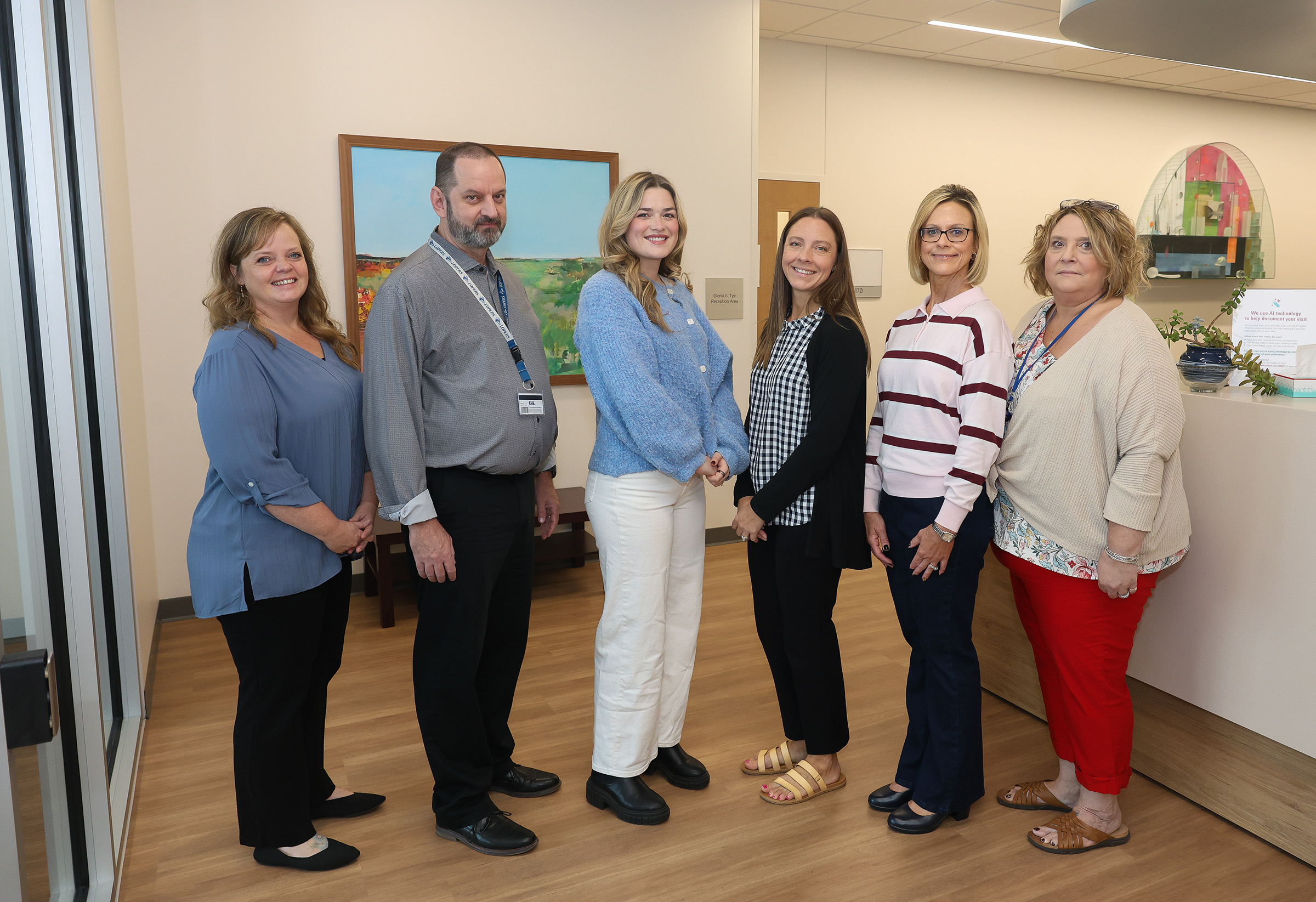
UNK Counseling has four licensed counselors who provide short-term, goal-focused mental health services, including individual and group sessions, substance use assessments, crisis intervention, outreach programming and consultation.
Counseling services are already covered by student fees for those enrolled in at least one on-campus class. Online-only students can access the services for $138 per semester.
Hof encourages students to view those services the same way they would other healthcare.
“Just like your physical wellness can impact your functioning, your mental wellness can, too,” she said. “If you’re physically ill and it keeps going on and it’s not getting any better, you’re probably going to see a healthcare provider. We want students to have that same mentality with mental health.”
College inevitably brings stress, Hof said. Academics, relationships, family, work, athletics and other responsibilities can all become difficult to balance at times.
Students don’t have to manage them alone.
UNK Counseling is open 8 a.m. to 5 p.m. Monday through Friday in the new Health Science Education Center II on the west edge of campus. Students can call 308-865-8248 to schedule an appointment. The same number connects students with an on-call counselor after hours, and anyone experiencing an immediate mental health crisis can call or text 988 for 24/7 support.
For Hof and Wiarda, success isn’t measured simply by the number of counseling appointments or students completing a training. It’s seeing students overcome the barriers that prevent them from living the life they want.
“We’re here to help them resolve a problem or learn how to navigate it,” Hof said. “The ultimate goal is to help students stay engaged in their lives, accomplish what they came here to do and know there are people here to support them.”